dailynewsnblog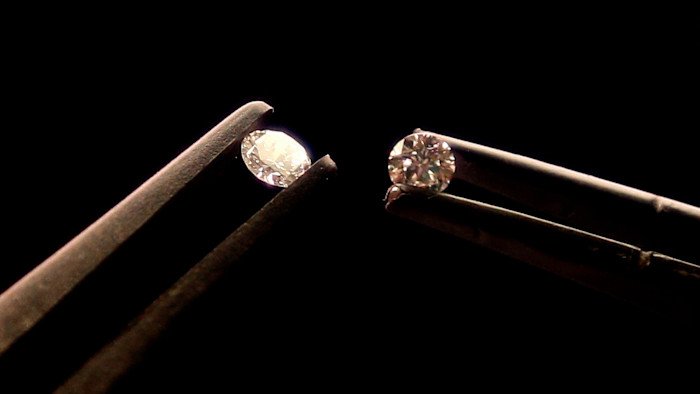
Unlock the Editor’s Digest for free
Roula Khalaf, Editor of the FT, selects her favourite stories in this weekly newsletter.
The US has reimposed tariffs on Belgian diamonds and cork from Portugal after abandoning some of the exemptions it had granted under previous trade deals.
US President Donald Trump agreed with the EU last year not to place duties on more than a dozen products from the bloc, including diamonds, cork and aircraft. But after the US Supreme Court last week struck down the legal basis for his tariffs, Trump imposed a blanket 10 per cent global duty under a different law, and not all previous exceptions apply.
The 10 per cent rate came into effect on Tuesday but Trump has threatened to raise it to 15 per cent, the maximum allowed under Section 122 of the Trade Act of 1974.
The change to the exemptions affects EU trade worth $4.6bn annually, out of the $244bn worth of trade originally granted carve-outs through last year’s agreement.
Although this represents less than 1 per cent of the $633bn of EU exports to the US in 2025, the impact of losing exemptions is concentrated in certain industries and geographies.

Antwerp in Belgium is one of the world’s biggest diamond-cutting and polishing centres and had pushed the EU hard to secure an exemption for its products, which gave it an advantage over rivals such as India and Dubai. Since last September, Trump’s tariffs had not applied to diamonds polished in Europe, but the new 10 per cent global duty excludes that exemption.
The Antwerp World Diamond Centre, which represents the industry, said diamond companies should assume the new global duty applies “until we receive clear confirmation otherwise”.
It is unclear if the exemptions change is deliberate or an oversight in the chaotic response to the Supreme Court’s ruling. Neither the US Trade Representative’s office nor the White House replied to a request for comment.
Paula Pinho, spokesperson for the European Commission, said the EU was in touch with US counterparts to seek clarity on “the length of application” of the new global tariff rate and its scope.
A spokesperson for the Belgian foreign ministry said it was still analysing the new measures.
Matthias Diependaele, minister-president of the northern Belgian region of Flanders, said: “The constant uncertainty surrounding the US import duties on diamonds continues to weigh heavily on the international value chain.
“This is a shockwave in Antwerp: trade volumes are under pressure, market volatility is increasing and the predictability of US demand has virtually disappeared.”
Legal experts say Section 122 of the Trade Act of 1974, under which the new global tariff has been implemented, requires measures to be “applied consistently” to all countries, making it unsuitable for the Trump administration to offer carve-outs to individual countries.
More than 1,200 product categories, including iPhones and computers, were exempted from tariffs originally levied by the Trump administration under the Emergency Economic Powers Act. Most of these exemptions, which applied globally, were transferred across to the new tariff regime after the Supreme Court ruling, according to analysis by independent monitoring body Global Trade Alert.
However, hundreds of country-specific exemptions, including those on cork, diamonds and some chemicals that were agreed with the EU last year, are not on an exemptions list published by the US government, according to the GTA analysis. Aircraft remain exempt from the new global duty.
Johannes Fritz, economist and chief executive of GTA, said the use of Section 122 in effect handcuffed the Trump administration when it came to offering exemptions to individual countries.
“According to our legal experts, there is no way that country-specific exemption can be granted using Section 122 of the Trade of Act 1974, which requires all tariffs to be applied equally to all countries,” Fritz said.
The US wine and spirits industries last year lobbied to secure a tariff carve-out for imported cork because of a lack of domestic production. However, about $247mn worth of EU cork exports to the US will no longer be covered by an exemption, according to FT calculations.
Additional reporting by Barbara Moens in Brussels and James Politi in Washington