dailynewsnblog
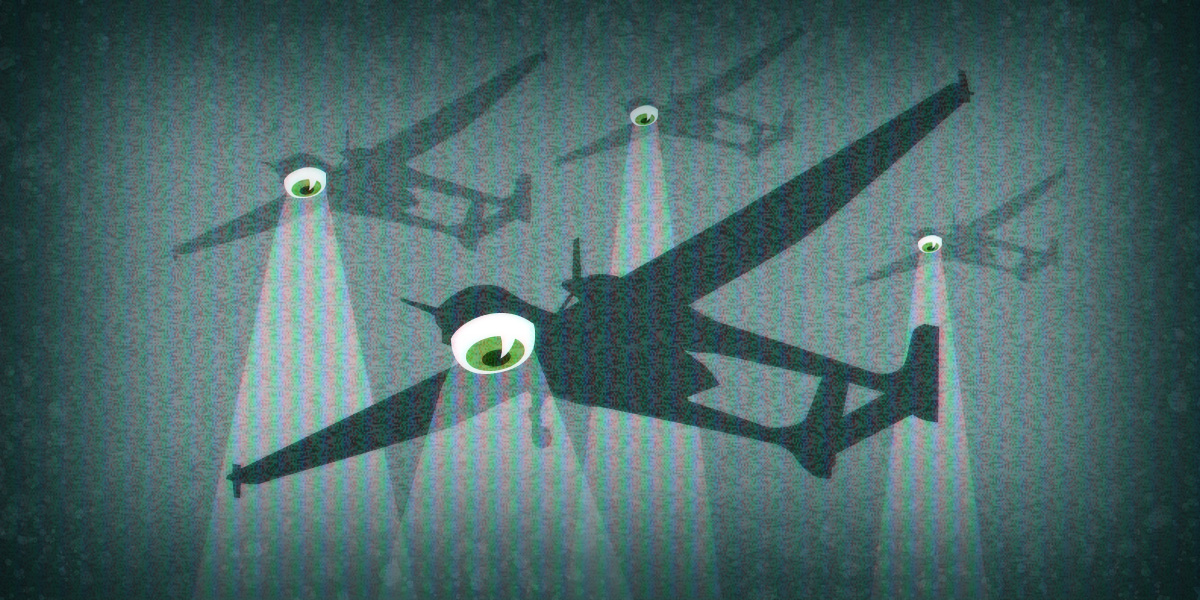
The Baton Rouge Police Department announced this week that it will begin using a drone designed by military equipment manufacturer Lockheed Martin and Edge Autonomy, making it one of the first local police departments to use an unmanned aerial vehicle (UAV) with a history of primary use in foreign war zones. Baton Rouge is now one of the first local police departments in the United States to deploy an unmanned aerial vehicle (UAV) with such extensive surveillance capabilities — a dangerous escalation in the militarization of local law enforcement.
This is a troubling development in an already long history of local law enforcement acquiring and utilizing military-grade surveillance equipment. It should be a cautionary tale that prods communities across the country to be proactive in ensuring that drones can only be acquired and used in ways that are well-documented, transparent, and subject to public feedback.
Baton Rouge bought the Stalker VXE30 from Edge Autonomy, which partners with Lockheed Martin and began operating under the brand Redwire this week. According to reporting from WBRZ ABC2 in Louisiana, the drone, training, and batteries, cost about $1 million.
All of the regular concerns surrounding drones apply to this new one in use by Baton Rouge:
- Drones can access and view spaces that are otherwise off-limits to law enforcement, including backyards, decks, and other areas of personal property.
- Footage captured by camera-enabled drones may be stored and shared in ways that go far beyond the initial flight.
- Additional camera-based surveillance can be installed on the drone, including automated license plate readers and the retroactive application of biometric analysis, such as face recognition.
However, the use of a military-grade drone hypercharges these concerns. Stalker VXE30’s surveillance capabilities extend for dozens of miles, and it can fly faster and longer than standard police drones already in use.
“It can be miles away, but we can still have a camera looking at your face, so we can use it for surveillance operations,” BRPD Police Chief TJ Morse told reporters.
Drone models similar to the Stalker VXE30 have been used in military operations around the world and are currently being used by the U.S. Army and other branches for long-range reconnaissance. Typically, police departments deploy drone models similar to those commercially available from companies like DJI, which until recently was the subject of a proposed Federal Communications Commission (FCC) ban, or devices provided by police technology companies like Skydio, in partnership with Axon and Flock Safety.
Additionally troubling is the capacity to add additional equipment to these drones: so-called “payloads” that could include other types of surveillance equipment and even weapons.
The Baton Rouge community must put policies in place that restrict and provide oversight of any possible uses of this drone, as well as any potential additions law enforcement might make.
EFF has filed a public records request to learn more about the conditions of this acquisition and gaps in oversight policies. We’ve been tracking the expansion of police drone surveillance for years, and this acquisition represents a dangerous new frontier. We’ll continue investigating and supporting communities fighting back against the militarization of local police and mass surveillance. To learn more about the surveillance technologies being used in your city, please check out the Atlas of Surveillance.