dailynewsnblog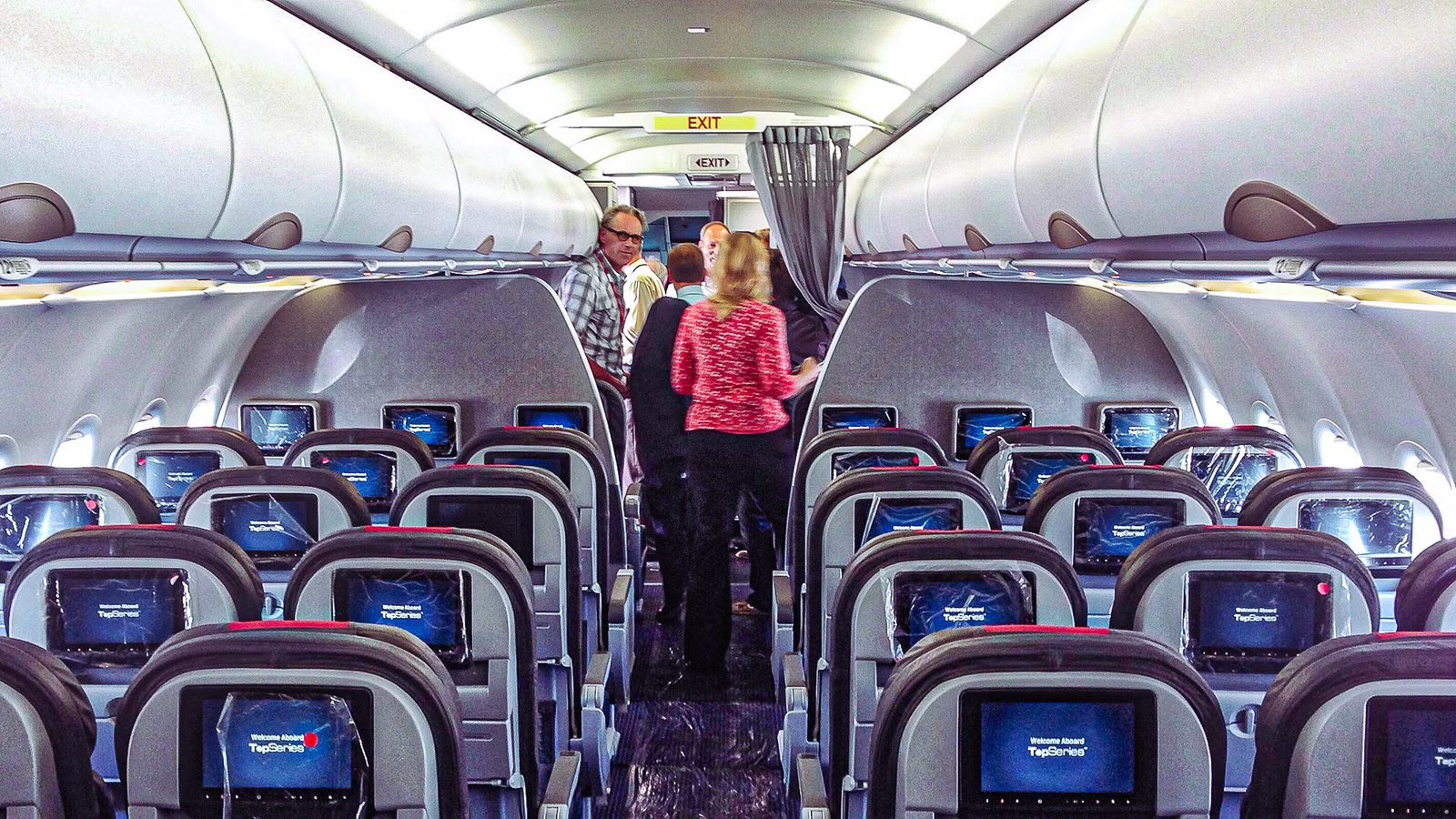
The biggest challenge that  American Airlines is currently facing is that its two chief competitors, Delta Air Lines and United Airlines, are both spending a lot more on cabins in order to try to attract higher-spending customers. Both rivals have turned the passenger experience into a core part of their revenue strategy, all while American is now being pushed to reconsider some of its own earlier product choices. The core overall tension in this story is a possible backtrack.
After years of favoring lighter, cheaper narrowbody cabins built around personal-device streaming, American is now reportedly weighing a return to seatback screens and faster next-generation in-flight internet. This overall rethink comes after the airline’s A319/A320 retrofit plan emphasized more premium seats, improved power at every seat, larger bins, and refreshed interiors, but not the kind of onboard hardware that passengers will immediately notice.
Meanwhile, Delta has kept leaning into free Delta Sync Wi-Fi, upgraded seatback entertainment, and a broader premium-focused strategy, while United is pressing ahead with a wide-ranging cabin overhaul centered on higher-end seating and product differentiation. Let’s discuss how American Airlines is not just reacting to nicer cabins elsewhere, but it is also reacting to the commercial success of competitors that have made comfort, connectivity, and consistency part of their brand.
American Has A Very Different Commercial Strategy In 2026 To United & Delta

Ignoring the recent industry turmoil created by higher oil prices and the Iran War, it was already fairly clear that United,  Delta Air Lines, and American were offering fundamentally different products and looking to solve rather different commercial problems. American is also in turnaround mode, and its own guidance frames 2026 around four pillars. These include a more consistent customer experience, better use of the network and fleet, deeper loyalty partnerships, and improved sales and overall revenue management.
Nonetheless, that plan still sits at the very top of an older philosophy that emphasized operational cost, simplification, and lighter domestic cabins, including a long-standing bet on streaming rather than embedded seatback entertainment. Delta and United, by contrast, are operating from a position of stronger product confidence and significantly improved margins. Delta has leaned into a diversified, high-margin model in which premium, loyalty, cargo, and MRO revenue do more of the work.
Those diversified revenue streams reportedly account for around 60% of total revenue, with premium revenues up around 7% on the year and around 9% during Q3 of 2025. United is even more explicit, as it said it flew a record 27.4 million premium seats in 2025, equal to around 12% of all flown seats, and has made premium cabin growth a centerpiece of its fleet and interior strategy. As such, the overall split is simple, as American is looking to repair and rebalance its network in 2026 while Delta and United are investing to widen a monetizable advantage.
What Specific Cabin Improvements Have United And Delta Made?

The extensive cabin improvements underway at both Delta and United highlight how that strategy turns into something passengers are actually able to take note of. Delta has kept building a more polished, consistent onboard product rather than chasing one-off gimmicks. Its Delta Sync seatback platform is now available on more than 330 aircraft and continues to expand, all while the airline continues rolling out fast, free Delta Sync Wi-Fi.
On newer Airbus A321neos, Delta is marketing domestic first-class seats with even more privacy, workspace and storage, memory-foam cushioning, larger overhead bins, power ports, and in-seat video. Even on older widebodies such as the Boeing 767-400ER, Delta emphasizes in-seat power, full seatback entertainment, and expanding fast Wi-Fi.
United’s upgrades are more dramatic and premium-heavy in nature, and its new elevated 787-9 interior centers on Polaris Studio suites that are 25% larger than standard Polaris, with privacy doors, ottomans for companions, and massive screens. United is also refreshing the rest of the aircraft with larger seatback entertainment screens and Bluetooth at every seat, all while pushing a higher share of premium seating overall. In these cases, airlines do not believe that these cabins are cost centers but, rather, a direct revenue-generating product.

Premium Is Everything: How United & Delta Have Taken Control Of The Airline Industry
The two carriers have generated a large portion of industry profits.
How Does American Airlines Lag Behind Its Competitors?

The American Airlines premium product is not lagging behind that of its competitors simply because it has nothing new and flashy on the table. In fact, that could not be further from the truth. The airline is offering its newest Flagship Suite and A321XLR premium cabins, both of which are genuinely competitive products. The bigger issue that the airline is facing is that these improvements are not part of the everyday American Airlines experience yet.
On much of the carrier’s domestic fleet, American A319 and A320 retrofit centers on more domestic first-class seats, power at every seat, larger bins, and refreshed trim, all while the airline is only now considering whether it needs to bring back seatback screens and upgrade to next-generation satellite Wi-Fi. That leaves American looking thinner on hardware and onboard consistency than its two largest rivals.
After all, Delta already has fast, free Delta Sync Wi-Fi on more than 1,100 aircraft, plus Delta Sync seatback screens on more than 330 aircraft and over 165,000 individual screens across its entire fleet. United, on the other hand, has pushed its Signature Interior to more than 68% of its overall narrowbody fleet, and those interiors tend to score significantly higher on passenger surveys than older interiors.
The airline also has more than 150,000 seatback screens, and it is adding Starlink across its regional fleet while rolling it out on mainline jets at the same time, according to CNBC. On the premium end, United is raising the bar with its massive Polaris Studio suites that are 25% larger than standard Polaris and include privacy doors and massive screens.
What Are The Competitive Implications Of This For American?

From a competitive standpoint, this puts American in a rather awkward middle ground. The airline is not simply standing still, as it has been slowly adding Flagship Suites, growing premium seating through the 787-9, the A321XLR, and other retrofit programs, all while restoring indirect-channel sales. As such, it says that early 2026 bookings are being driven primarily by premium cabins and corporate demand. Nonetheless, Delta and United are making the onboard experience itself part of their competitive moat and not just an add-on.
Indeed, Delta has already scaled fast and free Wi-Fi across more than 880 aircraft, built Delta Sync seatback onto more than 330 aircraft, and says that those tools have already brought in more than 3.5 million new SkyMiles members. United says that 68% of its narrowbody fleet now has its Signature Interior, and that those aircraft score well higher on industry surveys than older interiors, and that premium seats made up a record 27.4 million seats overall.
In this context, American Airlines risks being seen as the airline that is improving but still ever so slowly catching up. That matters the most with high-yield travelers, corporate buyers, and loyal frequent fliers, primarily because those customers compare consistency as much as price. If Delta and United keep turning product quality into preference and preference into loyalty, American certainly risks losing even more market share.

American Vs. Delta Vs. United: Which Carrier Has The Best Premium Economy?
These three airlines offer the most prominent premium economy offerings in the domestic aviation market.
What Are The Financial Implications For American Airlines?

It is also important to take note of the financial importance of this situation, as American does not have the same cushion as Delta and United to spend freely and figure it all out later. The airline brought in a massive $54.6 billion in revenue last year, but its margins were relatively thin, leaving less room for costly mistakes. It is also still carrying a heavy debt load, with total debt sitting at $36.5 billion at the end of the year.
This makes any decision to upgrade cabins, improve Wi-Fi, or bring back seatback screens much more consequential. The challenge is that passenger experience spending is fundamentally not cheap, and the costs hit long before the benefits may fully show up. Retrofitting aircraft takes money, takes aircraft out of the sky, and can cause significant short-term disruption.
As such, even in the event that such upgrades might be the right call strategically, they still add pressure at a time when American is trying to improve profitability and strengthen its balance sheet. At the same time, American probably cannot afford not to invest. If Delta and United keep pulling ahead in premium seating and onboard consistency, they will simply be in a stronger position to win higher-paying travelers.
The Bottom Line

At the end of the day, American Airlines is in a relatively tricky financial situation. For years, the carrier struggled with financial difficulties, and it decided (in many ways wisely) to try and become as diligent as possible when it came to managing its costs. The airline had proven demand for its services (and this is still quite evident in its record revenue figures).
However, what the airline struggled with was keeping its costs low enough to reliably turn a profit, and this pushed the airline to cut back on in-flight luxuries and network experiences that did not return its investment. Now, however, the environment in the market is demanding that airlines offer unique and appealing passenger experiences.
This has led other carriers to invest heavily in the development of their cabins. American, however, appears to have been mostly left out in the cold. The carrier has not only struggled to capture premium travelers, but it is also not even investing in the experience elements needed to help it reliably compete at a network level with Delta and United.