dailynewsnblog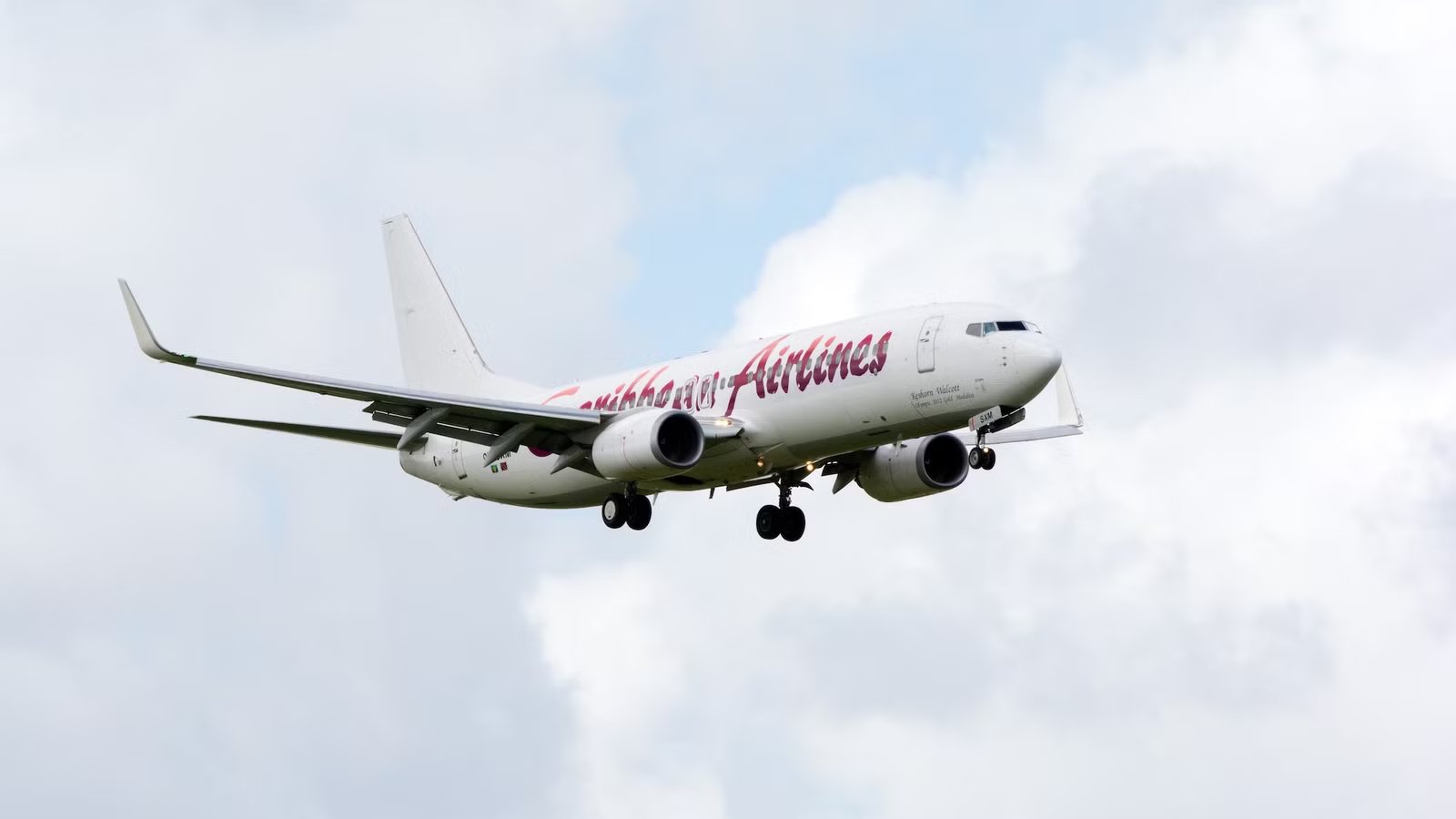
A routine Caribbean Airlines arrival at New York’s John F. Kennedy International Airport (JFK) reportedly turned into an extraordinary midair emergency when a passenger went into labor and gave birth as the flight was on approach to its final destination. The dramatic moment gained international attention after air traffic control audio circulated online, capturing controllers expediting the aircraft’s arrival at the airport.
Furthermore, the controllers joked that the newborn child should be named “Kennedy,” a playful piece of commentary that brought a smile to quite a few faces. This story is a two-layered tale. There was a heartwarming event that also served as a reminder of just how quickly airline crews, controllers, and airport responders can shift from routine operations to real-time crisis management when lives suddenly appear at stake.
A Deeper Look At How It All Went Down

The incident in question took place on Caribbean Airlines Flight BW5, which was operating a nonstop service from Kingston Airport (KIN) in Jamaica to JFK in New York on the morning of April 4, 2026. This turned into a live medical emergency as the Boeing 737 model approached the airport shortly before noon. Air traffic control audio shows the crew advising controllers that a pregnant passenger was in labor and requesting a more direct arrival.
Air traffic controllers naturally responded by clearing the flight direct ZETAL, stepping it down to a lower approach altitude, arranging medical personnel, and clearing it to land on Runway 4R. By the time the aircraft was taxiing into the gate, the baby had already been delivered on board the aircraft. In a now-viral exchange, ground control asked if the baby had been born yet, and, after hearing yes, quickly joked that the new child should be named “Kennedy” in honor of its arrival at the airport. The baby’s gender is unclear at this time.
Have Other Incidents Like This Occurred?

As dramatic as this might sound, births on board passenger aircraft are rare, but they are not completely unheard of. Some analysts will say that in-flight childbirth happens surprisingly often, once in every 26 million passengers, with other studies identifying more than 70 births on commercial flights between 1929 and 2018, a rate not far off from one per year.
The most recent high-profile incidents all occurred in Europe. In February 2025, a Brussels Airlines flight from Africa to Brussels Airport (BRU) made the headlines after cabin crew and assorted medical volunteers onboard helped deliver a baby named “Fanta” mid-flight. In May 2025, a similar incident occurred on board Ryanair Flight 4797, which diverted after a passenger gave birth en route from Belgium to Spain.
Other incidents occurred in the years following the pandemic. A good example, according to Reuters, was a situation in which an Afghan refugee gave birth on board a Turkish Airlines evacuation flight that took place in 2021. There is a direct Caribbean precedent as well. In 2005, a woman gave birth about 10 minutes before a British West Indian Airlines (BWIA) flight landed at JFK, with the cabin crew and a midwife passenger helping deliver the baby.

Alaska Airlines Boeing 737 MAX 9 & FedEx 777F Nearly Collide On Approach Into Newark
The incident is certainly quite concerning.
What Does All Of This Mean For Caribbean Airlines?

For Caribbean Airlines, this is exactly the kind of viral incident that can actually strengthen rather than directly damage the brand. Reporting frames this as a story of calm professionalism. The crew in question here communicated clearly, ATC expedited the plane’s arrival, and the flight reached JFK without a formal emergency declaration or spiraling into panic.
That ultimately matters because New York is one of Caribbean Airlines’ core U.S. markets, and the airline itself highlights JFK links among its major city pairs. The timing is also notable. In recent days, Caribbean Airlines has been publicly stressing continuity, operational review, and long-term sustainability while pushing back on rumors that the carrier might be shutting down.
Against that challenging backdrop, a heartwarming, competence-driven story offers valuable public-relations exposure. It reminds travelers that beyond schedules and fleet plans, the airline’s people are a direct part of its product. In a real emergency, that human element can define how the public remembers the carrier.