dailynewsnblog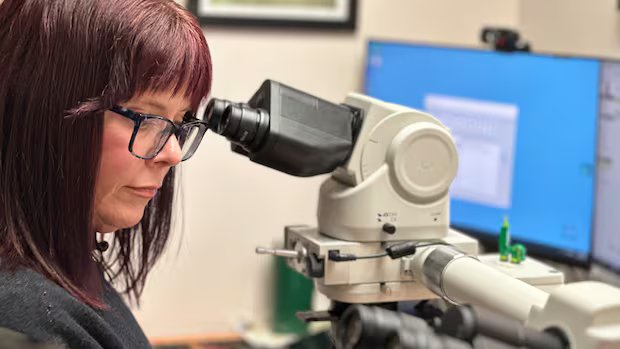

Listen to this article
Estimated 5 minutes
The audio version of this article is generated by AI-based technology. Mispronunciations can occur. We are working with our partners to continually review and improve the results.
Five months ago, Dr. Anne Herdman Royal began a new job in Canada. Driven out of the United States by a shifting political landscape and a mass shooting at the hospital where she worked in Tulsa, Okla., it had become a country she no longer wanted to call home.
“I was horrified,” she said, recalling the day four people were killed, including two fellow doctors. “I came home from the lockdown and told my husband, ‘We have to get out of here.'”
The next day, Herdman Royal applied to work in B.C. Last fall, she moved her family to Nanaimo to start a new life. She’s one of hundreds of American health professionals that have made a similar move in recent months.
Government data provided to CBC News reveals B.C. has hired 417 health-care workers since it launched a recruitment campaign in the U.S. exactly one year ago.
The numbers from B.C.’s Ministry of Health show 89 doctors, 45 nurse practitioners, 260 nurses and 23 allied health professionals from the U.S. accepted jobs in the province between March 2025 and January 2026.

Some Canadian agencies say U.S. doctors and health-care workers recently laid off by the U.S. Department of Government Efficiency are increasingly interested in living and working in Canada, but experts say Canada needs to move fast to recruit them.
“This makes a real impact,” said Health Minister Josie Osborne in an interview. “Even if half [of the 89 physicians] are family doctors, and they attach a full panel of patients, that’s more than 50,000 British Columbians who will have access to primary care. And that’s just huge.”
The province received nearly 2,800 applications during the first 10 months of the campaign. Many of them are still being processed, and the ministry says the goal is to find a place for every qualified health professional wanting to work in B.C.
“People are accepting job offers in all corners of British Columbia, in communities large and small,” Osborne said.
“It’s certainly spread out with respect to size of community, and roughly matching the population distribution across B.C.”

A year-long recruitment drive in British Columbia has resulted in more than 400 doctors and nurses relocating from the U.S. to work in Canada and it’s a model other provinces are following in hopes of having similar success.
B.C. looking to expand recruitment campaign
The province initially targeted health-care workers in Washington state, Oregon and California with video ads. Staff also set up a truck outside Seattle hospitals last spring, handing out free coffee and tea to doctors and nurses.
Grassroots social media campaigns amplified the call inviting doctors and nurses across the border. Now, the health minister is hinting at an expanded push across other parts of the U.S.
“The campaign has absolutely exceeded expectations,” said Osborne. “We are looking specifically at where people are coming from and what opportunities there might be for even more targeted marketing campaigns.”

Herdman Royal says word is spreading quickly. Since moving to Vancouver Island, she’s been contacted on a weekly basis from other doctors and nurses in the U.S. looking to do the same.
Many of them are frustrated with the direction of the medical system under the Trump administration, she added.
“‘One of us is getting out!’ is how it feels to friends and family,” she said, adding the interest isn’t only for B.C. “I know several [other doctors] who’ve gone to Ontario and Nova Scotia. I think Canada is very much going to benefit from the brain-drain [in the U.S.]”
Health-care infrastructure also needs to be addressed: researcher
Several other provinces are also actively recruiting American health-care workers. Manitoba announced in January it had hired 13 American doctors. In August, Nova Scotia had licensed 19.
“We’re headed in the right direction, but it’s not the full answer to the problem that we have,” said Simon Fraser University researcher Dr. Rita McCracken, who’s been studying Canada’s doctor shortage for years.

A B.C. government campaign to recruit U.S. health-care workers unhappy with Trump-administration policies appears to be working. For The National, CBC’s Lyndsay Duncombe breaks down the numbers.
She said marketing campaigns can be effective — but the rest of the health-care system needs to keep up, particularly infrastructure.
“We need provincial resources to go not just into the hiring of individuals, but also setting up the system where those individuals are going to work,” she added.
McCracken said that for many years, slow licensing has bogged down the process for international recruitments. But now, full licensure in many provinces has been expedited.
According to the Canadian Medical Association, U.S-trained and board-certified physicians can begin independent practice immediately, without additional examinations or certification.
Back inside the lab at Nanaimo’s hospital, Herdman Royal has found a place she wants to call home forever. She’s now starting the process to apply for permanent residency.
“I’ve started enjoying my job again; I have a life here,” she said. “The true, elusive work-life balance — I guess it’s been on Vancouver Island the whole time.”