dailynewsnblog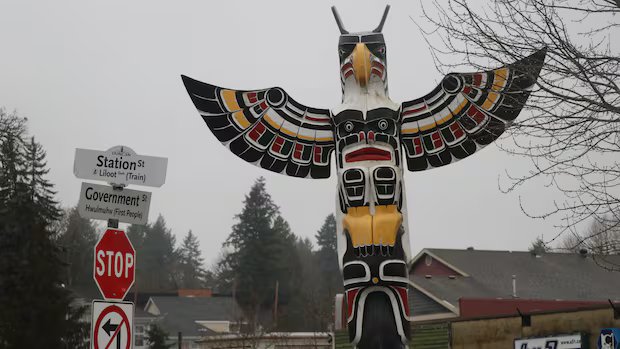
Canadians should learn more about the history of the land they live on, says Cindy Daniels, chief of Cowichan Tribes, as its legal counsel prepares to defend a contentious land claim involving private property, not far outside Metro Vancouver.
It’s the best way for the public, she says, to understand why the larger Cowichan Nation continues to pursue about 7.4 square kilometres of land, near the south arm of the Fraser River in Richmond, B.C., after a court awarded it a smaller portion in August.
“We fought to get back what was ours,” Daniels told CBC News. “We just proved what we knew.”
The unprecedented ruling declared that about 3.25 square kilometres of mixed residential, agricultural and industrial land was Aboriginal title — despite also being privately owned.
The two titles can “coexist,” Justice Barbara Young said.

It was a partial victory for the First Nation, and a loss for the defendants, which included the federal, provincial and municipal governments, who say the ruling could upend the security of B.C.’s land title system and present unintended consequences for private property rights.
It’s “untested waters,” said Thomas Isaac, a lawyer in Aboriginal law, who is not part of the proceedings.
The ruling has stirred intense debate on issues like the B.C.’s legal commitments to First Nations, and is headed for appeal.
‘Is this real?’
The affected area includes more than 100 private owners. Some didn’t hear about the case until it was well underway, or even later.
Homeowner Bal Batth learned about it in a letter from the city, which said his house, which has been in his family for more than 50 years, was partially inside the Aboriginal title area.
He says his next thought was, “is this real?”
There is disagreement over what the judgment means.

The land titles, or documents of ownership, held by those people inside the claim area are known as fee simple titles. They’re the most common form of land ownership in Canada and are supposed to be indefeasible or basically guaranteed, says Isaac. But, he says, the ruling upends that basic principle.
“That was the court’s words in numerous places in the decision, that indefeasible title is no longer indefeasible when it comes to Aboriginal title being proven,” he said.
And yet, there are multiple lines in the decision that say private property is not affected.
“The problem is, that it is,” said Isaac.
Cowichan Nation has said it was simply seeking Aboriginal title to the land of its former summer village, so it asked the court to declare invalid the titles held by the federal government and the City of Richmond.
It argued the proper processes weren’t followed when the land was readied for sale between 1871 and 1914. The court agreed.
But Isaac says the claim also included privately owned land.
“You get what you ask for in some ways,” he said.
The plaintiffs at Cowichan Nation have claimed the ruling doesn’t “challenge the effectiveness or validity” of title held by individual private landowners.
But that has done little to quell the disbelief and anger of those whose homes are in the affected area, hundreds of whom turned out for a town meeting in October.
Many worry their properties could lose value over time or become targeted in future litigation.
“If the Cowichan didn’t want us private property owners involved, then why is the map involving us?,” Batth asked CBC News, referring to the area marked out in Cowichan’s claim.

Daniels, the chief, says private landowners should take it up with the province, which Cowichan Nation says is “the party responsible.”
The ruling also ignited calls for amendments to legislation that broadly tied B.C. to legal commitments around reconciliation.
Co-existence
Aboriginal title and fee simple title are both exclusive rights in the eyes of the law, says Isaac, which he says makes the “co-existence” of the judge’s ruling problematic.
“You don’t need to be a lawyer to figure out that you can’t have two exclusive rights to one thing,” he said.
But others, including the judge, disagree and say there are concrete examples when governments and First Nations reconciled Aboriginal title with fee simple titles, like in the Nisga’a Treaty from 2000 or the Rising Tide agreement in Haida Gwaii in 2024.
Both those examples involved less urban settings, however, and were settled outside the courts. But according to Young, they demonstrate the idea of co-existence.

(Glen Kugelstadt/CBC)
Before the houses, farms, industrial warehouses and roads near the south arm of the Fraser River in Richmond, there was a village.
A permanent settlement called Tl’uqtinus, which translates to “long beach” in the Hul’q’umi’num language, says Jared Qwustenuxun Williams, an educator from Cowichan Tribes.
As the court heard, in January 1853 James Douglas, the governor of the Colony of Vancouver Island, promised the Cowichan the settlement would be set aside for them.
Historical records presented to the court show that didn’t happen.
Instead the judgment found the lands were later surveyed and sold to other people, including Richard Moody, then the chief commissioner of land and works and the man tasked with creating a settlement for the Cowichan.
Those decisions, Cowichan Nation argued, set in motion their eventual exclusion from the village site, which has been subdivided over the past 150 years.
The win in court is about getting a “home” back, Daniels said, after a “removal that was forced on us historically.”
She says housing and fishing are some of the ways the next generation might be able to materially benefit from recovering access to that land.
The win has also given rise to harassment against First Nation members, says Shana Thomas, chief of Lyackson First Nation — one of the other First Nations represented by Cowichan — who says people have called their office or abused them in public.
As the case heads into appeal, the hearings are expected to be well attended by members of the media and followed eagerly by British Columbians.
Daniels hopes people will “open their hearts and minds, start learning and understanding.”