dailynewsnblog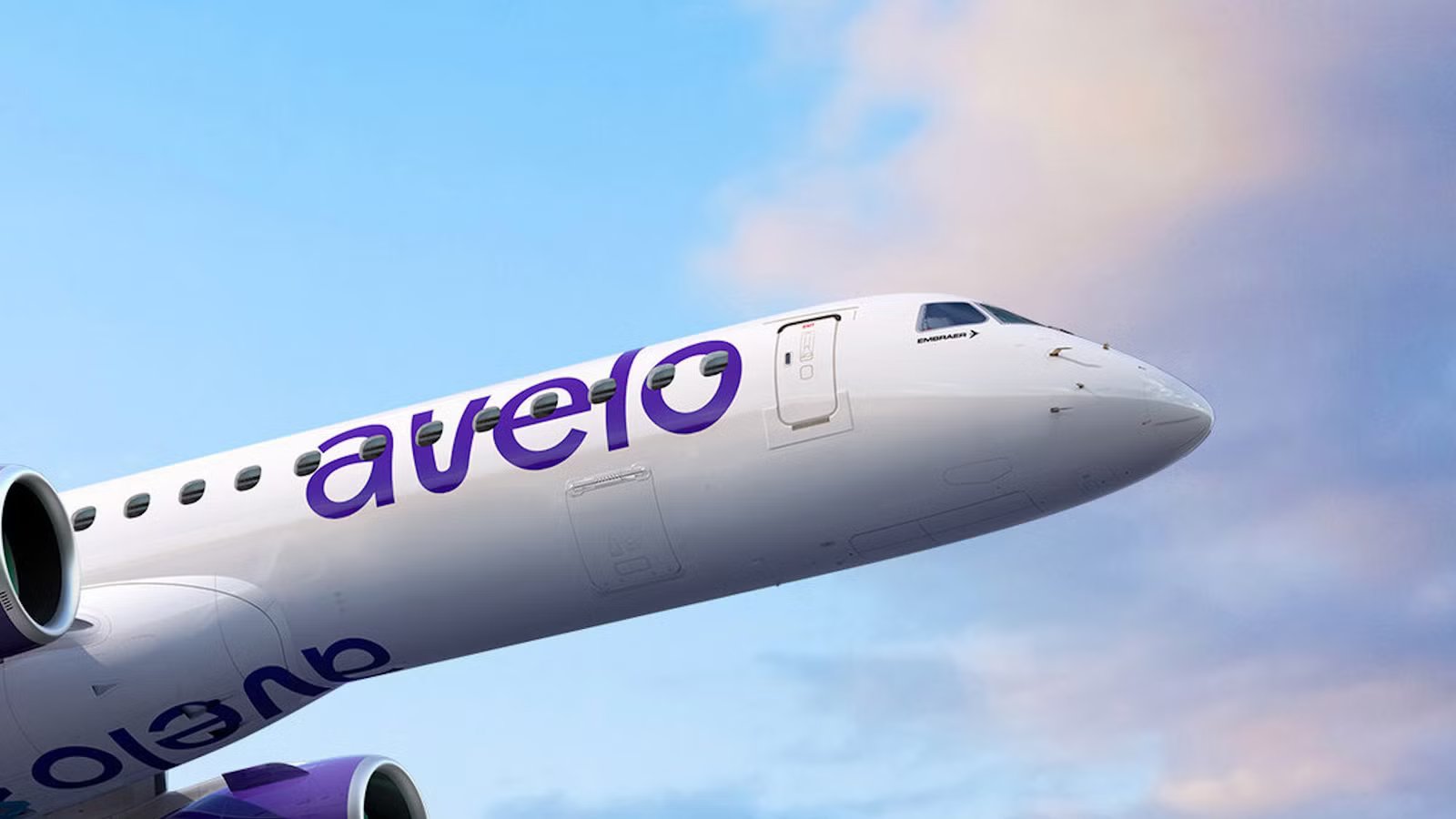
Avelo’s newly-extended booking window is about much more than selling autumn getaways. By pushing its schedule out to mid-November of 2026, the ultra-low-cost carrier is signaling operational stability while quietly spotlighting a strategic pivot. The airline is planning to become the first US carrier to operate the Embraer E195-E2. This will make it the very first US airline to roll the dice on a platform that others have mostly turned down.
This detail, which is not the direct headline of Avelo’s latest media communications, links this timetable directly to what the carrier sees as the aircraft of the future. For Avelo, the story is moving beyond the  Boeing 737 and instead of using a smaller, modern jet to deepen service at secondary airports, open new bases, and better match capacity to overall demand. Until then, the Boeing 737-800 will continue to serve as the anchor for the airline’s network.
A Schedule Extension-Turned Fleet Announcement

On February 25, 2026, Avelo Airlines opened sales for travel through November 17, 2026, extending its bookable schedule into mid-November 2026, with one-way fall fares advertised for prices as low as $42. The fare example in the release applies to select flights in the Southeast between September 10 and September 27, 2026, services that must be booked by March 4, 2026, for passengers to be eligible for the discount. These conditions make the deal both odd and somewhat unappealing to passengers.
The airline’s expanded calendar covers more than 30 destinations and reinforces Avelo’s four-base footprint while setting up another milestone, a fifth operating base at McKinney National Airport (TKI) in late 2026. Avelo launched on April 28, 2021, and it has the objective of becoming the first US airline to fly the Embraer E195-E2 in 2028. The carrier’s current fleet consists exclusively of larger (but potentially less efficient) Boeing 737 Next Generation models.
What Does This All Mean For Embraer?

For Embraer, Avelo’s schedule extension doubles as quiet marketing for the Embraer E2. The airline’s communications reveal that Avelo will be the first US airline to fly the E195-E2, turning a future fleet plan into a headline milestone. That matters because the US narrowbody market is dominated primarily by Airbus and Boeing, and the E2 family has had almost no penetration in the US market (even with the regional subcontractors of mainline carriers).
Avelo’s commitment to a massive 50 Embraer E195-E2s (alongside purchase rights for 50 more) adds a meaningful, multi-year backlog and a visible operator that can showcase the jet’s economics on low-demand routes. The jet will be in the spotlight for offering lower trip costs, 2-2 seating, and performance that can work at constrained airports all across the country.
It also gives Embraer a stronger story with US stakeholders on support infrastructure and trade, especially as the manufacturer manages supply-chain constraints while targeting higher annual delivery rates later this decade. Overall delivery timing is shifting, with earlier guidance pointing towards 2027-2032, with Avelo now saying that the first E2s are set to arrive in America by the time that 2028 comes around.

Right-Sizing: Why Avelo Airlines’ Huge Embraer E2 Order Is Good News
Avelo Airlines placed a major order on Thursday for up to 100 Embraer E195-E2s.
Growth On The Horizon For Avelo Airlines

For Avelo Airlines, extending sales to November 17, 2026, is a signal of confidence from the carrier’s management team. An airline that has struggled in recent months is now telling customers and airports that the network is stable enough to plan far beyond the usual booking window. The more strategic takeaway, however, is embedded in the airline’s fleet narrative.
Avelo currently operates an all-Boeing 737 Next Generation fleet, but it is positioning the Embraer E195-E2 as the next chapter, with the aircraft capable of right-sizing capacity on thinner routes, improving economics, and broadening the menu of airports that it is capable of serving, especially those with runway or noise constraints. Sure, it seems like a minute difference, but for an airline that could have been looking at shutting down, it is a very big deal.
The use of this aircraft dovetails nicely with the airline’s continued focus on secondary airports and its plan to open a fifth base in Texas by the end of the year. The trade-off is thus complexity, as a second fleet family means new pilot training, maintenance, and spare parts ecosystems. Nonetheless, the timeline now points to a debut for the type in 2028, with 2026 routinely framed as the bridge year for the airline and its network.