dailynewsnblog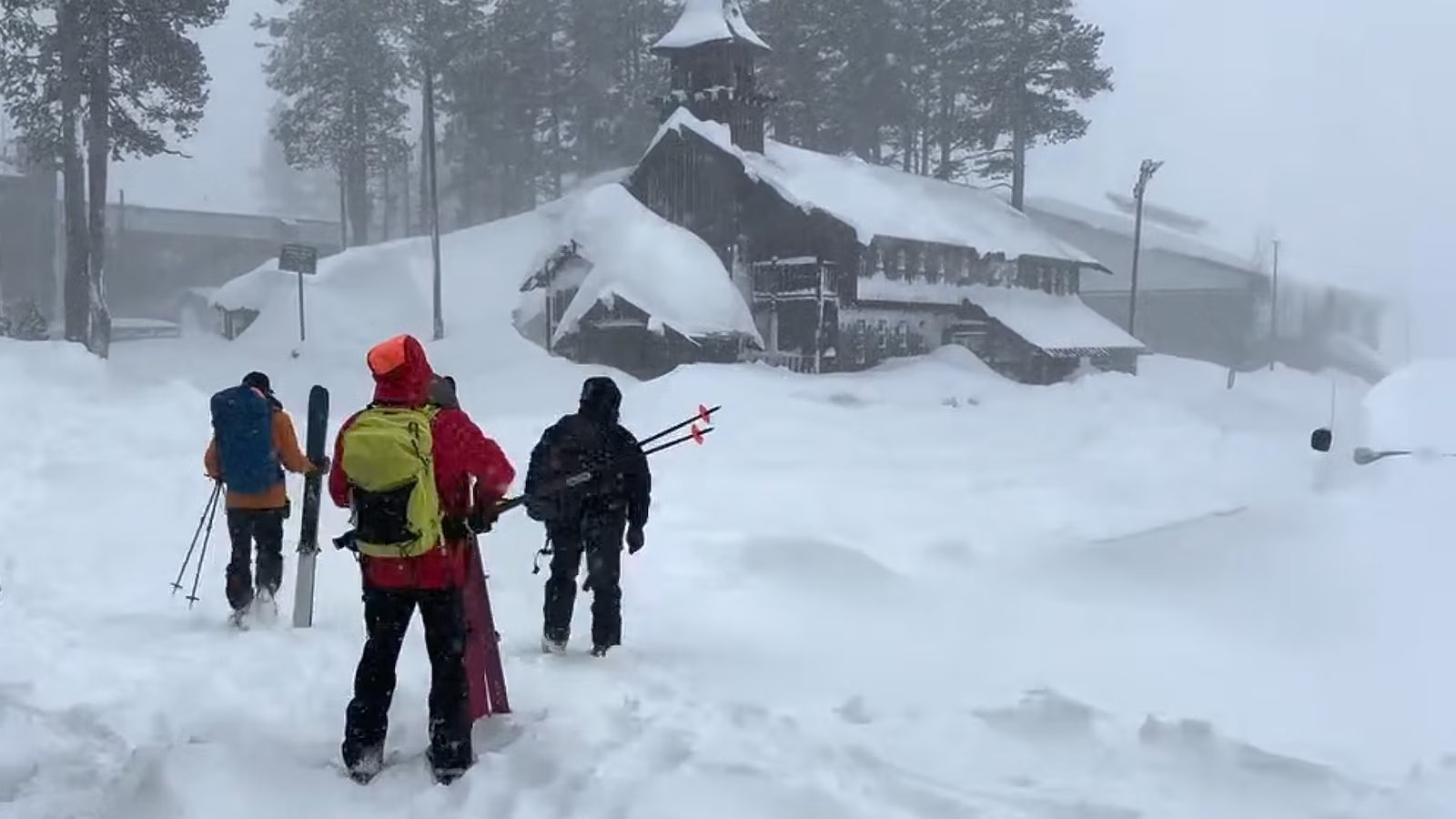
One of the world’s foremost avalanche experts said the factors involved in the deaths of at least eight skiers in a major slide in California’s Sierra Nevada Mountains will come from the survivors.
But Bruce Tremper — the former director of the Utah Avalanche Center and author of the book “Staying Alive in Avalanche Terrain” — cautioned that it would not “be fair” at this point to second-guess the decisions made by the group’s guides.
“The thing I do know is, in most avalanche accidents, everybody wants to point fingers. Everybody wants to say, ‘Should they have known better? Did they make a mistake?'” Tremper told ABC News.

A rescue ski team makes their way to the area of an avalanche in the Castle Peak area of Truckee, Calif., February 17, 2026.
Nevada County Sheriff’s Office
Tremper said a myriad of factors could have played a role in why the group ended up in the path of the avalanche that overwhelmed them on Tuesday morning in the Castle Peak area of the Sierra Nevada Mountains.
“We really don’t know until they interview the people [who survived] and the information starts coming out,” Tremper said.
He said it’s possible that the route the group chose had been declared safe in the past during days when avalanche danger is high, like it was on Tuesday morning.

Location of California avalanche
Map Tiles by Google Earth
“I think it’s just as plausible that they were doing something that was normally safe, but it was just an unprecedented event and that they just happened to be in the wrong place at the wrong time. It’s just bad luck.”
The bodies of seven women and a man killed in the avalanche were recovered, but ongoing inclement weather has prevented search crews from transporting the victims from the backcountry to a morgue in the nearby town of Truckee, Nevada County Sheriff Shannan Moon said at a news conference on Wednesday. A search continues for a second man who was with the group and is presumed dead, Moon said.

Nevada County Sheriff Shannan Moon updates media on rescue efforts following an avalanche at a news conference in Nevada City, California, February 18, 2026.
Tran Nguyen/AP
Three guides from the Blackbird Mountain Guides, who were leading the group back from a three-day backcountry skiing expedition, were killed in the avalanche, according to the company.
The avalanche happened near the Frog Lake Backcountry Huts in the Castle Peak area, northwest of Truckee, officials said.
Six members of the ski group, including a fourth guide, survived the avalanche and were rescued Tuesday evenings, authorities said.

Nevada County Sheriff’s Office officials monitor an avalanche in the Castle Peak area of Truckee, Calif., February 17, 2026.
Nevada County Sheriff’s Office
In a statement Wednesday night, Zeb Blais, founder of Blackbird Mountain Guides, said the three employees killed in the avalanche were “highly experienced members of our guide team.”
Blais said all of the guides were trained or certified in backcountry skiing by the American Mountain Guides Association (AMGA). He said the guides were also instructors with the American Institute of Avalanche Research and Education (AIARE), which he described as “the industry standard for avalanche education.”
In his statement, Blais did not comment on the fateful decisions made by the guides.
“In addition, guides in the field are in communication with senior guides at our base, to discuss conditions and routing based on conditions,” Blais said.
The deadly incident came amid “high” avalanche danger warnings in the backcountry issued on Tuesday by the Sierra Avalanche Center, raising questions about why the group decided to trek out of the rugged area and not stay sheltered in the Frog Lake Backcountry Huts until the major winter storm passed.
“We’re still in conversation with them on the decision factors that they made. But, definitely, a heed for everyone,” Sheriff Moon said on Wednesday.
Blais said his company has suspended all field operations through Feb. 22 and “may extend into the next week or two.”
“There is still a lot that we’re learning about what happened. It’s too soon to draw conclusions, but investigations are underway,” said Blais. “We don’t have all the answers yet, and it may be some time before we do.”
After learning of the guides’ credentials and training, Tremper said, “You can’t get better than that.”
“That means they had very good training, they were very good at what they do. They were highly trained,” Tremper said.
Tremper said the cause of the disaster will remain unknown to the public until investigators release their report detailing accounts from the survivors. He warned against assuming the guides were reckless.
“Everybody wants to answer the same question and it’s not a fair way to approach this because when you look backwards in time, it’s really, really easy to see the chain of events that occurred that created the accident. But you can never do that looking forward in time,” Tremper said.
He said there’s a lot more that goes into being a backcountry guide than meets the eye.
“To be able to make good decisions, nobody can just do it alone. You work as part of a team and part of a system,” Tremper said. “So, the team means you’re talking to all the other guides. Like, if it’s a helicopter ski guiding operation, you might sit down with 20 different guides every morning and every evening and do briefing sessions.”
Tremper said that in his 29-year career as an avalanche forecaster, he has investigated roughly 100 avalanche accidents.
“In almost all of the accidents that I’ve investigated … when I put myself in their shoes, it’s like: ‘Well, I could have done that.’ In fact, I have done that before — but I’ve gotten away with it.'”