dailynewsnblog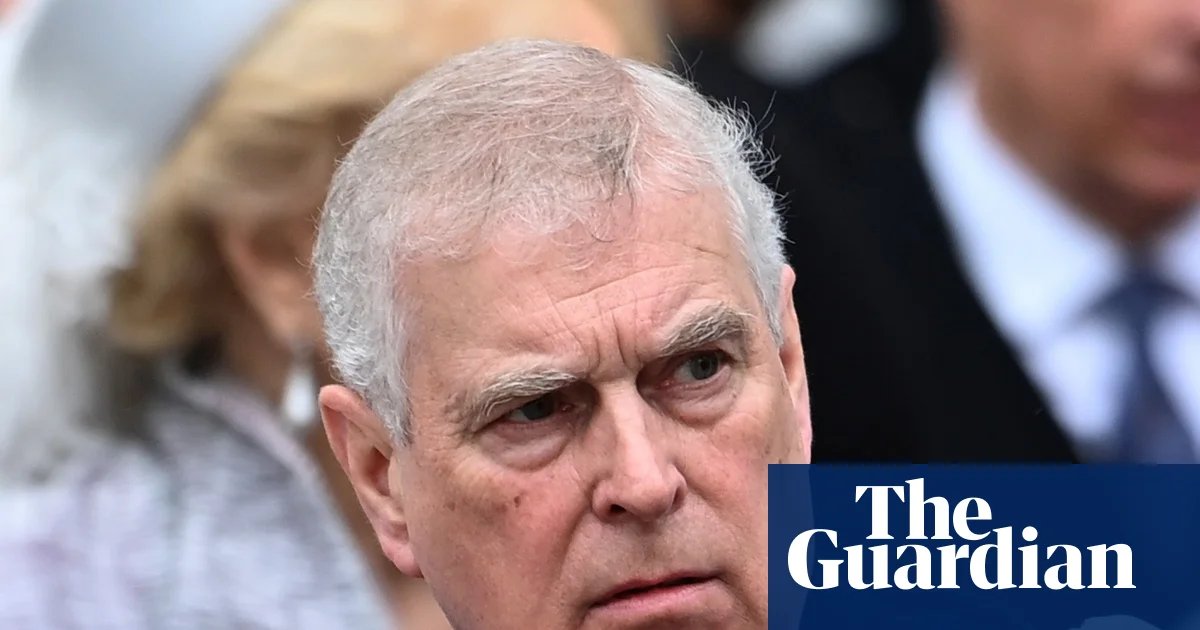
The Australian government has confirmed it would support any proposal to remove Andrew Mountbatten-Windsor from the royal line of succession after the former prince was arrested on suspicion of misconduct in public office.
With the UK government poised to consider laws to strip Mountbatten-Windsor of his right to inherit the throne once any policy investigation was finalised, the Australian prime minister, Anthony Albanese, has written to his British counterpart, Keir Starmer, to offer the country’s backing.
The former prince is eighth in line to the throne after Princes William and Harry and their children, despite him having relinquished his royal titles in October after new information came to light about his links to Jeffrey Epstein, the late financier and child sex offender.
This means Mountbatten-Windsor is still a counsellor of state, the group of adult royals who could be named to fill in for King Charles III if he was ill or abroad, even if in practice this would never happen for him, as only working royals are used.
Removing him from the line of succession would require an act of the UK parliament and the support of the 14 Commonwealth countries where King Charles III is head of state, which includes Australia, Canada and New Zealand.
“In light of recent events concerning Andrew Mountbatten-Windsor, I am writing to confirm that my government would agree to any proposal to remove him from the line of royal succession,” an extract of Albanese’s letter to Starmer, supplied to Guardian Australia, read.
Sign up: AU Breaking News email
“I agree with His Majesty that the law must now take its full course and there must be a full, fair and proper investigation.
“These are grave allegations and Australians take them seriously.”
The Guardian has reported that Buckingham Palace would not stand in the way of plans to remove Mountbatten-Windsor from the royal line of succession.
In a statement after the arrest of his brother, King Charles said the “the law must take its course”.
In 2011, the then British prime minister David Cameron won the support of Commonwealth nations – including Australia – for changes that meant male heirs no longer took precedence over women in line to the throne.
A ban on anyone in the line of succession marrying a Roman Catholic was also lifted.
In his first public comments after the arrest, Albanese on Friday told the Guardian’s Australian Politics podcast that Mountbatten-Windsor’s arrest was an “extraordinary fall from grace” for the former prince.
“I must say, from someone who had such an esteemed position and was in a position really of absolute privilege, and to see this decline and fall is extraordinary,” he said.
Mountbatten-Windsor denies all the allegations against him.
Despite his longstanding position as a republican, Albanese said Mountbatten-Windsor’s arrest would not prompt the government to consider another referendum on whether there should be an Australian head of state.
A 1999 republic referendum under John Howard’s prime ministership fell far short of approving the change on offer.