dailynewsnblog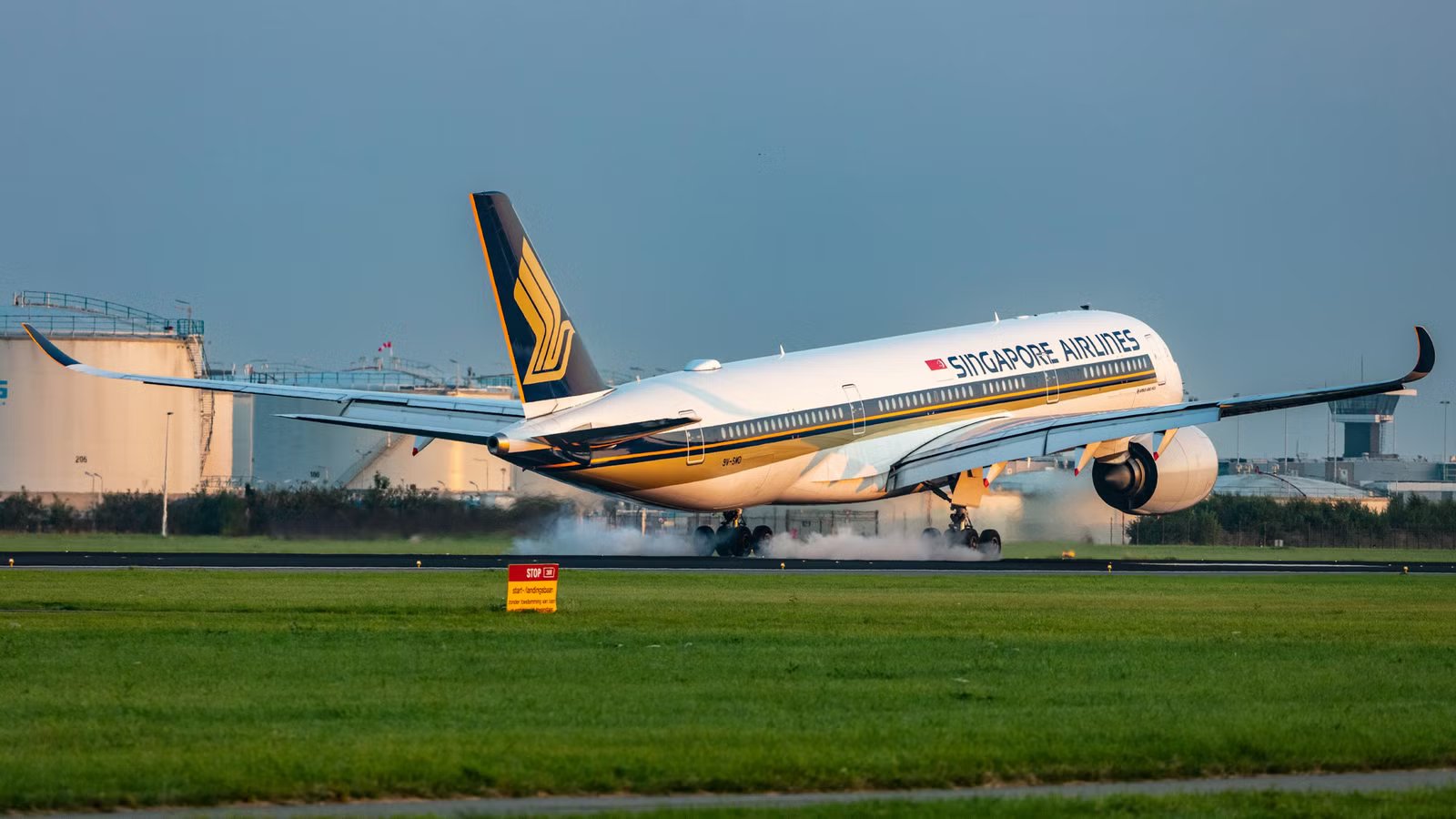
The final frontier, the non-stop 18-hour flight, is about to be broken, with the help of the Airbus A350. The aircraft’s success lies in its ability to operate at the absolute edge of its performance envelope, turning 19,000-kilometer journeys into routine scheduled services. This guide explores the intricate balance between aerodynamics, thermodynamics, and structural engineering required to keep a 300-ton machine aloft for nearly an entire day. Every gram of weight is accounted for, every second analyzed with endless data, all with the goal of pushing commercial aviation further than ever before.
For those carriers seeking to push further than anyone else, these ultra-long-range milestones allow access to direct markets that were previously unreachable without a costly and time-consuming stopover. Pushing an aircraft to its maximum range is a risk, but for the furtherance of aviation history, it is likely one worth taking.
When Limits Are Met

Maximum takeoff weight (MTOW) is the invisible ceiling that dictates every ultra-long-haul departure. For the A350-1000, this 322-ton figure represents the absolute structural limit of what the carbon-fiber wings can sustain against the relentless pull of gravity. It is a mathematical boundary where the human desire for distance meets the uncompromising reality of physics, requiring a level of precision that leaves zero margin for error.
With the -900ULR variant, the A350 functions as a precision-engineered fuel reservoir. To bridge the 9,487 miles between  New York and Singapore, the aircraft must depart with its tanks filled to the absolute brink, often leaving very little room for traditional heavy cargo or a high density of passengers. This creates a logistical paradox known as the fuel to carry fuel penalty, where a significant portion of the initial burn is dedicated simply to transporting the weight of the kerosene required for the final hours of the flight. It is a cycle of diminishing returns that requires flight planners to account for every single kilogram of onboard weight, from the mass of the catering carts to the volume of potable water.
The operational reality of these heavy departures forces the aircraft into a specific aerodynamic balancing act during the first phase of the journey. The A350 cannot immediately climb to the thin, efficient air of the upper stratosphere if the structural limit is near. Instead, it must linger at lower flight levels for the first four hours, where the air is dense enough to provide the necessary lift for its massive mass. As the Rolls-Royce Trent XWB engines consume fuel at a rate of roughly 16-17 lbs (around 7.5 kg) per nautical mile, the aircraft slowly sheds weight, eventually allowing it to step climb toward its peak altitude and efficiency. A slow, methodical ascent that proves that reaching the far corners of the globe is as much a test of patience as it is a feat of power.
The Need For Fuel

The standard A350 family utilizes highly efficient wing tanks for long-haul routes, but these can only reach so far. The extreme requirements of a 22-hour flight necessitated a specialized architectural change found only on the upcoming A350-1000ULR. Other than the much smaller Airbus A321XLR, this is not a common addition.
The Rear Center Tank (RCT) provides an additional 5,283 gallons (20,000 liters) of fuel capacity, a massive energy boost that allows the aircraft to carry approximately 35,274 lbs (16,000 kilograms) of extra kerosene. To manage this concentrated weight, the -1000ULR requires significant structural reinforcement to its fuselage and landing gear to sustain an MTOW of 709,888 lbs (322,000 kilograms). It is a masterpiece of hidden engineering, allowing the aircraft to bridge the 10,563-mile (17,000-kilometer) gap between Sydney and London with enough reserves to remain aloft for nearly an entire day.
Here, belly cargo space is sacrificed in favor of absolute endurance. Taking the volume typically reserved for several standard shipping containers, the RCT shifts the center of gravity and requires the flight management system to recalibrate the aircraft’s aerodynamic balance throughout the long, initial burn. It became a key selling point of the A321XLR, but now that it has been applied to a widebody, the true test of the RCT’s capability can begin to unfold.

The Striking Differences Between The Airbus A321XLR & Boeing 737 MAX 10
The Airbus A321XLR and Boeing 737 MAX 10 represent the pinnacle of evolution in the aviation industry, pushing narrowbodies to their absolute limits.
Surviving The Cold

It is easy to contend with the visible, but it’s often the invisible that contributes significantly to pushing the limits of a modern airliner. At altitudes exceeding 40,000 feet (12,192 meters), the air temperature often drops below -76°F (-60°C), initiating a phenomenon known as cold soak. It is a silent, creeping threat to the fuel system, where the sheer duration of the flight allows the extreme external cold to penetrate the carbon-fiber wing skin and chill the kerosene within.
Managing this thermal boundary is critical because Jet A-1 fuel has a freezing point typically around -53°F (-47°C). It is on these extremely long flights that the fuel in the smaller wing tanks can eventually approach this fuel temperature floor. If the temperature drops too low, the kerosene begins to wax, threatening to clog the filters and starve the engines of power. To combat this, pilots must either descend into warmer, denser air or increase their Mach speed to generate aerodynamic skin friction heating, both of which increase fuel burn and threaten the aircraft’s maximum range.
|
Variable |
Imperial Value |
Metric Equivalent |
|
Standard Jet A-1 Freeze Point |
-53°F |
-47°C |
|
Typical High-Altitude Air Temp |
-76°F |
-60°C |
|
Required Safety Buffer |
5.4°F |
3°C |
|
Maximum Operating Altitude |
43,100 feet |
13,137 meters |
This thermodynamic struggle highlights the success of the A350’s heated fuel recirculation systems and the insulation properties of its composite airframe. Unlike traditional aluminum wings, which conduct cold with high efficiency, the composite structure of the A350 acts as a thermal buffer, buying the crew precious hours of operation at high flight levels. However, as flights push toward the 22-hour mark, the management of this thermal energy bank becomes a primary focus for the flight management computer. It is a reminder that at the edge of the performance envelope, even the liquid state of the fuel becomes a variable that must be precisely controlled.
Reducing Weight

The relentless pursuit of range is, at its core, a sacrifice of the cabin’s density. To push the Airbus A350 to the edges of the map, carriers must engage in a brutal reduction of the total passenger count to ensure the zero fuel weight (ZFW) remains low enough to allow for a maximum fuel uplift. For airlines, it is a real gamble, breaking the notion that aircraft need to be filled with seats to ensure consistent profitability.
This payload elasticity is best observed in the specialized configurations of  Singapore Airlines, which operates its A350-900ULR fleet with only 161 seats, completely omitting a traditional economy class. Singapore removed economy class entirely from this variant, freeing up around 5,070 lbs (2,300 kilograms) of weight, which can help reclaim extra range, allowing the aircraft to maintain a 19-hour endurance without exceeding its 617,294 lbs (280,000 kilograms) takeoff limit for the -900ULR.
Fewer travelers mean less potable water, one significant weight factor, and a reduced requirement for the massive catering galleys that typically weigh down the aft sections of the fuselage. Anywhere where something is removed allows for crucial gains in areas that need additions for these ultra-long-haul flights to work. Minimizing the footprint makes sure that the center of balance can be managed effectively, which is vital when pushing an aircraft to the limits of how far it can fly.

Here’s How Much More The Airbus A350-1000 Costs Compared To The A350-900
The price difference between the two variants.
Connecting The Unconnectable

Working with the manufacturer-provided figures for aircraft performance is not always the best option. Manufacturers may boast a specific design range, but the volatile reality of global aviation, incorporating shifting jet streams and the need for significant fuel reserves, often dictates a shorter operational ceiling. This is where tried and tested data from actual flights comes in to provide the certainty.
When looking closely at the longest routes that the A350 operates on, a common trend occurs. Airlines have utilized the aircraft’s ability to fly such long distances to connect major hubs that were once halted by a connecting stop. Routes reaching to 9,000 miles are now considered just another long-haul flight, a stark contrast to where the industry was just a decade ago, let alone pre 2000.
|
Airline |
Route |
Equipment |
Avg Miles |
Metric Equivalent |
|
Singapore Airlines |
New York (JFK) – Singapore (SIN) |
A350-900ULR |
9,487 Miles |
15,268 Kilometers |
|
Singapore Airlines |
Newark (EWR) – Singapore (SIN) |
A350-900ULR |
9,484 Miles |
15,263 Kilometers |
|
China Southern |
Shenzhen (SZX) – Mexico City (MEX) |
A350-900 |
8,778 Miles |
14,127 Kilometers |
|
Singapore Airlines |
Los Angeles (LAX) – Singapore (SIN) |
A350-900ULR |
8,758 Miles |
14,095 Kilometers |
|
Delta Air Lines |
Atlanta (ATL) – Johannesburg (JNB) |
A350-900 |
8,433 Miles |
13,572 Kilometers |
Data acquired from Cirium as of March 2026
This operational data is what carriers around the world see as the baseline for future network expansion, proving that the A350 can sustain its performance across a variety of geographic and atmospheric challenges. So the question is, if the A350 can do this, then why can’t others? Ultimately, this capability is likely to define all widebodies currently in development for future release, as the range bar that the A350 has set will prompt manufacturers, including Airbus, to push even further. These insights provide the foundation for the final area of relevance: how these achievements in endurance are influencing the broader market and the expectations of the next generation of global flyers.
Further And Further

The A350, like other modern widebodies, possesses a composite airframe that provides many functional benefits for these long flights. Unlike traditional aluminum aircraft that suffer from metal fatigue over decades of pressurization, the carbon-fiber-reinforced polymer (CFRP) construction of the A350 is nearly immune to the corrosive effects of moisture and the stress of high-altitude operations. By operating an aircraft that is effectively a single, cohesive piece of advanced material, the industry is moving toward a future where the mechanical limits of the plane are no longer the primary bottleneck in global travel.
Success at the maximum range requires a total alignment of technical capability and operational discipline. For an airline to successfully monetize a 10,000-mile (16,093-kilometer) flight, every variable from the engine wash frequency to the precise weight of the in-flight magazines must be scrutinized. Airlines now prioritize high-bypass engine efficiency and utilize real-time weather analytics to find the most favorable tailwinds, often adding hundreds of miles to the flight path to save thousands of pounds of fuel.
Project Sunrise and the first true 22-hour commercial services are set to take the range even further. These flights will represent the ultimate realization of the A350-1000ULR’s potential, finally connecting city pairs like Sydney and London that have remained the pinnacle of aviation for over one hundred years. The lessons learned from the A350’s current limits will provide the foundation for a global network that is truly borderless, where any two points on the planet are separated by nothing more than a single, albeit very long, journey.