dailynewsnblog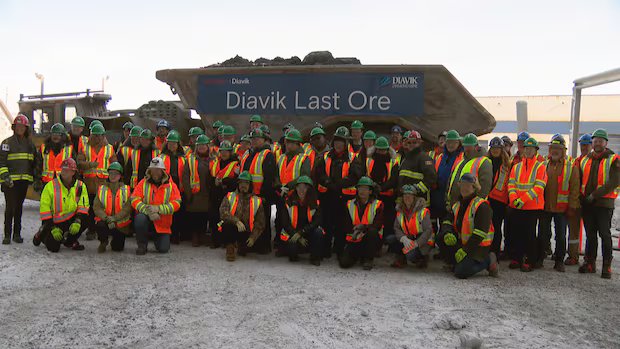

Listen to this article
Estimated 4 minutes
The audio version of this article is generated by AI-based technology. Mispronunciations can occur. We are working with our partners to continually review and improve the results.
A long-standing mine in the N.W.T. is shutting down its operations and turning a new page with a focus on remediation.
The Diavik diamond mine has been operating for decades, producing more than 150 million carats of diamonds, according to the mine’s owner Rio Tinto.
On Tuesday, it shut down for good.
Hundreds of people have worked at the mine. At its peak, Diavik had over 1,000 people working there. Not all of them are from the North, but at least some of those who’ve found their way to the territory say they want to stay.
That includes Sean Sinclair, originally from Ontario, who has been living in the territory for a little more than a decade.
Sinclair said he started working with Diavik back when he was still getting his master’s degree. He eventually landed a full-time gig and is now a closure manager at the mine.

But that’s not all. Sinclair also met his wife in Yellowknife, he said. And, as it turns out, she also works as Diavik.
“We both love Yellowknife a lot,” said Sinclair. “Certainly not planning to leave, but we’ll see what happens.”
Major projects the next opportunity
Other workers have similar feelings, including Mike Lowing, principal adviser for health, safety and environment.
Lowing said he’s been living in Yellowknife since 1974.
“Yellowknife’s a very interesting, dynamic place, I’ve spent most of my life here,” he said. “My family’s there, my friends are there. There’s a great future for Yellowknife despite the challenges of closing diamond mines.”

Lowing said Diavik’s closure will affect multiple communities across the territory. But despite not knowing exactly what he’ll be up to next, there are some possibilities.
Prime Minister Mark Carney announced a $35-billion investment plan for the North during a visit to Yellowknife earlier this month.
Part of his announcement confirmed federal backing for the Mackenzie Valley Highway project and the Taltson hydro expansion, on top of support for the Arctic economic and security corridor. Carney said work on the highway will begin as early as this summer.
Lowing said he’s game to work on that.
“A lot of these projects, much like Diavik, they turn to the North first for the workforce, so there’ll be a great opportunity,” he said. “I would jump at those.”
A golden comeback
Although this mine is closing, it doesn’t mean mining altogether should cease. That’s the verdict from Alex Clinton, a senior adviser at Diavik. He has also lived in Yellowknife for decades.
“What I ’m looking forward to is a lot more mining in the territories, the potential is massive,” he said.
Clinton said he wants to see a focus on gold in the territory’s mining future. Demand for the precious metal has been steadily climbing for years. And it seems there’s work underway to do that.
Yellowknife also has a long history of gold mining. The city’s first gold mine poured its first gold brick in 1938.
More recently, a new winter road around 20 kilometres east of Yellowknife will serve as a route to transport equipment from Highway 4 to Mon Mine as mining company Sixty North Gold prepares to reopen the mine this year after nearly 30 years of inactivity.
The gold mine, located about 45 kilometres north of Yellowknife, was in operation between 1991 and 1997, recovering around 15,000 ounces of gold at the time.
It closed after gold prices fell below $300 US per ounce. In early 2026, the price of gold broke previous records, surpassing $5,000 US an ounce.
“The market’s back in a big way,” said Clinton.
Clinton also said he wants to stay in the North. He says his kids were born in the N.W.T. and hopes there will be opportunities for them in the same industry he’s spent his life in.