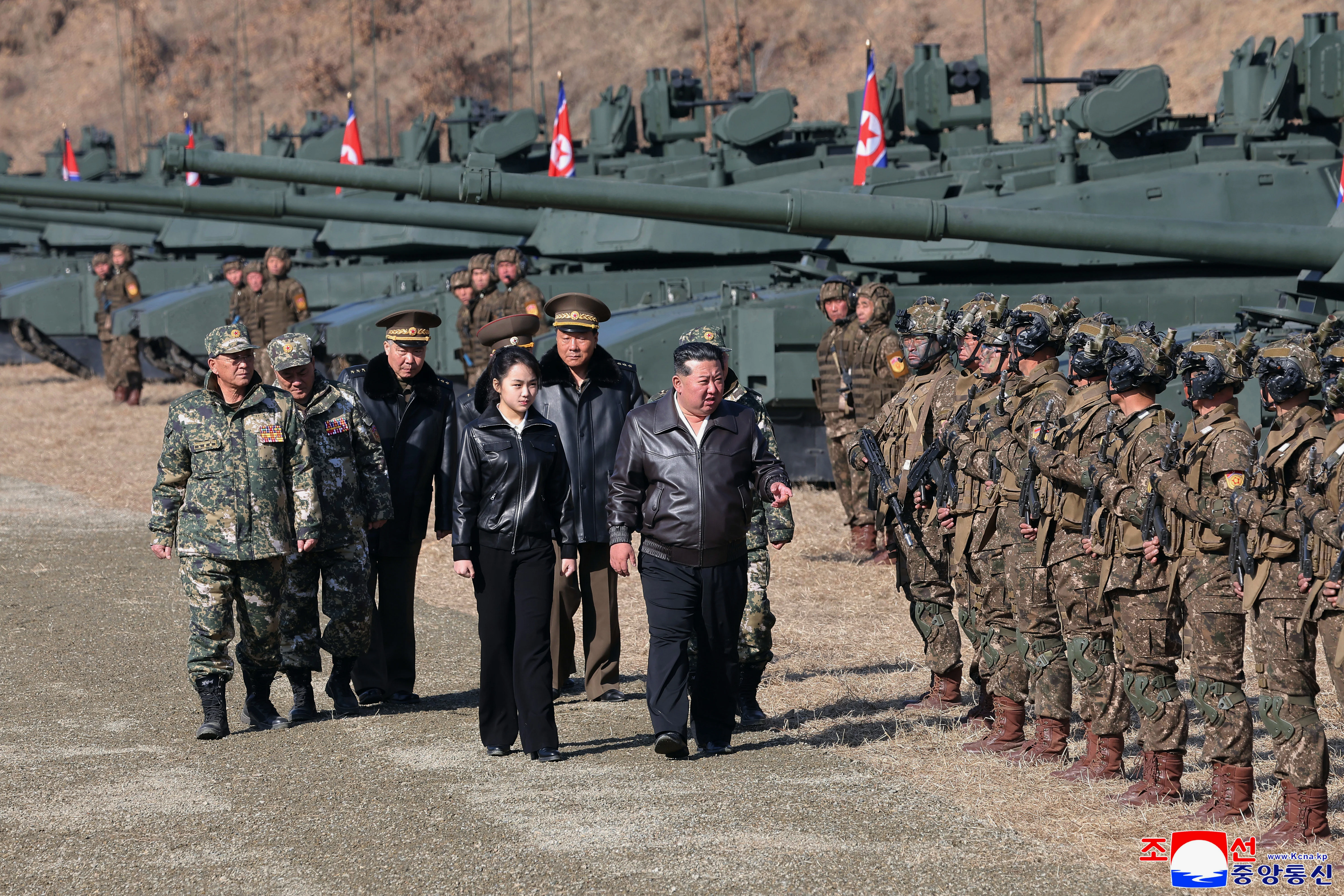
Defectors who have recently escaped the Democratic People’s Republic of Korea are saying the leader’s daughter, identified as Kim Ju‑Ae and believed to be about 13 years old, is being groomed as the next head of state. The Korean Central Intelligence Agency, cited by South Korean officials, described her as the most probable heir, a view that diverges from the traditionally male succession pattern that has defined the Kim dynasty.
The reports emerge from a context in which the regime has kept the family’s private life tightly sealed, offering scant public information beyond occasional state‑media photographs. Intelligence analysts note that the focus on Kim Ju‑Ae coincides with a period of heightened diplomatic activity, including recent talks on denuclearization and humanitarian aid, suggesting the leadership may be seeking a symbolic figure to project continuity and renewal.
South Korean intelligence spokesperson reiterated that the agency’s assessment is based on multiple sources, including satellite imagery of residences associated with the family and testimonies from high‑ranking defectors. No official statement has been issued by Pyongyang, but state media has subtly increased coverage of the leader’s family, hinting at an emerging narrative that could be leveraged domestically and abroad.
In-Depth Analysis & Key Details
The Kim dynasty has ruled North Korea since its founding in 1948, with power passing from Kim Il‑sung to his son Kim Jong Il, and then to Kim Jong Un in 2011. Historically, succession has favored adult male relatives, reinforcing a patriarchal image of strength. The potential elevation of a teenage daughter therefore represents an unprecedented break that could be used to craft a new legitimacy narrative rooted in dynastic continuity rather than military might.
Geopolitically, the prospect of a youthful female heir introduces uncertainty for regional actors. Allies and adversaries alike must reassess the stability of the regime’s command structure, especially as internal factions may vie for influence over a minor ruler. Economic sanctions and diplomatic isolation have pressured the regime to project a semblance of modernization, and a female successor could be framed as a progressive signal to the international community, even as the core political system remains unchanged.
Industry observers note that the North Korean leadership’s emphasis on lineage has implications for illicit finance networks and state‑run enterprises that rely on personal loyalty to the ruling family. A shift in the heir’s profile may prompt a recalibration of patronage channels, affecting everything from black‑market oil shipments to cyber‑theft operations that fund the regime’s activities.
"If a teenage girl ascends the throne, the entire architecture of North Korean power will have to accommodate a new generational narrative."
Why This Matters & What Lies Ahead
For ordinary citizens inside and outside the peninsula, the identification of a clear successor could either stabilize or destabilize the regime’s internal cohesion, influencing everything from food distribution policies to the intensity of border security. International markets monitor such signals closely, as shifts in leadership can affect the timing of missile tests, sanctions enforcement, and humanitarian aid flows.
Upcoming milestones include the likely appearance of Kim Ju‑Ae in state‑run media within the next year, a possible formal announcement at a Party congress, and intensified discussions in the United Nations Security Council regarding human‑rights reporting. South Korean lawmakers have signaled a review of intelligence‑sharing protocols, while U.S. policymakers are preparing briefing materials on how a youthful heir might impact future diplomatic overtures.
Source: Reported by NPR · Analyzed & Synthesized by DNB Newsroom