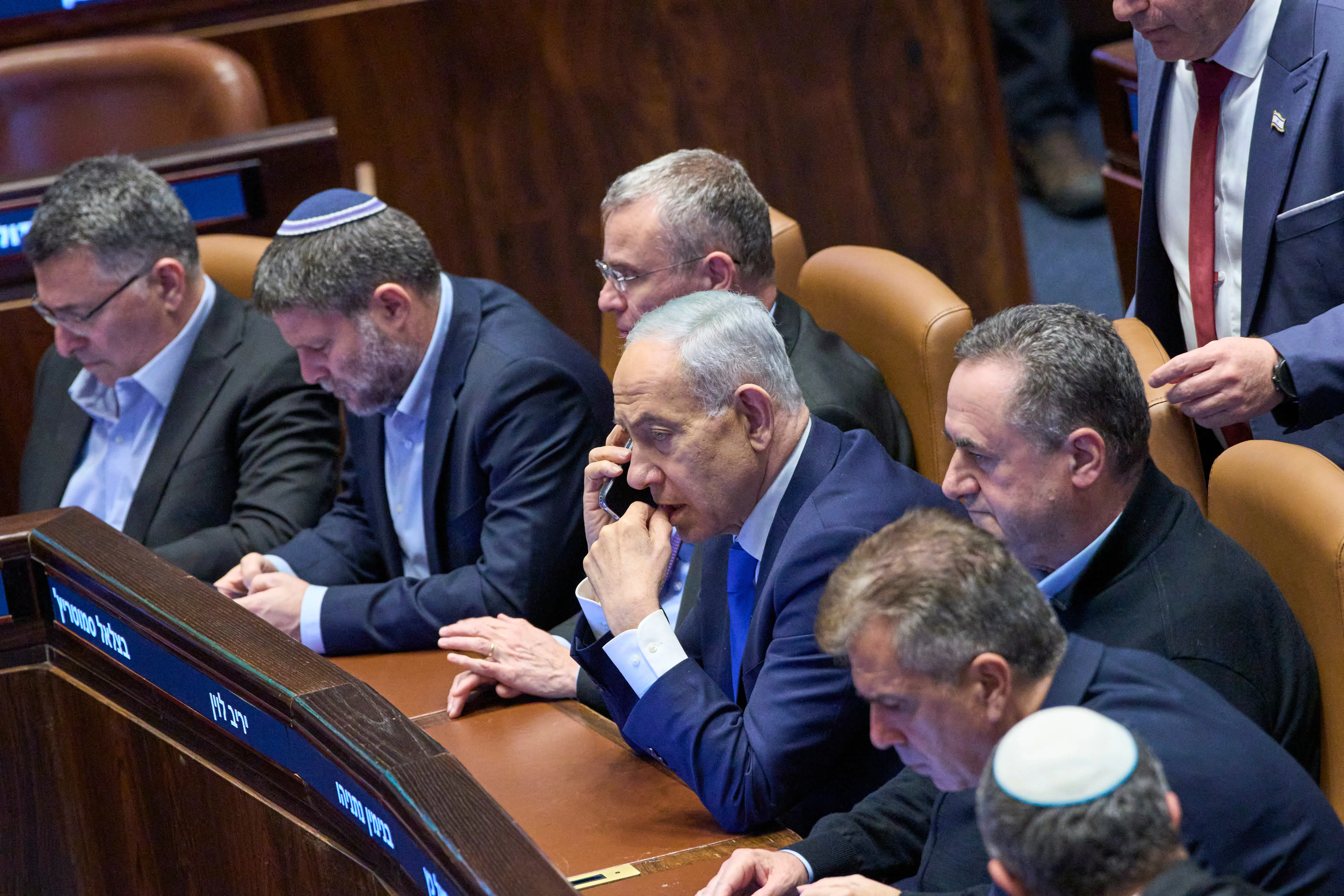
Prime Minister Benjamin Netanyahu met privately with former Israeli Defence Forces chief Yoav Eisenkot on Saturday, discussing the contours of a potential unity government that could reshape the nation’s political landscape. Both men, long‑standing fixtures in Israel’s security establishment, explored a framework in which Eisenkot would assume the premiership for an initial term before a pre‑agreed hand‑over to Netanyahu.
The dialogue took place in the Prime Minister’s office in Jerusalem, a setting that underscored the gravity of the negotiations as the country grapples with a fragmented parliament and looming national elections. Sources close to the talks said the two leaders exchanged views on key policy priorities, including security strategy, economic reform, and the contentious issue of judicial overhaul.
Netanyahu, speaking to the press after the meeting, emphasized his willingness to entertain a rotation arrangement, describing it as “a pragmatic step to ensure governance continuity and national security.” Eisenkot, while not delivering a formal statement, was reported to have signaled readiness to consider the role, contingent on clear parameters and broad coalition support. Opposition parties and civil‑society groups have already begun weighing the proposal’s implications.
In-Depth Analysis & Key Details
Israel’s political system has long been characterized by coalition governments, but the current stalemate is unprecedented in its depth, with no clear majority emerging from the latest election cycle. Historically, rotational premierships have been rare, most notably the 2020 arrangement between Netanyahu and Benny Gantz, which collapsed amid mutual distrust. The present overture to Eisenkot reflects a strategic pivot toward leveraging a figure with broad security credentials to bridge partisan chasms.
Regulatory and geopolitical forces also shape the calculus. International allies, particularly the United States, have expressed concern over Israel’s internal volatility, urging a stable governing coalition to maintain strategic continuity in the region. Domestically, the judiciary reform controversy has inflamed public protests, prompting legislators to seek a compromise that could defuse civil unrest while preserving core policy objectives.
Industry analysts observe that a unity government anchored by Eisenkot could recalibrate defense procurement cycles and influence foreign investment flows. The defense sector, a cornerstone of Israel’s export economy, may benefit from a leader perceived as a technocrat rather than a partisan figure, potentially smoothing procurement negotiations with both domestic firms and overseas partners.
"A unity pact that hands the first term to a former military chief could restore political equilibrium, but only if it transcends symbolic gestures and delivers concrete policy continuity."
Why This Matters & What Lies Ahead
For ordinary Israelis, the prospect of a stable government promises relief from months of protest, economic uncertainty, and the looming threat of security escalations. A clear leadership hierarchy could also restore confidence in public institutions, encouraging consumer spending and stabilizing the shekel amid volatile market conditions.
Legislators and watchdog groups will be watching upcoming Knesset sessions closely, where any formal agreement must be codified. Key dates include the deadline for coalition submissions before the next election cycle and a scheduled parliamentary hearing on judicial reforms, both of which could be directly impacted by the terms of a rotation deal. International observers will also monitor how the arrangement influences Israel’s diplomatic engagements, especially with the United Nations and neighboring states.
Source: Reported by NPR · Analyzed & Synthesized by DNB Newsroom