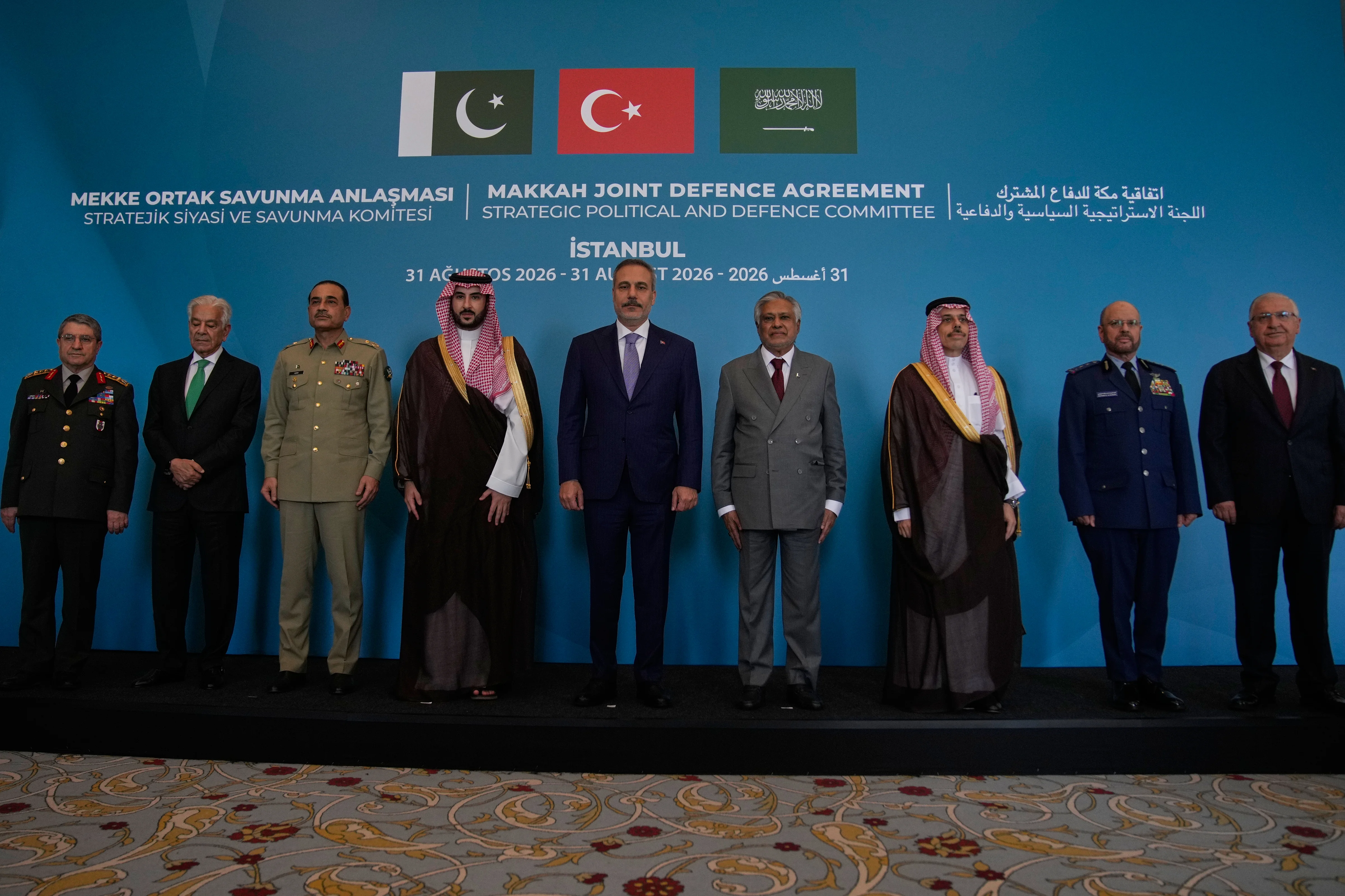
On Sunday, the Pakistan Army issued a formal statement confirming that a brigade‑size force will be sent to Saudi Arabia to augment the kingdom’s defensive capabilities against the ongoing Houthi offensive. The decision was framed as a reciprocal gesture for Saudi Arabia’s longstanding support of Pakistan’s strategic interests, including defense procurement and economic aid.
The Pakistani troops are slated to arrive at King Khalid International Airport in Riyadh and will be integrated with Saudi Arabian National Guard units tasked with protecting critical infrastructure along the Persian Gulf coastline and the Red Sea corridor. Logistics officials indicated that the deployment will include armored vehicles, engineering teams, and air‑defense assets to counter the missile and drone barrage that has plagued commercial shipping lanes.
In remarks delivered to national media, Pakistan’s Chief of Army Staff emphasized the “shared responsibility to safeguard regional stability” and pledged that the forces would operate under Saudi command while adhering to international law. Saudi defense minister Fahad Al‑Shammari thanked Islamabad for its swift response, noting that the reinforcement would bolster the kingdom’s ability to protect oil terminals and civilian ports from further Houthi strikes.
In-Depth Analysis & Key Details
The partnership traces its roots to a decades‑long defense pact forged during the Cold War, when both nations aligned against perceived Soviet expansion. Over the past decade, Saudi Arabia has become a primary purchaser of Pakistani military hardware, creating a reciprocal security dependency that now manifests in joint operational deployments.
Houthi attacks have escalated since late 2023, leveraging Iranian‑supplied ballistic missiles and unmanned aerial systems to target vessels transiting the Bab el‑Mandeb. The resulting disruptions have prompted insurance premiums to surge and have forced major carriers to reroute cargo, inflating global freight costs. Regulatory filings indicate that the United States and European Union are monitoring the situation closely, with potential sanctions on entities facilitating the arms flow to the Houthis.
Defense analysts observe that Pakistan’s involvement introduces a new variable into the Gulf’s security calculus. While the troops will enhance Saudi ground defenses, the move may also provoke Tehran to increase its support for the Houthis, potentially widening the conflict’s scope. Moreover, the deployment tests Pakistan’s logistical capacity to project force beyond its borders, a capability it has cultivated through peacekeeping missions but rarely exercised in a high‑intensity maritime context.
"Pakistan’s troop deployment signals a tangible shift from diplomatic solidarity to on‑the‑ground cooperation, a step that could recalibrate the balance of power across the Red Sea corridor."
Why This Matters & What Lies Ahead
For ordinary consumers, the heightened security presence aims to stabilize oil flow through the Strait of Hormuz and the Red Sea, helping to keep gasoline and jet‑fuel prices from spiking further. A stable shipping environment also protects the livelihoods of seafarers and the economies of port cities that depend on uninterrupted trade.
The coming weeks will see joint command structures formalized, with a scheduled bilateral security summit in Riyadh slated for early December. Observers will watch for any legislative authorizations required by Pakistan’s parliament to sustain the deployment, as well as potential UN Security Council debates on external troop involvement in the Gulf. These developments will shape not only regional defense postures but also the broader geopolitical narrative surrounding Iran’s influence in Yemen.
Source: Reported by NPR · Analyzed & Synthesized by DNB Newsroom