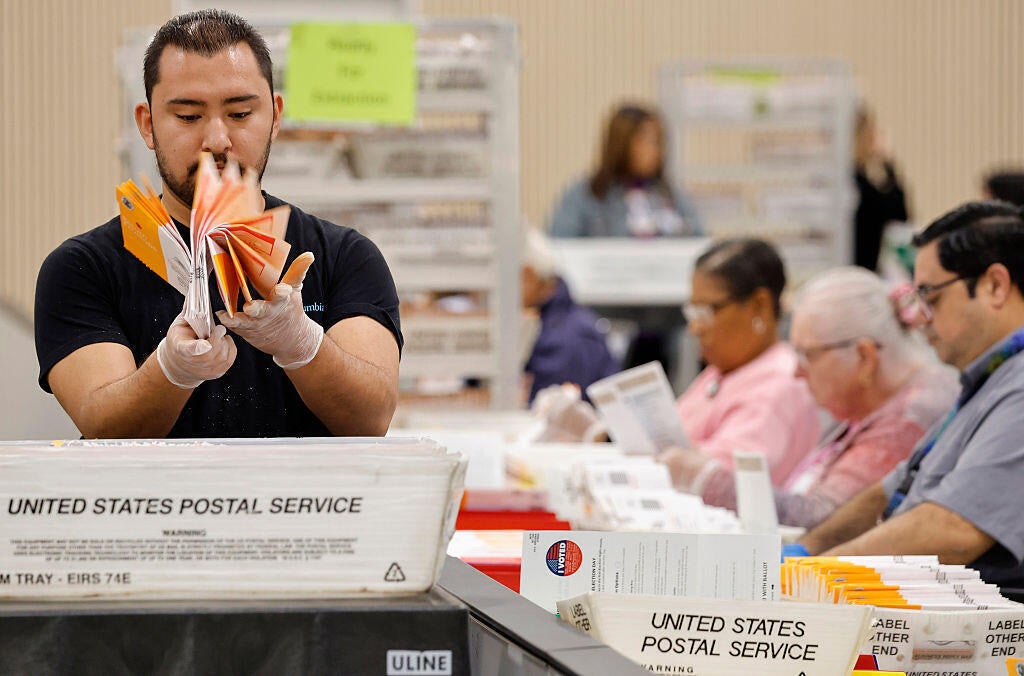
The Justice Department announced on Thursday that it will abandon the lawsuit it filed two years ago to stop California from counting an estimated 20,000 ballots it claimed were cast by non‑citizens. The case, originally brought by the civil‑rights division of the DOJ, sought a federal court order to require the state to set aside those votes pending a full investigation.
The motion to dismiss was filed in the U.S. District Court for the Northern District of California, where the original complaint had been lodged. By withdrawing, the federal government leaves the state’s existing election apparatus untouched as California moves toward final certification of the 2024 primary results, a process that must be completed by early December.
In a brief statement, Acting Assistant Attorney General for the Civil Rights Division, Vanita Gupta, said the department “recognizes the importance of state autonomy in administering elections and believes the matter is best resolved through existing state mechanisms.” California Secretary of State Shirley Weber responded that the state will continue to apply its rigorous verification protocols and urged the public to trust the integrity of the electoral process.
In-Depth Analysis & Key Details
The DOJ’s original suit emerged amid a wave of post‑2020 election litigation that targeted states with large immigrant populations, arguing that lax verification allowed non‑citizens to influence outcomes. Historically, California has employed a combination of voter registration databases, citizenship checks, and cross‑referencing with federal immigration records to flag ineligible votes, a system that has withstood multiple audits.
Critics of the lawsuit, including several voting‑rights groups, argued that the federal action threatened to politicize routine ballot‑validation work and could set a chilling precedent for future interventions. Proponents, largely from conservative think tanks, maintained that any breach of citizenship requirements undermines public confidence. The dismissal reflects a broader shift within the DOJ, which has faced internal debates over the balance between enforcing election law and respecting state jurisdiction.
Election law scholars note that the case highlights a technical tension: while the federal government can enforce the National Voter Registration Act, it lacks direct authority to dictate how states handle suspected non‑citizen ballots once they are cast. The withdrawal may therefore reinforce the principle that state election boards retain primary responsibility for eligibility determinations, unless clear statutory violations are demonstrated.
"The decision to drop the suit underscores a growing recognition that federal courts are ill‑suited to micromanage state ballot‑validation processes, leaving the battle over election integrity to state officials and the courts that oversee them."
Why This Matters & What Lies Ahead
For everyday voters, the DOJ’s retreat removes the specter of a protracted legal battle that could have delayed certification of election results, potentially eroding confidence in the democratic process. By allowing California’s existing safeguards to operate unimpeded, the move helps preserve the timely reporting of outcomes that businesses, markets, and civic institutions rely on during election cycles.
Looking ahead, the case will likely be referenced in upcoming congressional hearings on election security, where lawmakers are expected to debate whether new federal standards should be codified to address non‑citizen voting concerns. Additionally, the California Supreme Court is slated to hear a related appeal in early 2027 that could clarify the legal weight of citizenship verification in future elections, making the DOJ’s withdrawal a pivotal moment in the evolving landscape of U.S. election law.
Source: Reported by CBS News · Analyzed & Synthesized by DNB Newsroom