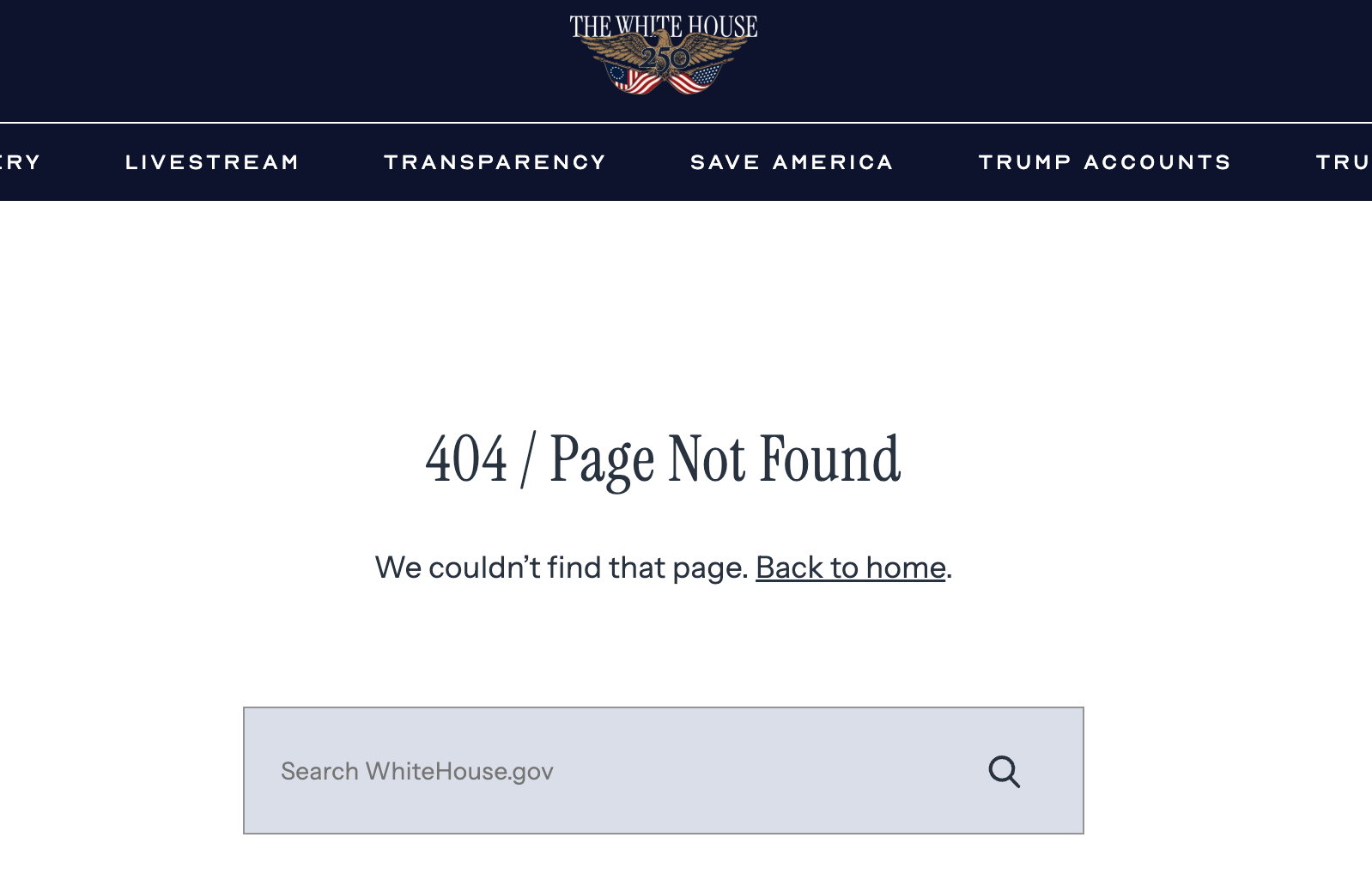
On Tuesday, the White House announced that the online portal displaying dozens of senior officials' financial disclosure forms had been restored after a brief, unexplained outage that raised concerns among transparency advocates. The disappearance of the site, which is intended to provide the public with insight into potential conflicts of interest, was first flagged by CBS News reporters who noted the page’s inaccessibility during routine monitoring.
The outage occurred late Monday evening, affecting the public’s ability to view disclosures for cabinet members, senior advisors, and agency heads across the federal government. The portal, hosted on whitehouse.gov, is a central hub for the Office of Government Ethics (OGE) filings that are required annually under the Ethics in Government Act. Its sudden removal prompted a flurry of inquiries from journalists, watchdog groups, and members of Congress who rely on the data for oversight.
In a brief statement, the White House’s Office of Management and Budget attributed the downtime to a “temporary technical issue” and confirmed that engineers had restored the page after confirming its integrity. The administration emphasized that no documents were altered or removed, and that the incident would be reviewed to safeguard continuous public access. Early reactions from ethics experts praised the rapid correction but urged the administration to adopt more robust redundancy measures.
In-Depth Analysis & Key Details
The episode revives a longstanding tension between the federal government’s transparency obligations and the operational fragility of its digital infrastructure. Since the Ethics in Government Act of 1978, officials have been mandated to file detailed financial statements, a process that has evolved from paper submissions to a centralized online database. Historically, lapses in access have sparked congressional hearings, most notably after the 2008 financial crisis when gaps in disclosure were linked to policy decisions.
Regulatory scrutiny intensifies as the Office of Government Ethics and the OMB grapple with modernizing legacy systems while meeting the public’s demand for real‑time data. Critics argue that the reliance on a single web portal creates a single point of failure, exposing the administration to both technical glitches and potential cyber‑attacks. Meanwhile, some policymakers contend that the incident illustrates the need for statutory reforms that require multiple, independently hosted mirrors of the disclosures to ensure continuity.
Industry analysts note that the rapid response, prompted by a media outlet’s probing, reflects an evolving dynamic where investigative journalism serves as a de‑facto audit mechanism. Experts from the Brookings Institution and the Center for Responsive Politics suggest that the incident could accelerate bipartisan efforts to codify stricter uptime guarantees and to fund upgrades to the OGE’s digital architecture, thereby reducing reliance on ad‑hoc fixes.
"When a single query from a newsroom can resurrect a cornerstone of governmental transparency, it underscores both the power of a free press and the fragility of our digital accountability tools."
Why This Matters & What Lies Ahead
For everyday citizens, uninterrupted access to financial disclosures is a vital safeguard against undue influence and corruption, enabling voters and advocacy groups to scrutinize the economic interests that may shape policy decisions. The brief blackout, however brief, erodes confidence in the mechanisms designed to keep public servants accountable, potentially diminishing trust in the broader democratic process.
Looking ahead, the incident arrives as Congress prepares to debate the Transparency and Accountability Act, a bill that would mandate redundant hosting of disclosure data and impose penalties for prolonged outages. Additionally, the Office of Government Ethics is slated to release a roadmap for modernizing its IT infrastructure later this year, a plan that will be closely watched by both legislators and watchdog organizations. The timing of these developments makes the restored portal a bellwether for how effectively the administration can balance technological resilience with its statutory transparency commitments.
Source: Reported by CBS News · Analyzed & Synthesized by DNB Newsroom