dailynewsnblog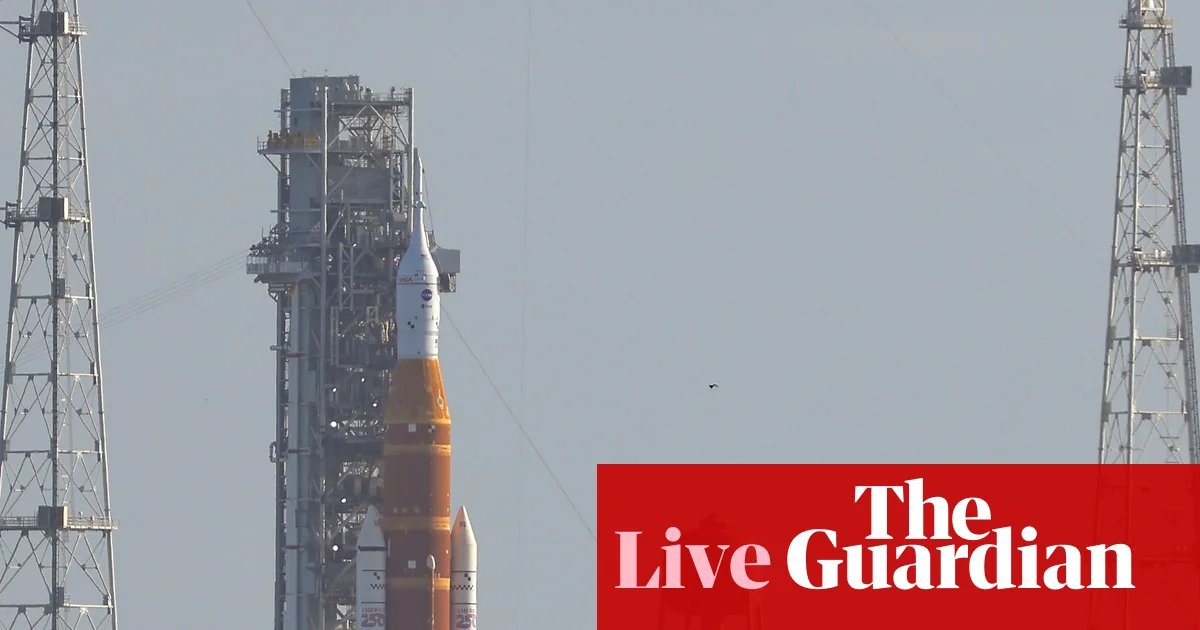
How to watch the Artemis II mission
Unlike the Apollo moon landings from 1969 to 1972, when millions of people had to gather around small TV sets to watch missions unfold in often grainy and ghosting black and white video, every moment of Artemis II will be a fully online, high-resolution multimedia experience.
The Guardian has a live feed at the top of this blog you can follow.
Nasa has countless webpages dedicated to every aspect of the flight from its homepage at nasa.gov, and the space agency has a significant presence on numerous social media platforms including X, YouTube, Instagram and Twitch.
Additionally, it runs a free, on-demand streaming channel, Nasa+, which will provide live coverage from before launch to after splashdown, including all press briefings. It also has a dedicated app for smart devices.
The Artemis II commander Reid Wiseman maintains a prominent social media presence, and has been posting prolifically ahead of the flight, although it remains to be seen how often he is able to update during the mission itself.
Also worth keeping an eye on is the X account of the new Nasa administrator Jared Isaacman.
Key events
How the launch is expected to unfold
A two-hour launch window for Artemis II opens at 6.24pm EST (11.24pm BST) after an almost four-hour fueling process. Nasa’s final weather briefing on Tuesday reported an 80% chance of favorable conditions for launch.
Mission managers will be watching closely data from launchpad 39B at the Kennedy Space Center, as well as real-time and forecast weather information. Any last-minute technical issue or weather violation can cause a scrubbed launch attempt, or a delay, right up to T-0 (the moment the countdown clock reaches zero).
After lift-off, the 322ft (98m) rocket will take about 6.5 seconds to clear its tower, and accelerate quickly to 17,500mph and an altitude of about 531,000ft. Once there, main engine cut-off and core stage separation take place a little more than eight minutes into flight.
The real journey to the moon begins on flight day two, after several revolutions in Earth’s orbit, with the so-called translunar injection burn, the final major engine firing of the mission.
Welcome to our launch blog for Wednesday’s scheduled launch of Artemis II, Nasa’s first crewed lunar rocket in more than half a century that is set to lift-off from Florida’s Kennedy Space Center at 6.24pm ET (11.24 BST).
I’m Richard Luscombe at the press site in Cape Canaveral with a close-up view of launchpad 39B, where the Space Launch System (SLS) rocket and Orion crew capsule will depart on their 10-day, 685,000-mile journey to the moon and back.
Hundreds of thousands of spectators will pack the beaches and causeways of Florida’s space coast to watch humans travel beyond lower Earth orbit for the first time since the final Apollo mission in December 1972.
Three Nasa astronauts, Americans Reid Wiseman, Victor Glover and Christina Koch, join Jeremy Hansen of the Canadian Space Agency on a mission that will slingshot around, but not land on the moon, before returning to a Pacific ocean splashdown.
Follow our coverage as we bring you the latest from the space center leading up to the opening of tonight’s two-hour launch window.
Read our preview of the mission here: