dailynewsnblog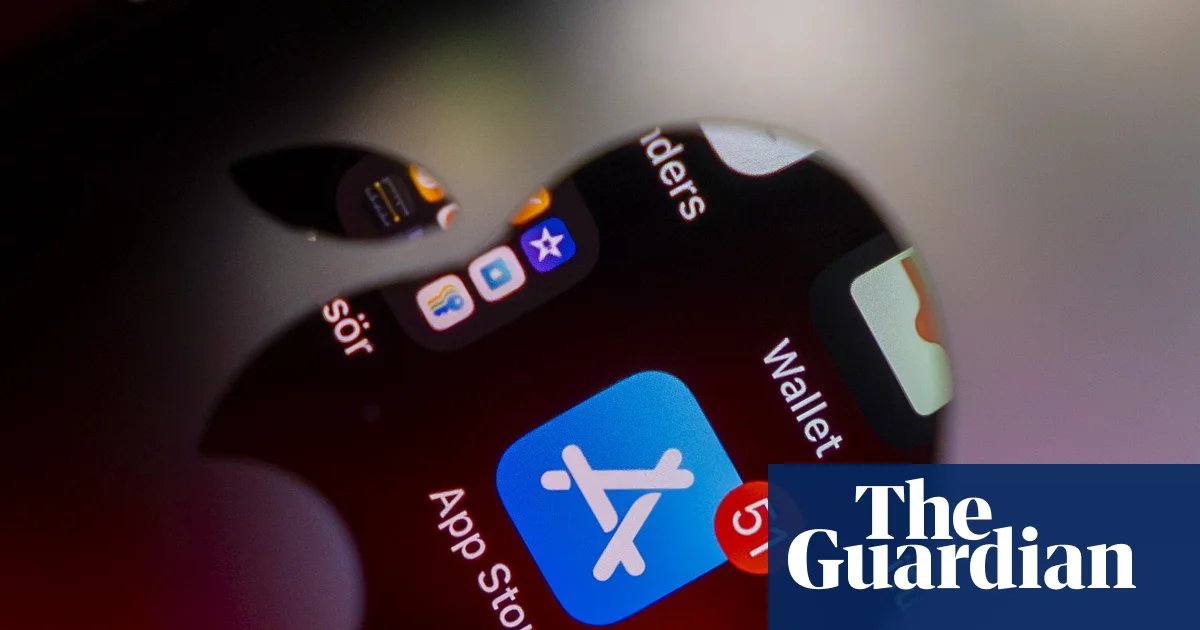
Apple announced late on Thursday it would lower the commission fees collected in its App Store in mainland China. The move follows pressure from regulators in the tech company’s second-largest market, as well as global scrutiny of its payment requirements.
Fees for in-app purchases and paid transactions will be lowered to 25% from 30% starting on Sunday, Apple said in a statement on its blog for developers.
“Apple is making changes to the App Store in China following discussions with the Chinese regulator,” the company’s announcement reads. “As of March 15, 2026, changes will be made to the commission rates that apply to the China mainland storefront of the App Store on iOS and iPadOS.”
The cut is estimated to save Chinese developers more than 6bn yuan ($873m) in operating costs annually, the Chinese state-owned Economic Daily said in a Thursday report that framed the measure as a win for Chinese digital consumers.
“This adjustment will … improve consumption choices and information transparency,” the Economic Daily said. “The premium for digital goods and services on the iOS side will be gradually eliminated, and the prices of membership subscriptions, game recharges, live broadcast tips, mini programs and other scenarios are expected to decrease, which is expected to save consumers up to nearly 1bn yuan per year.”
In-app purchase transactions for developers belonging to Apple’s small business and mini-apps partner programs will be cut to 12% from 15%. “Mini apps” refer to smaller applications that operate within a larger application such as Tencent’s WeChat. The move is a breakthrough for Chinese app developers and operators of “super apps”, including Tencent and TikTok owner ByteDance, whose platforms host many smaller apps created by third-party developers.
The 30% Apple tax remains a main target of antitrust scrutiny by regulators worldwide. The EU introduced new legislation in 2024 that forced Apple to lower commission fees to between 10% and 17% for developers. In the US, Apple allows users to pay in-app fees via alternative payment methods. App Store commissions were the subject of a big lawsuit between Apple and Fortnite maker Epic Games, which resulted in the tech company being forced to allow linking to alternative payment sites that allow developers to circumvent the Apple tax.
China’s antitrust watchdog had begun investigating the iPhone maker over its App Store prices last year but had not levied any formal charges, Bloomberg reported.
“In China’s case, Apple has been talking with the IT ministry and other departments, and have been requested or pressured to reduce their fees,” said Rich Bishop, founder of AppInChina, a firm that advises foreign software developers on making their apps available in China.
The move comes into effect on World Consumer Rights Day on Sunday, a time when Chinese state media usually highlights domestic and foreign companies accused of consumer rights violations. Apple was targeted by the campaign in 2013, when its after-sales service was criticized by state broadcaster CCTV, forcing the company to publicly apologize.
In the future, the Chinese government may request Apple to collect App Store revenues in China instead of overseas, and further tighten regulatory oversight for foreign apps published in China, Bishop said. Apple has previously taken down apps such as virtual private networks (VPNs) from its China App Store at the request of Chinese internet regulators.
All internet-connected devices carry an individual code which discloses their location, and VPNs allow users to hide their location by assigning their device a new code. Many Chinese users and foreign firms operating in China use them to bypass strict domestic internet censorship of foreign websites. China’s antitrust regulator was mulling an investigation into Apple’s policies and App Store fees, Bloomberg reported last year, while Chinese consumers filed an antitrust complaint over the firm’s app fee structure last October. Google cut Android developer fees worldwide last week.
Apple’s fee reduction also applies to international developers whose apps are available on the China App Store. Bishop added: “Duolingo, the top-grossing education app in China, makes about $50m a year from the Chinese market, and this will be saving them a decent amount of money.”