dailynewsnblog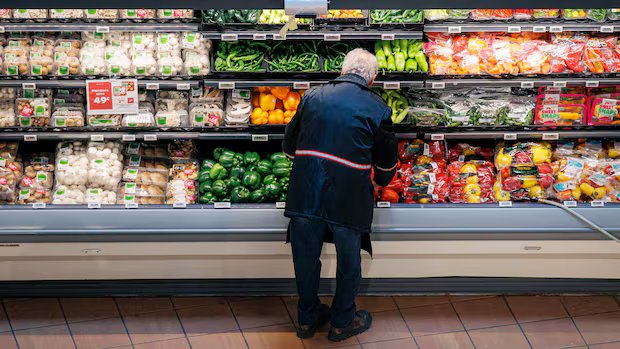
A year after the “Buy Canadian” movement started sweeping the country, the Canadian Food Inspection Agency (CFIA) is cracking down on grocery stores that promote imported food as Canadian.
So far this year, the federal food regulator has issued two fines to Loblaw-owned grocery stores for this type of violation. The CFIA is also investigating Canadian labelling and advertising practices at grocer Sobeys’ head office, CBC News has learned.
“Canadians have been clear that they want to support Canadian businesses and buy Canadian products,” said the agency in an email. “The CFIA will take the appropriate action to protect Canadians from misleading claims.”
Since the Buy Canadian movement ignited in February 2025 in response to U.S. President Donald Trump’s trade war, many grocers have taken full advantage by using patriotic symbols and signage to spotlight domestic products.

Back in September, CBC News reported that the CFIA had identified 27 violations in 2025 where grocers, mostly national chains, made erroneous country-of-origin claims. Even so, the agency hadn’t issued any fines — which didn’t sit well with shoppers.
But now, the CFIA’s approach to enforcement has changed.
The agency told CBC it has hit a Loblaw-owned Fortinos in Toronto with a $10,000 fine for misrepresenting a foreign-made food.
The CFIA says the Fortinos, located on Queens Plate Drive in Toronto, displayed Président-brand Rondelé specialty cheese spread with an 11-point maple leaf symbol on the shelf tag. However, the cheese is made in France.
“The product display created an impression that the product was made in Canada,” said the CFIA.
Federal regulations state that food labels and in-store signage must be accurate and not misleading.

Despite multiple customer complaints, none of the major grocery chains have been fined for promoting imported products as Canadian — a process that’s become known as maple washing.
Last month, CBC News reported that the CFIA also issued a $10,000 fine to Loblaw-owned Superstore in Toronto. It had displayed American-made President’s Choice broccoli slaw with “maple leaf advertising decals” and a “product of Canada” statement on an in-store shelf tag.
According to the CFIA, a food is a product of Canada if it was entirely or almost entirely created in the country.
Both incidents were discovered last October and the CFIA issued the penalties to the stores in January.
No more mercy
The CFIA said that, in total, between Nov. 1, 2024, and Feb. 25, 2026, it identified 78 violations related to country-of-origin claims on food labels or in advertisements at retail stores.
When asked about the sudden shift toward fines, the CFIA said the grace period is over.
“Grocery retailers have had sufficient time to ensure correct signage,” the agency stated. It’s now moving to “using appropriate enforcement actions where warranted.”
As such, there may be more fines to come. The CFIA told CBC News it couldn’t provide details about its probe into mislabelling at Sobeys, because the investigation is ongoing.
But CBC has learned that the probe is related to a case uncovered by the CFIA last year. It involved a Sobeys-owned Safeway just outside Edmonton, which advertised house-brand Compliments avocado oil with in-store signage that included a red maple leaf and the statement “made in Canada.” However, the small print on the bottle revealed the product was imported.
The “made in Canada” label is meant to signify that a product was manufactured or processed in Canada.

The CFIA probe into Sobeys also follows a CBC News investigation last year that uncovered more than a dozen “imported” Sobeys house-brand Compliments products, including ice cream cones, salad dressing, raw nuts and graham crackers, displayed with a red maple leaf symbol in a Toronto Sobeys store.
Some of the products, such as imported raw almonds, also included a “made in Canada” declaration.

Loblaw and Sobeys, Canada’s largest grocers, have each told CBC News that they strive for accurate country-of-origin signage, but noted the task is challenging when dealing with large inventory.
In response to the fines issued, Loblaw spokesperson Lina Maragha said in an email that the grocer continues to strengthen its labelling procedures. She also offered an apology for “any confusion.”
“If something doesn’t look right, we encourage customers to let us know so we can correct it as quickly as possible,” said Maragha.
Sobeys did not respond to questions about the CFIA investigation into its advertising practices.
Ex-CFIA inspector criticizes $10K fine
Former CFIA inspector Terri Lee says there’s no excuse for grocers making misleading claims about where products come from.
“They should be verifying that what they’re saying is true,” said Lee, who worked at the agency for 24 years before her retirement in 2021.
She also says that a $10,000 fine for a big company is far too low.
“That’s no kind of detriment for a large company like Loblaws,” she said. “It’d be like you and me speeding and we’re getting like a $10 [ticket].”

Lee said the fines should be tiered depending on the size of the grocer. She suggests large companies face penalties in the hundred-thousand dollar range.
However, current CFIA fines max out at $15,000. On its website, the agency classifies a $10,000 fine as a “very serious” violation.
The agency said fines are just one of the tools it uses to enforce the rules. Other measures include warnings, business licence suspension or cancellation, or referral for prosecution when warranted.
The CFIA also highlighted the 2025 federal budget’s plan to review government-issued penalties. According to the budget, the review seeks to ensure fines are steep enough so that “noncompliance is not just treated as the cost of doing business.”
The federal government plans to reveal the results of the review in its 2026 budget.