dailynewsnblog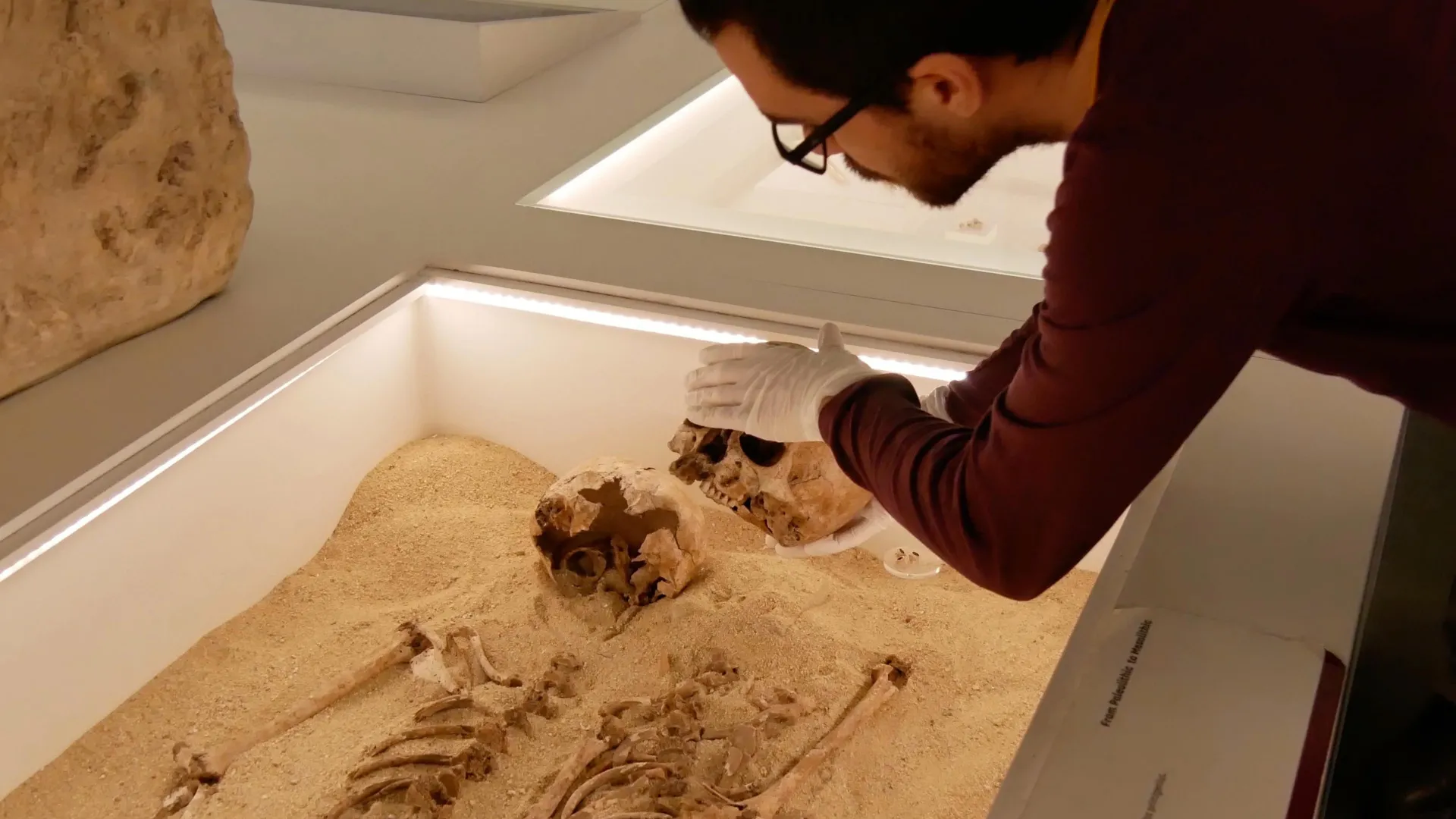
An international team led by the University of Vienna and Liège University Hospital Centre has uncovered genetic changes linked to a rare inherited growth disorder in two people who lived more than 12,000 years ago. By combining ancient DNA testing with modern clinical genetics, the researchers diagnosed the condition in two individuals buried together in southern Italy. Their findings, published in the New England Journal of Medicine, demonstrate that paleogenomics can now trace ancient population history and pinpoint rare genetic diseases in prehistoric humans.
The work builds on a fresh investigation of a famous Upper Paleolithic burial discovered in 1963 at Grotta del Romito in southern Italy. For decades, the site intrigued scientists because of unusual skeletal traits and the way the two individuals were laid to rest. Researchers long questioned how the pair were related and whether a medical condition explained their short stature.
Ice Age Double Burial Raises New Questions
The two individuals were buried in an embrace. “Romito 2,” a young person with notably shortened limbs who was once believed to be male, rested in the arms of “Romito 1,” thought to be an adult female. There were no signs of injury. Romito 2 stood about 110 cm (3’7″) tall, a height consistent with a rare skeletal disorder called acromesomelic dysplasia, although bones alone could not confirm that diagnosis. Romito 1 was also shorter than average for that time period at roughly 145 cm (4’9″). Over the years, experts debated their sex, their relationship, and whether the same condition might explain both of their statures.
To investigate further, scientists extracted ancient DNA from the petrous portion of the temporal bone in both skeletons, an area known for preserving genetic material. The results showed the two were first-degree relatives. The team then examined genes involved in bone growth and compared the detected variants with modern medical data. This collaborative effort brought together paleogenomics, clinical genetics, and physical anthropology, with researchers from the University of Vienna working alongside colleagues in Italy, Portugal, and Belgium.
Earliest Known Genetic Diagnosis in Humans
Genetic testing revealed that both individuals were female and closely related, most likely a mother and daughter. In Romito 2, researchers found a homozygous mutation in the NPR2 gene, which plays a key role in bone development. This provided clear evidence of acromesomelic dysplasia, Maroteaux type — a very rare inherited disorder characterized by severe short stature and significant shortening of the limbs.
Romito 1 carried a single altered copy of the same gene. That genetic pattern is associated with a milder form of short stature, explaining the difference in height between the two women.
Rare Genetic Diseases Deep in Human History
Ron Pinhasi, University of Vienna, who co-led the study says: “By applying ancient DNA analysis, we can now identify specific mutations in prehistoric individuals. This helps establish how far back rare genetic conditions existed and may also uncover previously unknown variants.”
Daniel Fernandes of the University of Coimbra, first author of the study, adds: “Identifying both individuals as female and closely related turns this burial into a familial genetic case. The older woman’s milder short stature likely reflects a heterozygous mutation, showing how the same gene affected members of a prehistoric family differently.”
The findings underscore that rare genetic diseases are not limited to modern populations. Adrian Daly of Liège University Hospital Centre, a co-leader of the study, notes: “Rare genetic diseases are not a modern phenomenon but have been present throughout human history. Understanding their history may help recognising such conditions today.”
Evidence of Social Care in the Ice Age
Despite serious physical challenges, Romito 2 lived into adolescence or adulthood. Her survival suggests she received consistent support from her community. Alfredo Coppa of Sapienza University of Rome, who also co-led the study, says: “We believe her survival would have required sustained support from her group, including help with food and mobility in a challenging environment.”
Key Findings
- Ancient DNA analysis revealed that two individuals buried together in southern Italy were closely related — most likely mother and daughter.
- In the younger individual, two altered copies of the NPR2 gene confirmed acromesomelic dysplasia (Maroteaux type), a condition marked by severe short stature and pronounced limb shortening; the older individual carried one altered copy linked to milder short stature.
- The findings show that rare genetic diseases were already present in prehistoric populations and can now be studied using paleogenomics.
- The younger individual’s survival despite severe physical limitations suggests sustained care and social support within her community.