dailynewsnblog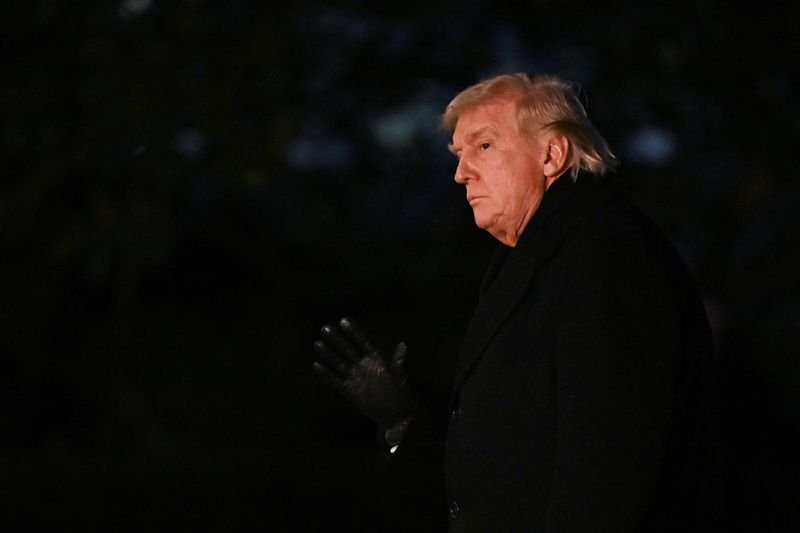
LONDON, Feb 12 (Reuters) – The global order once championed by Washington across economics, trade and security is being upended by U.S. President Donald Trump, galvanising allies to action. Financial markets are taking note.
For investors, signs of more pro-active policies and trade deals that extend beyond those made with the United States are an incentive to increase exposure to non-U.S. equity markets, energy stocks, and take a bullish view on the likes of the euro and Canadian dollar, they said.
Canadian Prime Minister Mark Carney struck a chord with his January Davos speech, noting how “middle powers” might act together to avoid being victimised by American hegemony, while a European Central Bank plan to bolster the euro’s international role is anticipated at this week’s Munich Security Conference.
“Trump has separated the U.S. from the rest of the world, but in doing so he has encouraged a strengthening of the rest of the global macro picture and investors are responding to that,” said Seema Shah, chief global strategist at Principal Global Investors, which manages roughly $594 billion of assets.
“This is not about sell the U.S., but about remembering that there are other opportunities outside the U.S..”
Principal Global Investors’ focus on international equities had become more concentrated, she said, adding that earnings momentum in Europe and Asia is good.
Major equity markets and emerging markets are set for double-digit earnings growth in 2026 as a shift away from U.S. exceptionalism takes hold, said Madison Faller, global investment strategist at JPMorgan Private Bank.
Of the 52 companies in Europe’s STOXX 600 index that have so far reported fourth-quarter earnings, over 73% have beaten expectations, according to LSEG I/B/E/S, compared with 54% in a typical quarter.
London’s internationally-focused FTSE 100 stock index has crossed the 10,000 milestone for the first time and is up 5% this year, easily outperforming a 1.4% rise in the S&P 500.
BNP Paribas said its European Strategic Autonomy fund launched last May and worth 600 million euros ($713.3 million) invests in themes that include defence, industrial resilience, resource independence and technology, fuelled by Europe’s massive investment plans.
Still, U.S. trade will be hard to replace, and beyond the meaningful signalling effect, non-U.S. trade agreements, such as the EU’s with India and the Mercosur bloc, and Canada and China’s initial deal, will need time to have an impact.
COME TOGETHER, RIGHT NOW