dailynewsnblog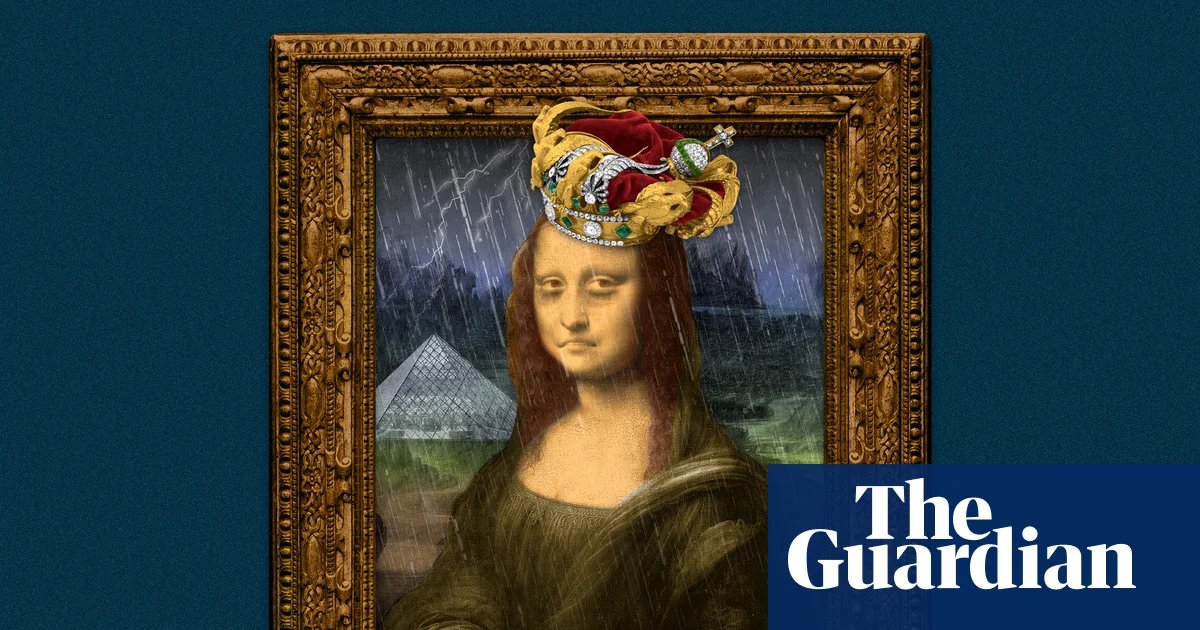
Just over a year ago, Laurence des Cars, the intellectually brilliant (if famously prickly) former head of the largest and most-visited museum in the world, wrote a somewhat alarming note to her boss, France’s culture minister.
Des Cars, who on Tuesday resigned as president of the Louvre, lamented the advanced state of disrepair of the iconic museum’s buildings and galleries.
The Louvre was overcrowded, she said. Facilities were substandard, technologies hopelessly outdated. Water was coming through the ceilings. Violent temperature swings were damaging artworks. The museum had reached a “worrying level of obsolescence”.
But she had the answer. Barely a week later, the first woman to run France’s most prized cultural institution stood beside Emmanuel Macron in front of its biggest draw, the Mona Lisa, as the French president proudly unveiled Louvre: New Renaissance, their radical, ambitious, €1bn plan for the museum’s renovation.
Des Cars’ immediate future, and that of the Louvre, looked assured. Alas, the year ahead had other plans. Rolling staff strikes, a decade-long ticket scam, an avalanche of ageing infrastructure issues and – most glaringly – a daring daylight heist of €88m (£77m) of crown jewels intervened.
No one doubts that the Louvre needs work. Spread across a sprawling 360,000 sq metre site, it is a city within a city. Originally a solid 12th-century fortress, it expanded into a gilded royal palace in the 16th century and, come the French Revolution, became a museum in 1793.
Its multilayered architectural fabric contains more than 400 rooms and about 9 miles of corridors. It has 600,000-plus items in its collection, about 35,000 of which are on permanent display. It is the world’s largest museum. It was not designed for that purpose.
In its current iteration, the Louvre is intended to handle about 4 million visitors annually. Last year, helped by star attractions including the Mona Lisa, the Venus de Milo and the Winged Victory of Samothrace, it drew 9 million.
Something, undeniably, had to be done. The question is what. And how far it should be dictated by the projection of state cultural power (and French presidential ego-polishing).
Besides the necessary repairs and visitor improvements, des Cars’ project, enthusiastically backed by Macron, includes giving Leonardo da Vinci’s celebrated portrait a room of its own, with independent access.
That will entail excavating cavernous new exhibition spaces beneath the Cour Carrée, the museum’s eastern courtyard. The Louvre will also be graced with a “new grand entrance” at the Colonnade de Perrault, also on the museum’s eastern side.
The project’s critics, who are many, call it pharaonic. The cost, estimated at more than €1.1bn, has drawn heavy criticism, from the state auditor and Louvre staff who feel the money could be far better spent. Experts question the true point.
“It’s unnecessary, and it’s harmful,” said Didier Rykner, the editorial director of La Tribune de l’Art, an art news website. “But des Cars convinced Macron. He sees it as the kind of grand legacy project that French presidents love to leave behind them.”
The Louvre’s last major refurb, in the 1980s, was commissioned by the late president François Mitterrand and included the striking glass pyramid, designed by the Chinese-American I M Pei, that serves as the museum’s current entrance.
Previous leaders have given France such museum-monuments as the Pompidou Centre (Georges Pompidou), a new national library and an opera house (Mitterrand), and the Indigenous arts museum on the Quai Branly (Jacques Chirac).
Macron has an affinity with the Louvre. He chose it as the backdrop for his presidential victory speech in 2017. But the fate of what the current president has come to see as his signature cultural legacy is starting to look a little less certain.
Many in the French arts world openly believe that is why des Cars survived as long as she did: Macron, who leaves office next spring, did not fancy risking his flagship legacy project, despite the many and varied misfortunes that piled up.
The museum’s decaying infrastructure saw two water pipes burst this month alone, including in the Denon wing, home to the Mona Lisa. In November, more than 300 documents in the Library of Egyptian Antiquities were soaked by another flood.
The Campana gallery, famed for its Greek ceramics, closed late last year due to “structural weaknesses” in the beams supporting the floor above. Offices in another part of the Sully wing have been moved due to the risk of floor collapse.
But since des Cars penned her resignation to the culture minister, Rachida Dati (who also left office this week to launch her attempt to be mayor of Paris), repair and maintenance issues have been the least of the museum’s worries.
Morale is at an all-time low, with the Louvre’s 2,300 employees complaining of “untenable” conditions, severe understaffing and poor pay. Strikes have forced the museum to close, wholly or partially, more than a dozen times since last summer.
“Staff feel like they are the last bastion before collapse,” employee unions said in a recent joint statement. Union spokespeople talk of a “catastrophic” situation, unbearable tensions and “absurd and irresponsible” management decisions.
This month, police arrested nine people, including two museum employees and two guides, over a suspected ticket fraud scheme targeting Chinese tour groups that may, over the course of a decade, have cost the museum more than €10m (£8.7m).
And most spectacularly of all, one Sunday in October, a gang of four broke into the museum’s Apollo gallery and made off with €88m (£77m) of diamond-studded Napoleonic jewellery in France’s most dramatic heist in decades.
The gang used a stolen truck with an extendable ladder to reach the gallery’s entirely unsecured first-floor window, smashed display cases, grabbed the jewels, and fled on motorbikes in a seven-minute raid that made headlines around the world.
Four men have been arrested and are under investigation, but investigators are no closer to recovering the jewels. Even with Macron’s support, it was inevitable that des Cars would eventually succumb to the cascade of reputational blows.
“Quite clearly, here is a list of failings that, in many countries and many institutions, would have already led to her departure a long time ago,” said Alexandre Portier, the conservative chair of a parliamentary inquiry on museum security.
After she resigned, des Cars said that while she accepted at least part of the blame for the obvious security failings that led to the heist, she felt she “may be paying the price today” for her “clear-sighted” earlier warnings and her proposed solution.
She was proud of her work at the museum since 2021, she told Le Figaro, but had endured “an unprecedented media and political storm” and “staying the course is not enough. You need to move forward. And conditions for that are no longer in place.”
After two years at Versailles, her successor, Christophe Leribault, now has one hell of a job. Leribault, 62, who previously ran the Musée d’Orsay, is admired for turning around the Petit Palais in Paris with innovative exhibitions that boosted visitor numbers.
His task at the Louvre will be of a different – and politically loaded – order. The culture ministry says the priorities are to “strengthen the safety and security of the building, its collections and people”, restore trust and carry forward “necessary transformations”.
Rykner is more specific. “He needs to get essential repairs done,” he said. “Calm down the staff unions, hire more people. That’s not easy. He needs some new heads of department. And he has to develop a coherent acquisitions policy. It’s a huge job.”
Where “New Renaissance” fits into all that is unclear. The Louvre’s staff unions continue to denounce a “phantasmagorical” project they describe as “out of touch”, “incomprehensible” and “far removed from the reality and needs of the Louvre”.
The Cour des Comptes, France’s state auditor, which has said security and repairs are “indispensable”, is equally scathing, describing the project as “a significant financial risk” and arguing the money should be spent on urgent repairs and upgrades.
More tangibly, financing is not secure: the Louvre has said €200m to €300m will come from licensing fees from the museum’s Abu Dhabi franchise, with the remainder mainly from international donors – who, particularly in the US, appear highly reluctant.
The timetable is strained. A shortlist of architects was meant to have been selected by April this year and the project launched by early 2027, before the presidential ballot at which Macron will step down. But that process was suspended in February.
Between its Abu Dhabi funds, cash reserves, ticket revenues and state subsidies, according to Rykner, the Louvre has the money to carry out essential repairs, maintenance and a more modest modernisation. The rest risks despoiling France’s heritage.
It was also, he said, unnecessary. “For sure, pressure on the Pyramid and the Denon wing has to be alleviated. The Mona Lisa has to move,” he said. “But three smaller additional entrances would be perfectly feasible – and there are other options for displaying the Mona Lisa.”
The Louvre could also use the Grand Palais, renovated for the Olympics at a cost of more than €500m, for exhibition space, Rykner said. “New Renaissance is a pure vanity project,” he said. “Leribault should resist it until the president has gone.”