dailynewsnblog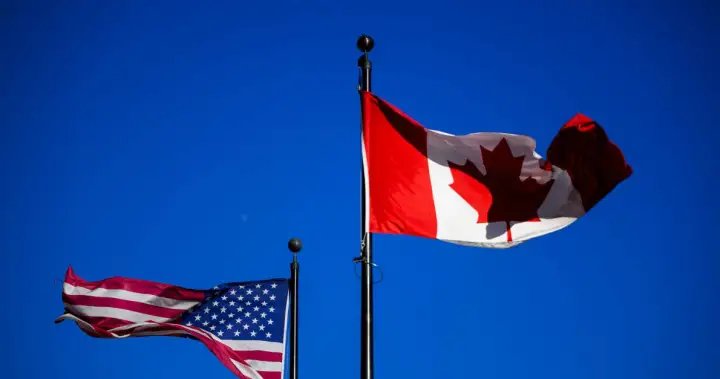
A small majority of Americans view their fellow citizens as morally bad, a new survey suggests, while the vast majority of Canadians have the exact opposite view.

The two countries are at the polar opposite ends of a 25-nation survey on morality conducted by the Pew Research Center and released Thursday, which asked people around the world to rate the morals and ethics of others in their country.
While just 47 per cent of American adults surveyed said Americans overall are morally good — the lowest score of any country — 92 per cent of Canadians had a positive moral view of other Canadians, tying with Indonesia at the top of the list.
Only seven per cent of Canadians said their fellow citizens were morally bad, compared to 53 per cent of Americans.
The report’s authors note that Pew has never asked this question before, so it could not say if Americans’ negative view of their fellow citizens’ morality is new or what’s driving it, but suggested political partisanship may be a factor.
“In the United States, Democrats are more likely to rate their fellow Americans as morally and ethically bad than are Republicans” by a margin of 60 per cent versus 46 per cent, lead author Jonathan Evans told Global News.
However, he noted the pattern of “people that are not supportive of the governing party being more likely to view fellow citizens as immoral, that’s something we saw in quite a few countries around the world.”
He did not say if Canada was among them, and the Pew study did not break down the political leanings of respondents in all countries.

Get breaking National news
For news impacting Canada and around the world, sign up for breaking news alerts delivered directly to you when they happen.
An Ipsos poll conducted for NPR in January found that, while 61 per cent of Americans felt the U.S. should be a moral leader on the world stage, only 39 per cent felt the country was living up to that position — down from 60 per cent in 2017.

Divide over morality of social issues
The Pew survey also asked whether respondents viewed specific issues like extramarital affairs, divorce, abortion, homosexuality and gambling as moral or immoral.
Across every question, Canadians were less likely than Americans to view each issue as morally unacceptable, though Evans noted the difference for some issues were within the margin of error of 3.6 per cent for Canada and 1.9 per cent for the U.S.


For example, just eight per cent of Americans said using contraceptives was immoral, versus six per cent of Canadians. Similar numbers also frowned upon gambling (29 per cent in the U.S., compared to 27 per cent in Canada) and viewing pornography (52 per cent versus 48 per cent).
However, Americans outpaced Canadians far more in viewing homosexuality (39 per cent versus 15 per cent), having an abortion (47 per cent versus 19 per cent), having an extramarital affair (90 per cent versus 76 per cent) and getting a divorce (23 per cent versus 11 per cent) as immoral.
“I think in some ways there is a difference between Canada and the U.S., and in some things there’s a fair bit of similarity across these questions,” Evans said.
Ipsos polling has shown a similar divide between Canadians and Americans on certain social issues, particularly LGBTQ2+ rights.
Last year’s Ipsos Pride Survey of 26 countries found 68 per cent of Canadians believe same-sex couples should be allowed to marry, compared to 53 per cent of Americans.
A 2023 global survey on abortion by Ipsos, meanwhile, found 69 per cent of Canadians believe abortion should be legal, versus 55 per cent in the U.S.
Evans noted most of the 25 countries surveyed have seen their views on many of these issues become more moderate since the last time Pew asked these questions in 2013.
An exception was India’s views on divorce, where 65 per cent now say it’s wrong compared to 53 per cent over a decade ago.
“Now that another decade has passed, we wanted to just better understand the lay of the land, if there are differences regionally or whatnot, because this is a topic that gets discussed a lot in various spaces in the U.S. and in other countries around the world about what should and should not be acceptable in society,” he said.
© 2026 Global News, a division of Corus Entertainment Inc.