dailynewsnblog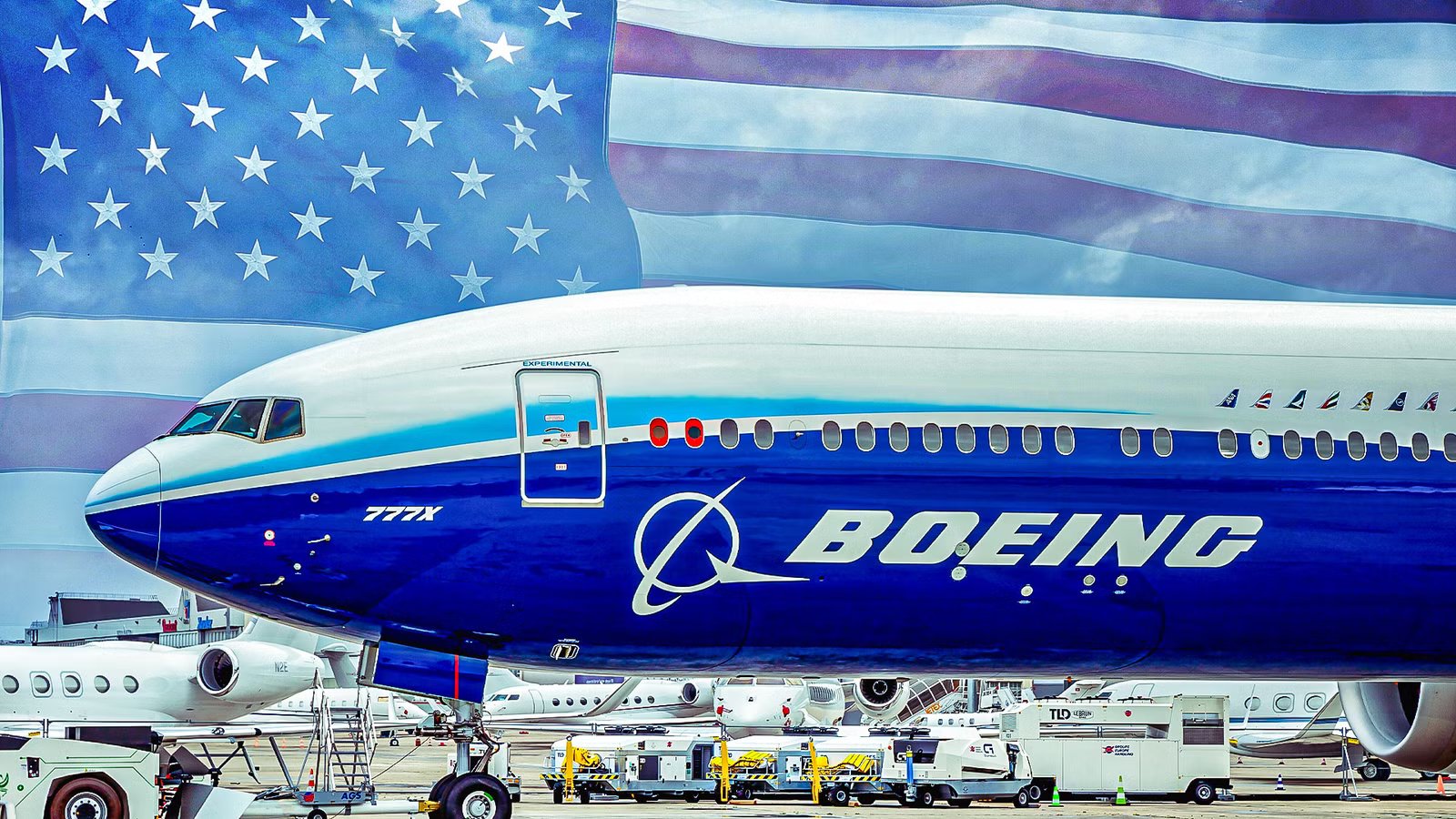
How was  Boeing formed, and how did a single experimental seaplane mark the start of one of the most powerful aerospace manufacturers in history? The question matters because Boeing has shaped nearly every dimension of modern aviation, from commercial air travel and military aviation to space exploration and national defense. Understanding Boeing’s origins helps explain not just the company’s success, but also how aviation itself became industrialized in the United States.
This article explores Boeing’s earliest history, beginning with William Boeing’s first encounter with flight and his partnership with naval engineer George Conrad Westervelt. It follows Boeing through its 1920s consolidation, the 1934 antitrust breakup, World War II dominance, and its defining leap into the jet age with the Boeing 707, before examining the challenges and transformations that shaped the modern company.
How Did Boeing First Get Started?

Boeing was formed when William E. Boeing, already the successful president of Greenwood Timber Company, entered aviation with a manufacturing-first mindset rather than a purely experimental one. He was less interested in chasing records than in building airplanes that could be produced reliably, maintained easily, and sold to institutional customers.
Unlike many early aviation pioneers who focused on flight as an art or sport, Boeing approached aircraft the way he approached timber mills and shipyards: in his vision, airplanes had to be durable industrial products that could be standardized, produced at scale, and supported by long-term infrastructure. This mindset distinguished Boeing from most early aviation pioneers, who were focused on flight itself rather than its industrialization.
From the beginning, Boeing emphasized conservative engineering, strong structures, institutional customers, and production discipline. This focus aligned naturally with emerging government demand during World War I and later with federally supported airmail routes. By the late 1920s, Boeing had transformed from a small aircraft builder into the center of a vertically integrated aviation network that included manufacturing, airlines, engines, and maintenance.
The empire was dismantled by antitrust action in 1934 with the Air Mail Act. Despite that, Boeing evolved into something new: a pure aircraft manufacturer whose survival depended entirely on engineering excellence and strategic risk-taking. That shift marked the end of William Boeing’s direct involvement with the company, but laid the groundwork for its dominance in World War II production and its pioneering role in the commercial jet age.
How Did Boeing Grow From A Seaplane To A Major Manufacturer?

William Boeing’s interest in aviation ignited in 1909 at the Alaska-Yukon-Pacific Exposition in Seattle, where he witnessed a manned flight for the first time.
Boeing learned to fly at the Glenn L. Martin School in 1915, and with the help of US Navy Lieutenant Conrad Westervelt, who brought technical expertise that Boeing himself lacked, designed the first Boeing seaplane, the B&W or Boeing Model 1A, a twin-float aircraft that proved more reliable than many contemporaries, which successfully flew on June 15, 1916, marking the inception of a major aerospace enterprise. Although the US Navy declined to purchase it, the design demonstrated that Boeing could produce functional aircraft.
In July 1916, Boeing and Westervelt founded Pacific Aero Products, and in May 1917, amid impending US involvement in World War I, the company was renamed Boeing Airplane Company. Boeing’s Model C trainer became the company’s first commercial success, earning a US Navy order for 50 units, a US Army order for two units of the EA, the side-by-side landplane variant.
When military contracts collapsed after 1918, and surplus aircraft flooded the market, Boeing briefly diversified into furniture and boats to survive. Boeing aircraft became closely tied to airmail routes during the 1920s, culminating in the Boeing Model 40, a rugged biplane designed specifically for mail delivery.
The improved Model 40A added passenger seating, helping to blur the line between mail carriers and airlines. This evolution directly led to the creation of Boeing Air Transport, one of the predecessors of United Airlines, but soon pivoted to airmail, launching an international route between Seattle and British Columbia in 1919.
By 1921, Boeing profited from repairing and building new aircraft, becoming a top fighter plane manufacturer. In 1927, it won an airmail contract from San Francisco to Chicago using innovative air-cooled engines in Model 40A planes, which also carried passengers, spawning Boeing Air Transport.
In 1928, Boeing started an aggressive expansion of his aviation empire through strategic acquisitions, to create a vertically integrated powerhouse: Boeing acquired Pacific Air Transport, a key airmail and passenger carrier, and merged it with Boeing Airplane Company and Boeing Air Transport. The pivotal move came on February 1, 1929, when Boeing partnered with engine maker Pratt & Whitney‘s Frederick Rentschler to form United Aircraft and Transport Corporation (UATC), capitalized at $146 million, combining aircraft manufacturing, engines, and airline operations.
The dominion lasted until 1934, when the Air Mail Act forced its breakup into United Aircraft Corporation, Boeing Airplane Company, and United Airlines to curb monopoly. William Boeing resigned and sold his stock, but he held an advisory role in the company during World War II and attended the 1954 rollout of the Dash-80, precursor to the groundbreaking Boeing 707 jet airliner. William E. Boeing’s quote is inscribed on his memorial at the Boeing Developmental Center, Tukwila, WA:
Our job is to keep everlastingly at research and experiment, to adapt our laboratories to production as soon as practicable, to let no new improvement in flying and flying equipment pass us by.

Why In The World Was Boeing’s 1st Commercial Jet Aircraft A Narrowbody Quadjet?
The Boeing 707 is considered to be the first narrowbody jetliner developed by Boeing.
What Happened To Boeing After William Boeing Stepped Away?

The Boeing Airplane Company refocused exclusively on aircraft design. As World War II approached, Boeing ramped up as a major defense contractor, becoming a production powerhouse. The company mass-produced the iconic B-17 Flying Fortress bomber, which played a critical role in Allied bombing campaigns over Europe, with over 12,700 units built.
Boeing also led the development of the Boeing B-29 Superfortress , the advanced long-range bomber used in the Pacific theater, including the atomic bomb missions, producing around 3,970 of them. Wartime efforts expanded Boeing’s workforce to over 50,000 and solidified its reputation for large-scale manufacturing.
Undeterred by the massive post-war layoffs, which by 1946 cut the employees from 50,000 to under 9,000, the company invested $15 million of its own funds into the Boeing 367-80 (Dash-80) prototype, which first flew in 1954. This demonstrator paved the way for the Boeing 707, introduced in 1958, which revolutionized air travel by ushering in the jet age for commercial passengers and dominating transatlantic routes.
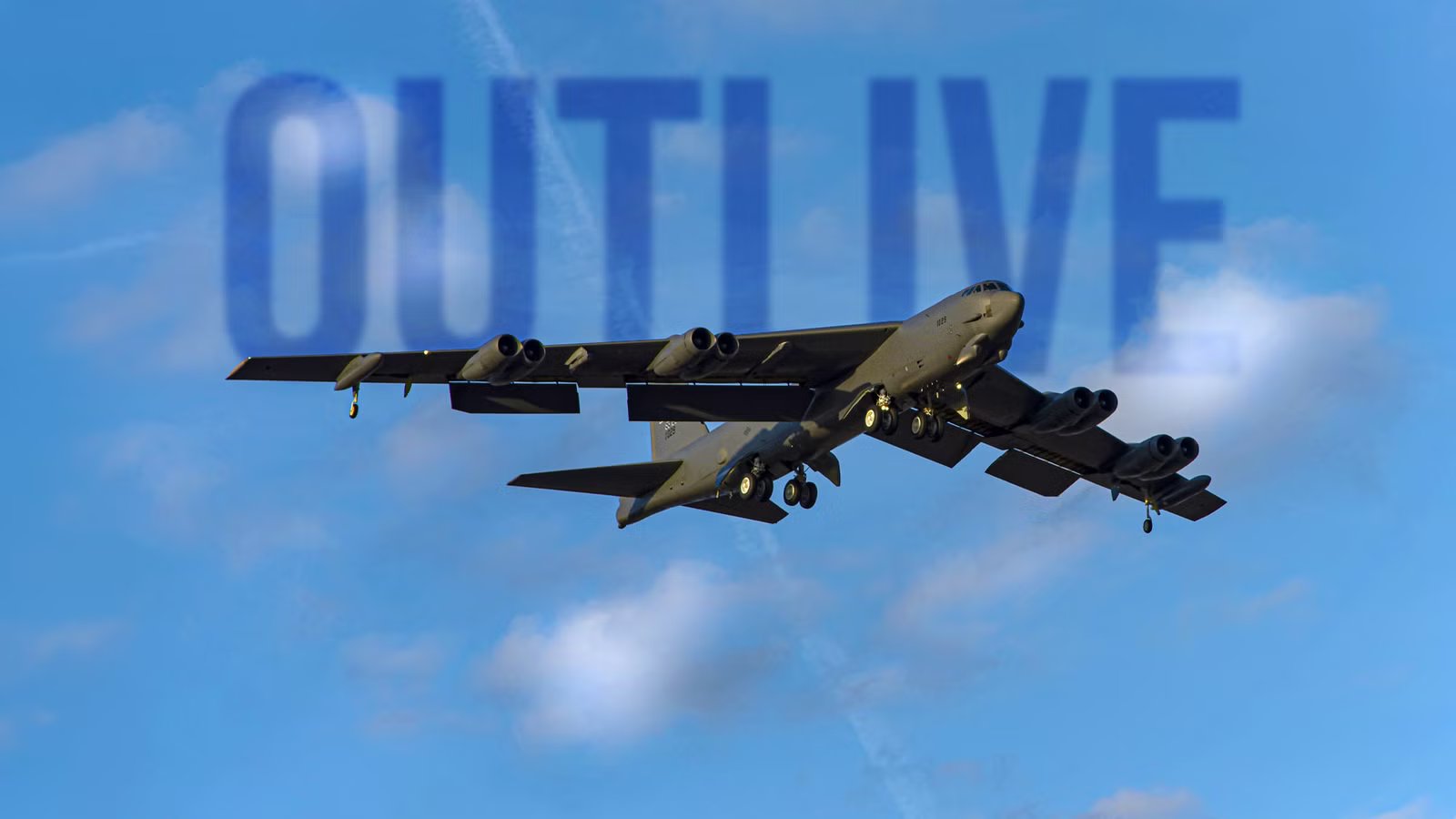
If the 707 helped Boeing to cement its status as a leader in large commercial airliners, the B-52 did the same for the military industry. The 1960s brought further innovation and diversification. Boeing acquired Vertol Aircraft in 1960, entering the helicopter market with models like the CH-47 Chinook, which remains in service today. The company launched the short-haul 727 in 1963, the narrowbody 737 in 1967 (which would become the best-selling commercial jet in history), and the revolutionary widebody 747 jumbo jet in 1969, built in a massive new factory in Everett, Washington. Boeing also contributed significantly to NASA’s Apollo program, building the first stage of the Saturn V rocket that enabled moon landings. However, the decade ended with economic headwinds: a recession, reduced defense spending, and 747 development costs led to severe layoffs, with Seattle’s unemployment spiking to 14% in the early 1970s.
Recovery in the 1970s and 1980s saw Boeing expand its lineup with the 757 and 767 twins in the early 1980s, while continuing military work like components for the B-2 Spirit stealth bomber and contributions to the Space Shuttle program. The 1990s introduced the twin-engine 777 in 1994, the first aircraft fully designed using computer-aided tools, and the Next Generation 737 series. A landmark event was the 1997 merger with McDonnell Douglas, which bolstered Boeing’s defense and space portfolios but raised antitrust concerns in Europe, requiring concessions on exclusive contracts.
How Did Boeing Evolve From The Cold War Through The Early 2000s?

Entering the 2000s, Boeing acquired Hughes Electronics’ satellite business in 2000, enhancing its space capabilities, and moved its headquarters to Chicago in 2001. The decade featured the launch of the fuel-efficient 787 Dreamliner in 2009, incorporating composite materials for lighter weight, though production delays plagued the program. Military ventures included the KC-767 tanker and partnerships like United Launch Alliance in 2006. Challenges arose with ethical scandals, including a 2003 procurement issue that led to executive resignations and fines, as well as ongoing WTO disputes with Airbus over subsidies.
The 2010s were marked by highs and lows. The 737 MAX, launched in 2011 and entering service in 2017, promised efficiency but suffered catastrophic crashes in 2018 and 2019, leading to a global grounding until late 2020, billions in costs, and intense scrutiny over design and certification processes.
Boeing also ended production of legacy models like the 757 (2004) and 717 (2006), while advancing the 777X and Starliner spacecraft for NASA. Layoffs continued amid restructuring, including closing facilities in Wichita and Long Beach.

5 Boeing Jets That Changed The Aviation Industry
A closer look at five Boeing jets that had a great impact on the world of aviation.
What Major Risks And Crises Has Boeing Faced In The Modern Era?

The 2020s brought compounded crises: the COVID-19 pandemic slashed air travel demand, exacerbating MAX fallout and leading to further job cuts — over 30,000 by 2021. Quality issues persisted, culminating in a 2024 Alaska Airlines incident where a 737 MAX 9 door plug blew out mid-flight, prompting FAA audits and production caps. CEO Dave Calhoun stepped down in 2024 amid the fallout, succeeded by Kelly Ortberg. Boeing moved its headquarters to Arlington, Virginia, in 2022 and delivered the final 747 in 2023. Recovery signs emerged in 2025, with aircraft deliveries rising to 600 (up from 348 in 2024), net orders surging to 1,075, and major deals like Ethiopian Airlines’ purchase of nine 787 Dreamliners finalized in December 2025.
As of early 2026, Boeing is ramping up production, focusing on quality improvements, and positioning for growth in the commercial, defense, and space sectors, with optimism about dominating the market amid rebounding demand.
What Lessons Emerge From Boeing’s 110-year Evolution?

110 years after the first small seaplane, the company has navigated booms and busts, evolving into a global aerospace giant. The company’s story also shows how regulation, war, and technological change can reshape even the most powerful enterprises.
Boeing survived antitrust breakup, postwar competition, and massive technological shifts, emerging stronger each time, and becoming the first aerospace enterprise in history to reach $100 billion in annual sales, with over 13,000 patents, and dozens of successful models.
Ultimately, understanding how Boeing was formed helps explain not only the company itself but the structure of modern aviation. From military aircraft to commercial jets, Boeing’s early decisions continue to influence how the world flies today.