dailynewsnblog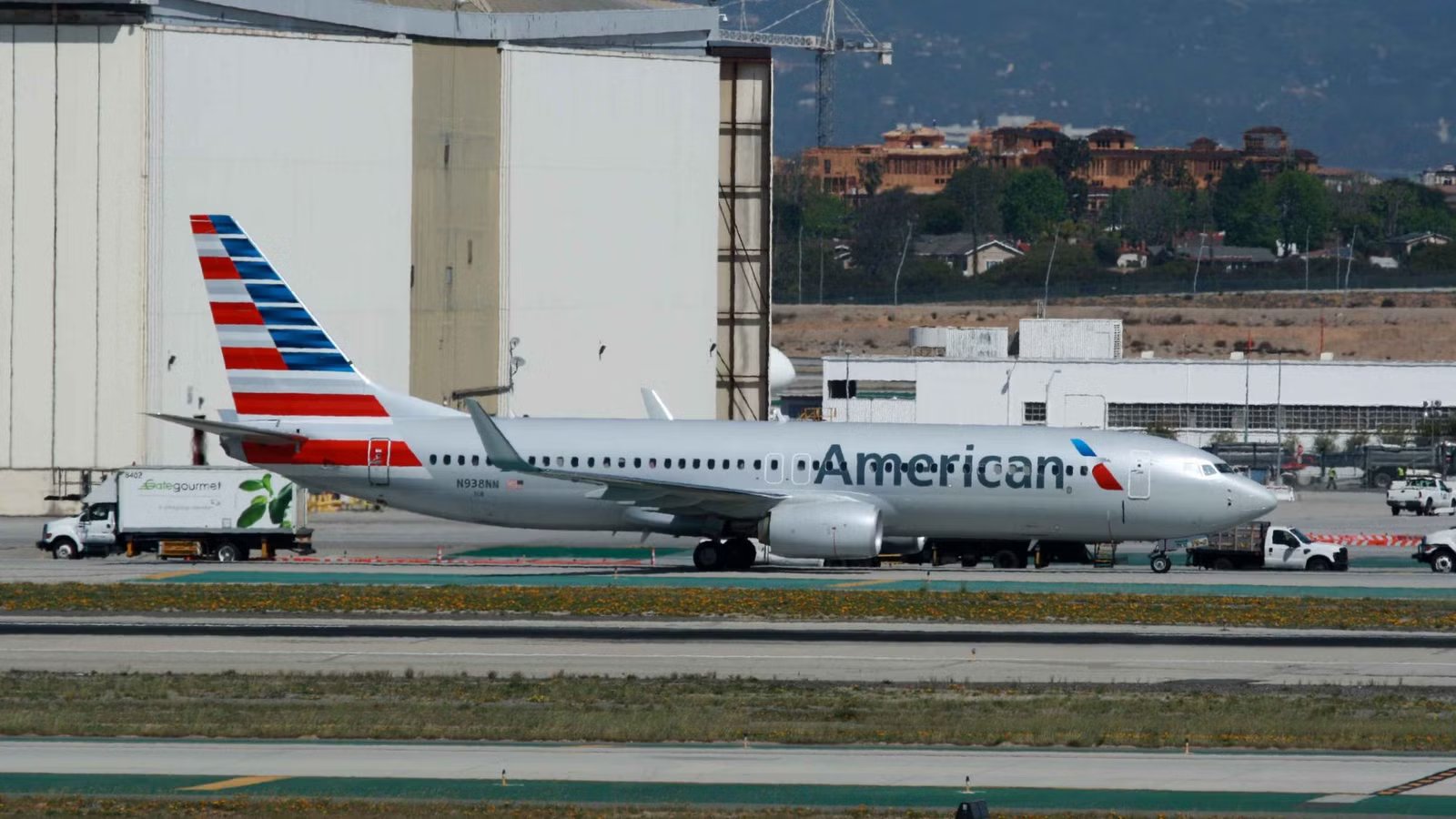
An American Airlines Boeing 737-800 became stuck in soft ground after a pushback incident at Syracuse Hancock International Airport (SYR) in New York on Saturday, March 21. The aircraft, operating as AA1235 to  Charlotte Douglas International Airport (CLT), reportedly exited the paved surface during ground handling.
The aircraft involved, registered N938NN, is part of  American Airlines’ large 737-800 fleet, which forms a core part of its domestic operations. The airline operates almost 400 examples of the type, making it one of the largest 737-800 operators globally. While such ground incidents are relatively rare, they can occur due to environmental and operational factors. No injuries have been reported, but the aircraft required assistance to be freed, leading to delays and operational disruption.
American Airlines 737 Gets Stuck During Pushback

The incident occurred during pushback, a routine procedure in which an aircraft is moved away from the gate by a tug before taxiing under its own power. During this maneuver, the Boeing 737-800’s wheels reportedly left the paved surface and entered a soft, muddy area adjacent to the taxiway. As a result, the aircraft became immobilized and was unable to proceed to the runway. Ground crews quickly responded to secure the aircraft and assess the situation.
Passengers were safely deplaned following the incident, and there were no reports of injuries among those onboard or ground staff. The aircraft required specialized towing equipment to be repositioned, which caused delays to the flight schedule. The 737-800 typically carries around 160–172 passengers, meaning a significant number of travelers were affected by the disruption. Airport operations in the immediate area were also briefly impacted as crews worked to resolve the situation.
Simple Flying has reached out to American Airlines for a comment.
A Routine Operation With Real Operational Consequences

Ground incidents like this are often influenced by seasonal conditions, particularly in regions that experience freezing and thawing cycles. Soft or saturated ground near taxiways can pose risks if aircraft deviate even slightly from paved areas. Pushback operations rely heavily on communication between the tug operator and the flight deck, as well as strict adherence to marked guidance paths. Even minor deviations can result in an aircraft leaving the paved surface.
The Boeing 737-800 is one of the most widely used narrowbody aircraft in the world, with a typical capacity ranging from 160 to 189 passengers and a range of roughly 3,000 nautical miles (5556 km). It is part of the Next Generation (737NG) family, designed with improved wings, engines, and fuel efficiency compared to earlier variants. These capabilities make it a backbone aircraft for short- and medium-haul routes across global airline networks.
At American Airlines, the type represents nearly a third of the airline’s total fleet, underlining its operational importance. The aircraft’s versatility and efficiency mean disruptions involving a single jet can have knock-on effects across multiple flights and rotations.

How Important Is The Boeing 737-800 At American Airlines?
The narrowbody twinjet accounts for around 30% of the carrier’s total fleet.
Ground Operations Can Present A Tangible Risk To Aircraft

Aircraft ground incidents, while often less visible than in-flight emergencies, still account for a significant portion of aviation occurrences globally, highlighting how critical these phases are to overall safety. Even minor events can require inspections, delaying the aircraft’s return to service. The 737-800, for example, has a maximum takeoff weight of around 174,200 lbs (79,015 kg) and requires careful handling during towing and recovery.
Globally, the 737-800 has been a workhorse for airlines due to its balance of capacity and efficiency, even offering around 20% lower fuel burn compared to older aircraft it replaced. Despite advancements in technology, ground handling remains one of the most risk-prone phases of flight operations, contributing heavily to incident statistics. While newer models like the Boeing 737 MAX are entering service, the -800 remains a key part of many fleets. Continued use means airports and airlines must maintain strict ground safety procedures to prevent similar incidents.
Overall, the Syracuse incident reinforces a broader industry reality: although flying is statistically very safe, operational risks can still arise before takeoff and after landing. This makes precision in ground handling, especially in challenging weather or surface conditions, just as important as safety in the air.