dailynewsnblog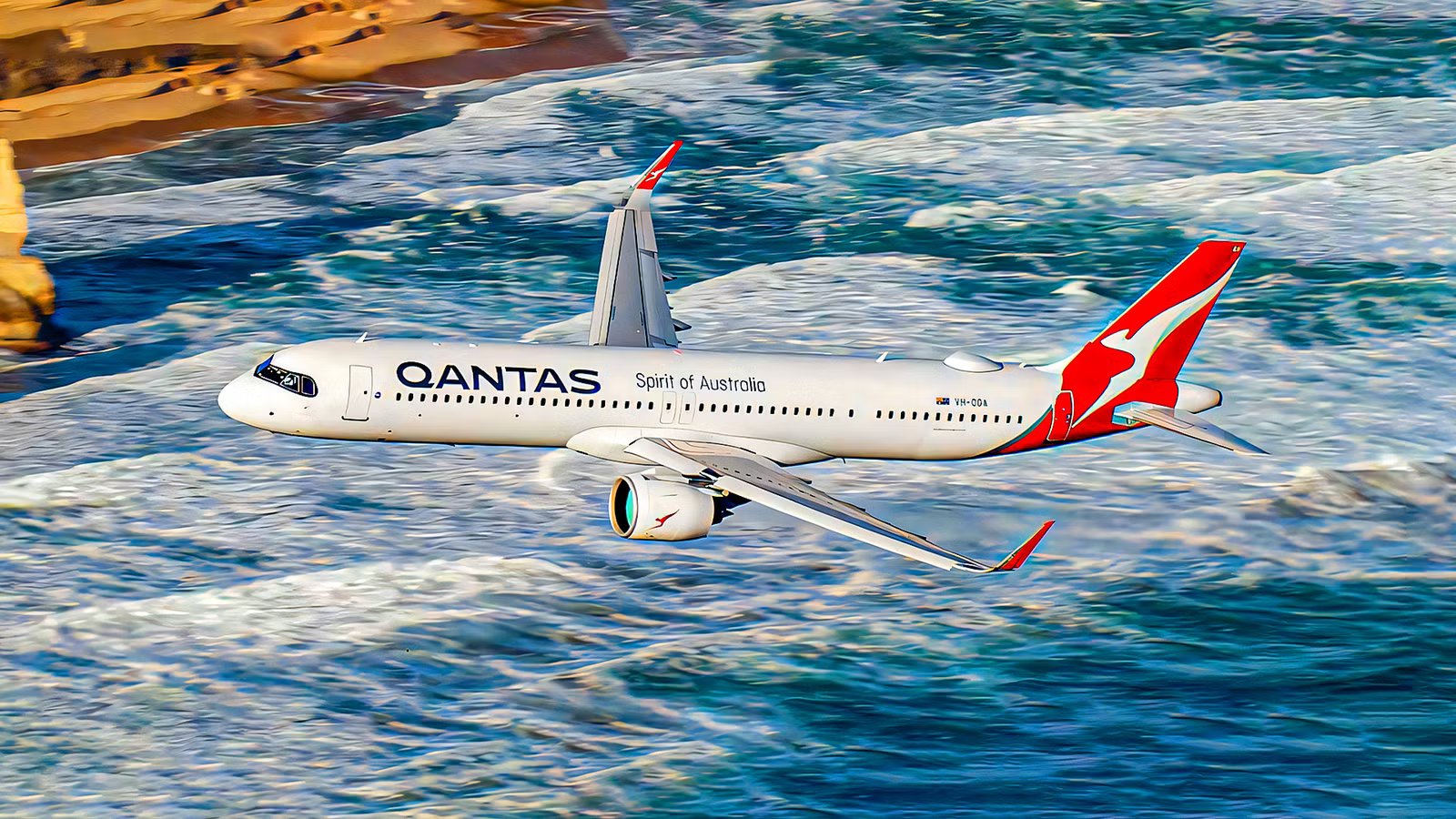
Australian carrier Qantas is betting big on the capabilities of the Airbus A321XLR, which it plans to utilize to upgrade and expand its domestic and international network. This week, the airline announced the first international route this aircraft will fly, with the airplane replacing the Airbus A330 on its Brisbane to Manila route.
Qantas already has four A321XLR in its fleet, of a total order of 48. These planes are poised to replace aging Boeing 737-800 airplanes, and expand the airline’s footprint within Oceania. With the capabilities of this narrowbody airplane, we could continue to see the airline explore aircraft upgrades on historically thin routes or new destinations never seen before by the carrier.
First International Stop: Manila

As published by Executive Traveler, Qantas revealed that its first international destination with the A321XLR will be Manila. The airline currently operates a five-weekly service between Brisbane Airport (BNE) and the Philippine capital, Manila. The new narrow-body aircraft will now see the route to Manila Ninoy Aquino International Airport (MNL) adjust to a daily service.

Covering a distance of 3,596 miles (5,787 km) will become Qantas’ longest route to date with the A321XLR, which is not hard given the aircraft type has only currently been operating domestic routes (more on that later). Qantas’ daily service to Manila from Brisbane will follow the schedule below as per its website, with services set to replace the A330 from October 25:
|
Flight Number |
Frequency |
Dep. Airport |
Dep. Time |
Arr. Airport |
Arr. Time |
Duration |
Aircraft |
|---|---|---|---|---|---|---|---|
|
QF97 |
1x Daily |
Brisbane (BNE) |
2:00 pm |
Manila (MNL) |
8:05 pm |
8hr 5min |
Airbus A321XLR |
|
QF98 |
1x Daily |
Manila (MNL) |
9:30 pm |
Brisbane (BNE) |
7:25 am |
7hr 55min |
Airbus A321XLR |
Flying Domestic For Now

Currently, the A321XLR for Qantas has been earning its stripes on domestic routes to and from Brisbane. Data from Cirium, an online aviation analytics company shoes that the airplane will fly between Sydney, Perth, Brisbane, and Melbourne, with multiple weekly services.
Qantas will launch the aircraft on regular services from Brisbane to Perth International Airport from May. This will cover a distance of 2,246 miles (3,614 km) up to six times a week. This will become the aircraft types second longest route for Qantas, surpassing Sydney to Perth at 2,041 miles (3,284 km).

With Cirium data, in 2026, the A321XLR is recorded to fly up to 27 weekly services from Sydney to Perth, 16 weekly services from Sydney to Brisbane, and 32 weekly services from Sydney to Melbourne. The Sydney-Melbourne-Brisbane air corridor remains one of the busiest in the world for domestic air travel.

Qantas To Introduce New Long-Haul Flights Between Sydney & Las Vegas
This will mark the first time Australia and Sin City have been connected with a seasonal non-stop service.
The Experience Onboard

Qantas has two configurations for the A321XLR, carrying between 197 and 200 passengers (20 business, and either 177 or 180 economy class seats) as per ch-aviation. Domestically, the interior fitout lacks seat-back entertainment, but passengers can connect using their device and watch in-flight movies and television shows via the Qantas Entertainment app, or browse the internet and check in on social media with free and fast in-flight WiFi.
The cabin features LED lighting, large windows, and higher-than-normal ceilings, providing a more spacious experience. Larger overhead lockers provide up to 60% more space for carry-on bags when compared to the Boeing 737s it is replacing. In business class, 20 seats are configured in a 2-2 layout, with a 37-inch (94cm) pitch, 25-inch (63.5cm) seat width, and five-inch (12.7cm) recline. Economy class is in a 3-3 layout, with a pitch of 30 inches (76.2cm) and a seat width of 17.6 inches (44.7cm).
For Qantas, the A321XLR has the capabilities to fly further than any narrow-body aircraft has before. This is set to revolutionize the airline’s medium and long-haul network from one of the most isolated countries in the world, and open up more new routes from Australian cities to Southeast Asia and the Pacific Islands. Capabilities could see the aircraft reach Sydney to Hong Kong, Bangkok or Phnom Penh, Melbourne to Phuket, Kuala Lumpur or Rarotonga, Brisbane to Tokyo, Bangkok or Jakarta, and Perth to Mauritius, Colombo or Bangalore.