dailynewsnblog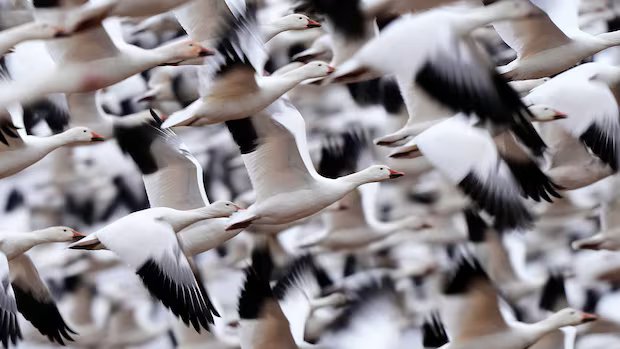

Listen to this article
Estimated 5 minutes
The audio version of this article is generated by AI-based technology. Mispronunciations can occur. We are working with our partners to continually review and improve the results.
Spring is heralded by the return of geese, but to many in Alberta’s poultry industry, migration means something different.
With last year’s avian flu season considered the worst in years, producers like Wetaskiwin-area turkey farmer Scott Olson are being mindful.
“I’m very conscious of not going out in the sloughs or doing anything where migratory birds are hanging out, and then going to our facility,” Olson said.
“With this nice weather we’re seeing, the geese will be here shortly.”
Olson’s no stranger to the damage done by avian flu: he’s experienced three outbreaks since 2022. The most recent was last fall, and all three cases led to the Canadian Food Inspection Agency (CFIA) culling his birds.

“It happens in one barn, and it will jump to another one a day or two later,” Olson said.
“When you contact CFIA, they want to stamp out all the birds on the premises, just to to stop the spread of the avian influenza.”
More than 2.5 million birds in Alberta — and 17 million across Canada — have died as a result of avian flu outbreaks since December 2021.
Avian influenza is naturally carried by wild birds. It’s spread through saliva and excrement, which can contaminate water and soil when birds fly overhead or make direct contact on the ground.

A housecat has died in the United States after eating raw pet food and contracting H5N1 bird flu. Epidemiologist Dr. Christopher Labos tells CBC News the risk of any individual pet getting avian flu is still low, but what is concerning is the easier it becomes for it to infect different types of animals, ‘the easier it will ultimately become for this virus to infect humans.’
For farmers like Olson, precautions to avoid avian flu include biosecurity measures like establishing controlled access zones around and within barns, strictly controlling who and what enters each barn, and thoroughly cleaning and disinfecting wherever necessary.
Olson’s strict rules also include dedicated boot rooms for changing into barn-specific coveralls, boots, and gloves before entering facilities.
During peak migration seasons, he will also limit farm access to essential vehicles and restrict visitors to mitigate disease transmission risk.
“Hopefully I’m not contaminating anything going in, and I’m not bringing anything back out,” Olson said.
Surge in avian flu cases last year
In Alberta, there were 26 cases of avian influenza confirmed in flocks last year.
“One in May was associated with the spring wild bird migration, and the rest were from September to December, which is associated with the fall migration,” a provincial Ministry of Agriculture and Irrigation spokesperson said in a statement.
That’s a significant increase from 2024, when only six cases were confirmed.
There were 20 in 2023, and 60 in 2022.
Those trends also match the CFIA’s records of wild animals found infected with avian influenza in Alberta: recorded cases in wildlife peaked in 2022, with 257 animals infected, closely followed by 254 cases last year. In 2024, only 48 animals were confirmed to be infected.
Teryn Girard, with Prairie Livestock Veterinarians, says fluctuations in case numbers between 2022 and 2025 are likely correlated to migratory bird activity.
“As weather patterns change, there may be more mixing of migratory birds or more changing of the migratory pattern,” she said.
The drop in cases from record highs in 2022 can be explained by major improvements in avian flu mitigation measures since then, Girard said.
“When it first came to Alberta, the anxiety around it was high,” she said. “Over the years, it’s become more manageable. Everybody has a role. They know what to expect.”
Girard says the commercial industry has adapted as it has learned more about avian flu, with biosecurity measures like the ones Olson takes.

Officials have confirmed cases of avian influenza at a commercial poultry facility in Strathcona County, and another facility in Leduc is under investigation. It’s the latest set of bird flu cases in the province since a recent outbreak at a petting zoo in Calgary. Kathy Magor is a biological sciences professor at the University of Alberta who researches avian influenza.
“Last year’s cases are a strong reminder to Alberta’s livestock producers of the importance of strict biosecurity measures and early detection through closely monitoring their animals, especially during the wild bird migratory seasons,” the provincial government said in its statement.
“Given the increased circulation of the virus in wild waterfowl like ducks and geese, and the spillover to domestic flocks we saw in the fall, many producers may be reviewing their biosecurity practices, procedures and training to prepare for the spring migration.”
9 confirmed cases in Canada this year
Alberta has yet to have a confirmed case of avian influenza in 2026, but that’s not the case for the rest of Canada.
The CFIA has confirmed nine cases so far this year: three each in British Columbia and Nova Scotia, two in Quebec and one in Ontario.
Two cases in wildlife — a skunk in Ontario and a bald eagle in British Columbia — were confirmed in January.
“The continued detections of [avian influenza] in both wild and domestic birds in Canada is a strong reminder for anyone raising birds to remain vigilant,” a federal government spokesperson said in a statement.