dailynewsnblog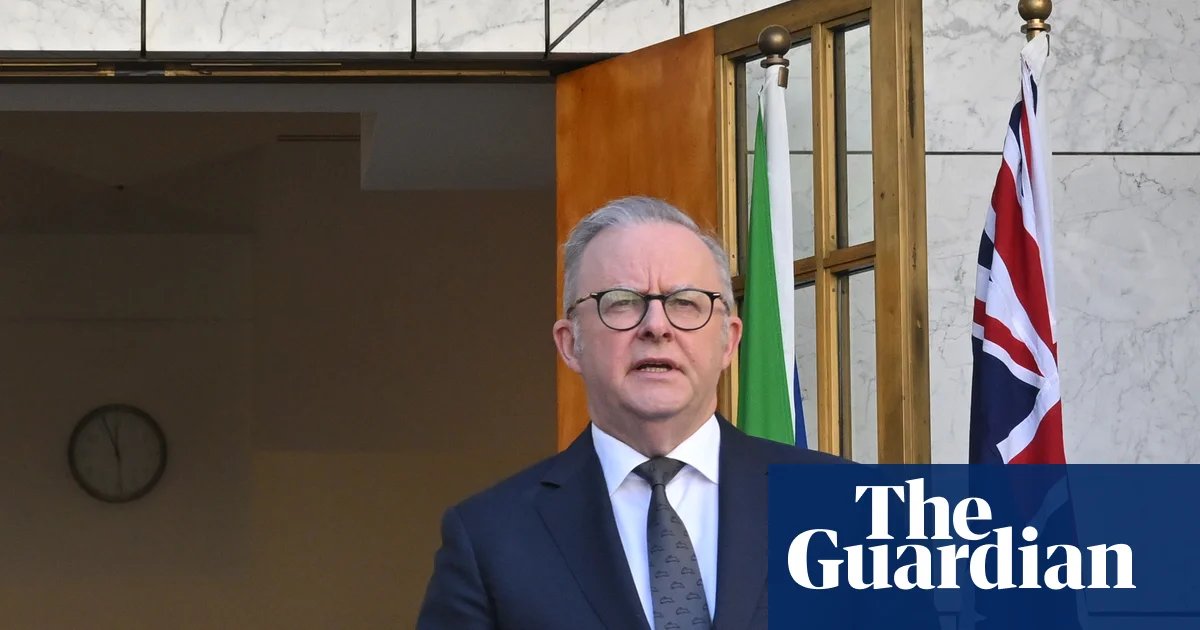
Anthony Albanese will fly to Singapore this week – Australia’s biggest source of petrol – as the government mounts an international bid to keep fuel prices from rising.
Diesel is getting more expensive again and petrol prices have stopped falling, despite the federal government’s cut to fuel excise last week.
Albanese spoke to China’s premier, Li Qiang, on Tuesday night, part of a growing diplomatic effort to shore up supply. A readout of the call from the Australian side said the two leaders agreed to increase government-to-government communication to support regional energy security.
It hasn’t been confirmed whether Albanese’s Singapore visit will directly secure any additional supply for Australia, but the PM said fuel would be on the agenda as the government scours the world for extra shipments of diesel and petrol.
“This will be important, and we’ll continue discussions on securing our trade in petrol, diesel and LNG,” Albanese said on Tuesday, adding that he had already planned to visit Singapore for later in the year but it had now been brought forward.
Referring to last month’s joint statement with Wong, he said Singapore and Australia had committed to “keep fuel flowing between both countries and to work together to strengthen energy supply chain resilience”.
“Together, we share concern over the situation in the Middle East, including the consequences for both of our nations. We share a deep strategic trust,” he said.
“We don’t need to wait for this global crisis to be over. We have to build resilience into the system. We are currently in a secure position. However, engaging with our international partners is an important part of keeping our fuel supply flowing.”
Fuel shipment prices have held at historic highs in Australia’s five biggest cities. Wholesale unleaded prices stopped falling on Tuesday after coming down by about 40 cents a litre since 26 March, including from the government’s 32-cent fuel excise cuts, Australian Institute of Petroleum data showed.
Falling wholesale prices had seen retailers cut their prices by about 33 cents a litre since late March in the capital cities. Prices continued to fall on Tuesday but flat wholesale prices would make further falls impossible unless retailers sacrificed profit margins.
Diesel prices rose for fuel companies and motorists, with terminal prices 10c a litre higher after a brief reprieve after fuel excise cuts.
The US president, Donald Trump, on Tuesday reiterated threats to target Iranian civilian infrastructure such as bridges and power stations, if negotiations for a ceasefire and to reopen the strait of Hormuz – a key global oil shipping route – are unsuccessful.
Trump also repeated criticisms of Nato, and singled out Australia, among others.
“They haven’t helped at all,” he said. “It’s not just Nato. You know who else didn’t help us? South Korea didn’t help us. You know who else didn’t help us? Australia didn’t help us. You know who else didn’t help us? Japan.”
The federal energy minister, Chris Bowen, said only 3% of petrol stations around Australia, or 241 outlets, had run out of diesel as of Tuesday. That included 125 in New South Wales, 40 in Victoria, 34 in Queensland and 20 in Western Australia.
There had been fears inside the government that the busy Easter holiday period could lead to a spike in fuel demand and potential supply outages. But after his televised address on Wednesday night asking Australians to consider their fuel usage and take public transport where possible, Albanese expressed gratitude.
“I would like to recognise the efforts of Australians over the Easter long weekend to conserve fuel and to get on with life. We saw very few cancellations. That was a good thing,” he said.
While Bowen announced over the weekend that Australia’s fuel stock levels remained “pretty static” – with 39 days of petrol, 30 days of jet fuel and 29 days of diesel in stockpiles – the government is looking to secure further supplies as the Middle East conflict continues.
The opposition leader, Angus Taylor, demanded again that the government provide more fuel supply chain data, including information on ships arriving in Australia and the amount of fuel being produced onshore. He also again called for Australia to commit to drilling for more oil.
“We need to have those details and we need to have them on a daily basis … We also need a longer-term plan to ensure this never happens again. That we have the fuel security we need as a country and that means drilling, making the absolute most of our natural resources in this country and that means drilling for more oil and gas in this country,” he said.
Albanese last month released a joint statement with Singaporean prime minister, Lawrence Wong, reaffirming the two nations would continue trading in energy. Singapore is one of the major sources of Australia’s oil, accounting for 26% of refined fuel imports, 55% of petrol imports, 22% of jet fuel and 15% of diesel.
There has been growing concern from energy experts that nations will start keeping oil for their own domestic consumption instead of exporting their usual amounts, after a statement from Malaysia that the country’s government would “prioritise our own needs”.
Bowen said fuel companies had supply contracts “well into May”, and that “deals are being done” using the government’s new powers to underwrite fuel shipments, foreshadowing more announcements in coming days.