dailynewsnblog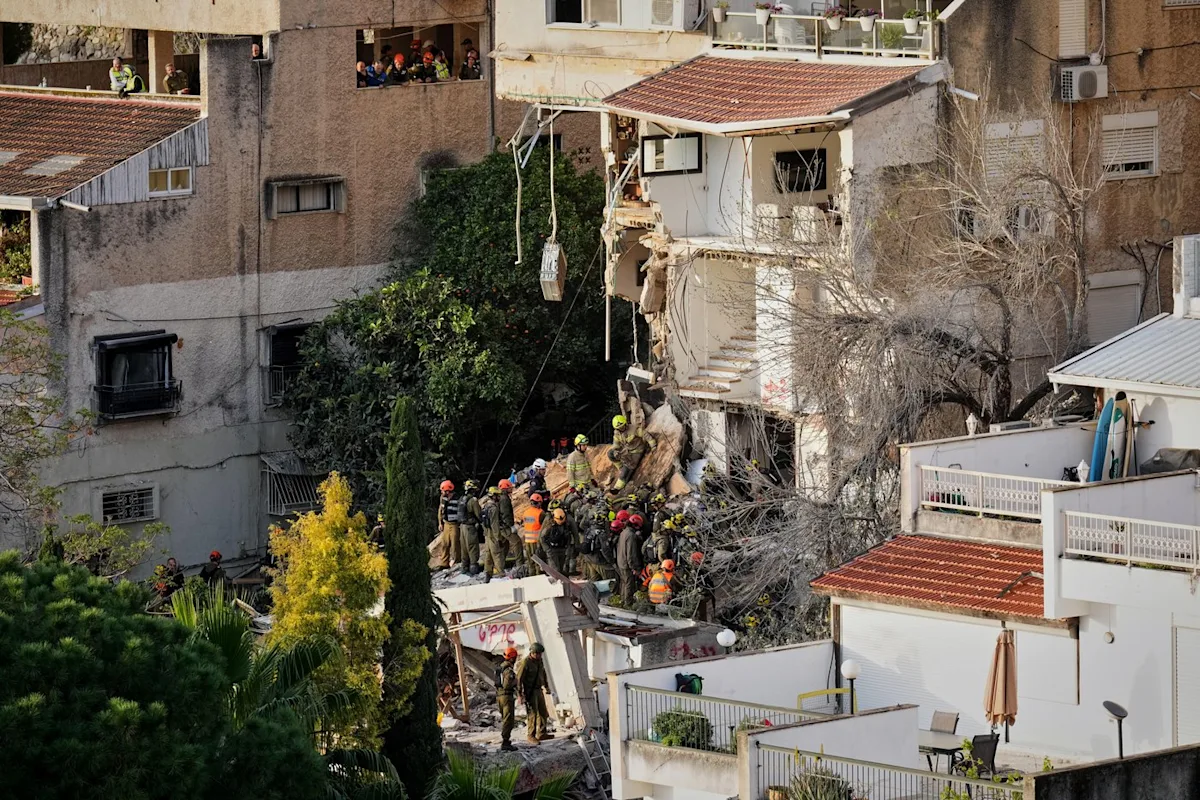
DUBAI, United Arab Emirates (AP) — Israel and the United States carried a wave of attacks Monday that killed more than 25 people in Iran. Tehran responded with missile fire on Israel and its Gulf Arab neighbors as U.S. President Donald Trump’s deadline for Tehran to reopen the Strait of Hormuz loomed.
Explosions rang out into the night in Tehran and low-flying jets could be heard for hours as the capital was pounded. Thick black smoke rose near the city’s Azadi Square after one airstrike hit the Sharif University of Technology grounds.
Two people were found dead in the rubble of a residential building in Haifa, according to Israeli authorities. The search was ongoing for two more even as new Iranian missile attacks hit the northern Israel city early Monday.
Kuwait and the United Arab Emirates both activated their air defense systems to intercept incoming Iranian missiles and drones, as Tehran kept up the pressure on its Gulf neighbors. Iran’s regular attacks on regional energy infrastructure and its stranglehold on the Strait of Hormuz, through which a fifth of the world’s oil is shipped in peacetime, has sent global energy prices soaring.
Under pressure at home as consumers are growing increasingly concerned, Trump gave Tehran a deadline that expires Monday night, Washington time, saying if no deal was reached to reopen the strait the U.S. would hit Iran’s power plants and other infrastructure targets and set the country “back to the stone ages.”
“Tuesday will be Power Plant Day, and Bridge Day, all wrapped up in one, in Iran,” he threatened in a social media post, adding that if Iran did not open the strait “you’ll be living in Hell.”
Trump’s deadline to open Hormuz strait looms but no signs of Tehran backing off
Tehran has shown no signs of backing down off of its stranglehold on shipping through the strait, which was fully open before Israel and the U.S. attacked Iran on Feb. 28 to start the war.
Following Trump’s expletive-laced posts on Easter Sunday, Iran’s parliamentary speaker Mohammad Bagher Qalibaf called the threats of targeting Iran’s infrastructure “reckless.”
“You won’t gain anything through war crimes,” Qalibaf wrote on X. “The only real solution is respecting the rights of the Iranian people and ending this dangerous game.”
Brent crude oil, the international standard, rose to $109 in early Monday spot trading, some 50% higher than it was when the war started.
Iran has let some vessels through the strait since the war began, but none belonging to the U.S., Israel or countries perceived as helping them. Some have paid Iran for passage and the overall flow of traffic is down more than 90% over the same period last year.