dailynewsnblog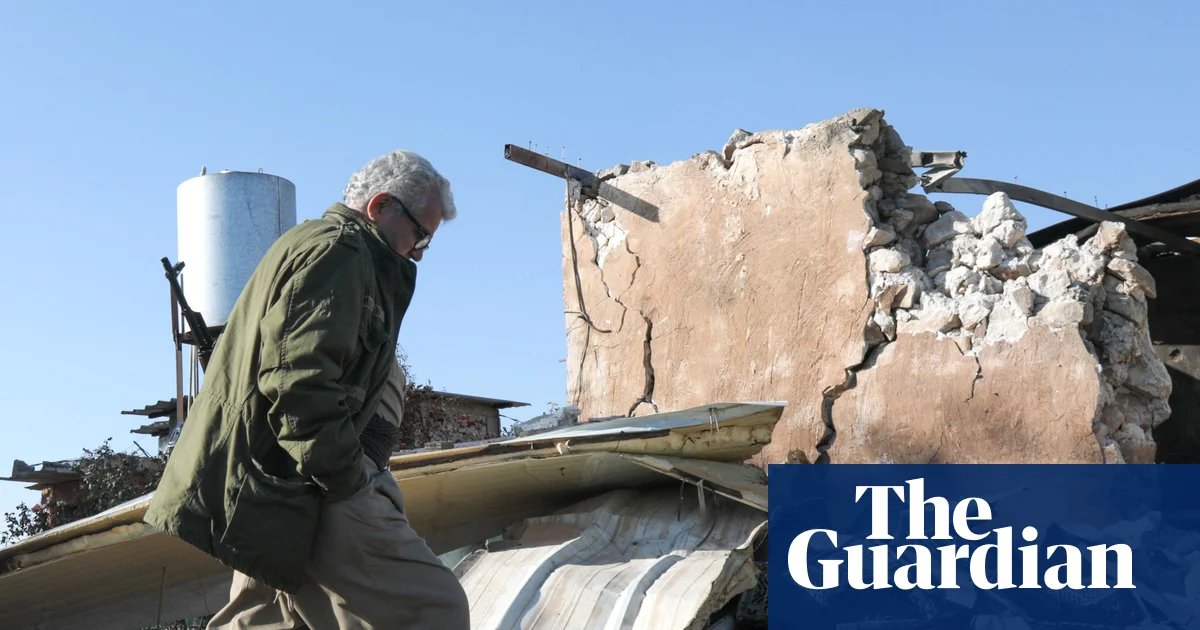
Intense waves of airstrikes have hit dozens of military positions, frontier posts and police stations along northern parts of Iran’s border with Iraq in what appears to be preparation by US and Israel for a new front in their war.
A US official with knowledge of the discussions between Washington and Kurdish officials said the US was ready to provide air support if Kurdish fighters crossed the border from northern Iraq.
A spokesperson for Israel’s military said the air force had been “heavily operating in western Iran to degrade Iranian capabilities there and to open up a way to Tehran and create freedom of operations there”.
With the remote border regions of Iran threatening to become a new front, Iran has warned “separatist groups” against joining the widening conflict. Tehran said on Thursday it had launched strikes against Iraq-based Kurdish groups “opposed to the revolution”.
“Separatist groups should not think that a breeze has blown and try to take action,” said the secretary of Iran’s Supreme National Security Council, Ali Larijani.
Khalil Nadiri, an official with the Kurdistan Freedom party (PAK), based in northern Iraq’s semi-autonomous Kurdish region, said on Wednesday that Kurdish opposition group leaders had been contacted by US officials regarding a potential operation, and that some of their forces had moved to areas near the Iranian border in Sulaymaniyah province and were on standby.
Meanwhile, Baloch militant groups opposed to the Tehran regime have also moved from remote mountain bases in Pakistan across the border into Iran, according to local officials.
Experts predicted that backing armed groups from Iran’s ethnic communities would “open up a hornet’s nest”, aggravating divisions within the diverse country and increasing the risk of a chaotic civil war if the current regime collapses.
Donald Trump called two leaders of Iranian Kurdish factions based in northern Iraq earlier this week and is open to supporting groups that are willing to take up arms to dislodge the regime, US media have reported.
Clandestine operations in north-western parts of Iran where Kurdish communities are most numerous were “ramped up” after the brief war between Iran and Israel last summer, according to former intelligence and defence officials in Israel, the US and elsewhere in the region.
There were reports in January of clashes between Iran’s Islamic Revolutionary Guard Corps (IRGC) and groups of Kurdish peshmerga fighters who had entered Iran from Turkey and Iraq. Two weeks ago, five rival Iranian Kurdish organisations led by the Democratic Party of Iranian Kurdistan (KDPI) formed a new coalition dedicated to overthrowing the regime in Tehran.
“Getting your groups aligned and united is the first play in the playbook,” said one former US defence official with experience of clandestine operations.
A spokesperson for the KDPI would not confirm or deny that its leader, Mustafa Hijri, was one of the two Iranian Kurdish leaders Trump called but said it was the duty of “free, democratic societies around the world to help [Iranian Kurds] win freedom”.
“We think that the regime is in a deeply weak situation … and will soon see its end days,” the spokesperson said.
Hijri called on Iranian military personnel on Wednesday to abandon their posts and “return to their families”.
The KDPI said Hijri had issued the call “in light of ongoing US and Israeli strikes against the regime’s military and security installations, [which] pose a direct and serious threat to the lives of the soldiers, particularly in Kurdistan”.
The US has repeatedly used Kurdish fighters as auxiliariesproviding vital assistance to US troops in the invasion of Iraq in 2003 and in the fight against Islamic State there and in Syria from 2014 to 2019.
Alia Brahimi, a Middle East expert at the Atlantic Council, cautioned against using local forces. “If the ground fighting is outsourced to ethnic separatist groups, that will leave the US with even less ability to shape developments on the ground than in the conflict 20 years ago. If other separatists join the fray, the Iranian public may then rally around the regime in Tehran,” she said.
“We’re only five days into the conflict, and we’re already seeing the dangerous consequences of the Trump administration’s lack of a strategic plan and the total absence of clarity over both rationales and objectives.”
Operatives from the Israeli foreign intelligence service were already active inside Iran, according to one former Mossad official, while two analysts said that a series of short-range drone attacks launched against IRGC units and posts along the border in recent days also bore the hallmarks of Israeli intelligence.
The drone attacks and other recent airstrikes along the Iran-Iraq border suggest an effort to open “access points” that would allow lightly-armed Kurdish fighters to cross into Iran and establish strongholds on the other side, said a former US defence official with recent experience of clandestine operations in northern Iraq.
Such an operation would follow a well-established US strategy of embedding small teams of military or CIA specialists who can direct airstrikes with locally recruited ground forces.
Such strategies were employed in Afghanistan in 2001 and in Syria and Iraq against IS.
“If you have enough air power, and it is well coordinated, then [the Kurds] would just be walking through smoking rubble, and any regime counterattacks would be broken up well before there needed to be any shooting,” the former official said.
The aim would not be to “march on Tehran” but to distract and drain Iranian military units, however, because US intelligence officials do not believe the lightly armed peshmerga could take on regular Iranian forces and IRGC units.
The US has had a clandestine presence in northern Iraq for many years, with communication hubs, surveillance posts and training programmes for Kurdish and other Iraqi fighters. Israel is also thought to have a presence there.
Both Axios and Fox News, citing a US official, on Wednesday reported that the militias had begun their offensive inside Iran. However, there was no official confirmation of that.
Iran’s Kurds – who make up between 5% and 10% of the population – have a long history of separatist activism and broader opposition to the radical clerical regime.
Kurds also fought alongside US forces in Syria, building close personal connections within the US military and intelligence services. They include many fighters from the KDPI and the other faction Trump reportedly contacted, the Kurdistan Free Life party (PJAK).
Reports that the US had provided weapons in recent months are likely to be unfounded, however, with light arms and ammunition already widely available locally, analysts said.
Support for Kurdish armed groups is likely to provoke deep concern in Turkey, Iraq and Syria, which also have sizeable Kurdish minorities.
“If the administration is seriously mucking about or contemplating mucking about with the Kurds in Iran, they’re opening up a hornet’s nest. I think that Recep Erdoğan [Turkey’s president] will have a lot to say about it and so will others – count on strong reactions from Iraqi PM [Mohammed Shia al-] Sudani and Syrian president [Ahmed al-] Sharaa,” said Barbara Leaf, the former assistant secretary of state for near eastern affairs until 2025 and a distinguished diplomatic fellow at the Middle East Institute based in Washington DC. “Gulf leaders are likely to be very queasy about the prospect of such a US move.”
Qubad Talabani, the deputy prime minister of the self-governing Kurdistan region of Iraq, said on Wednesday that the region was not part of the current conflict and would maintain its neutrality.
There has been intensifying violence from separatist groups among Iran’s Baloch minority in the south-east of the country. Militants attacked an IRGC border patrol and a police checkpoint in December.
Around the same time, the most active Baloch separatist group, Jaish al-Adl, announced a new coalition of armed factions that would seek to “strengthen the effectiveness of the struggle” against the “tyranny” of the Iranian regime.
The coalition claimed responsibility on Tuesday for the assassination of the commander of a police station in the city of Zahedan, and issued a statement calling on “military personnel to … surrender to their fellow citizens so that no harm comes to them during these critical times”.
Nasser Bouledai, an Iranian Baloch leader in exile in Europe, said he believed all Iranian communities would welcome US help, but that Washington had followed inconsistent policies in the past.
The US was accused only months ago of cynically sacrificing the interests of Syrian Kurds in clashes with Syrian government forces.
“I think [everyone] who is against the brutal cleric regime would accept support from the US but it should be a consistent and permanent support that resolves the issues of minorities – unlike, for example, when the US gave support for Syrian Kurds and then betrayed Kurds,” Bouledai said.
“It is high time the US supports Iranian ethnic and religious minorities against the cleric regime and settles the question of Iran once and for all.”