dailynewsnblog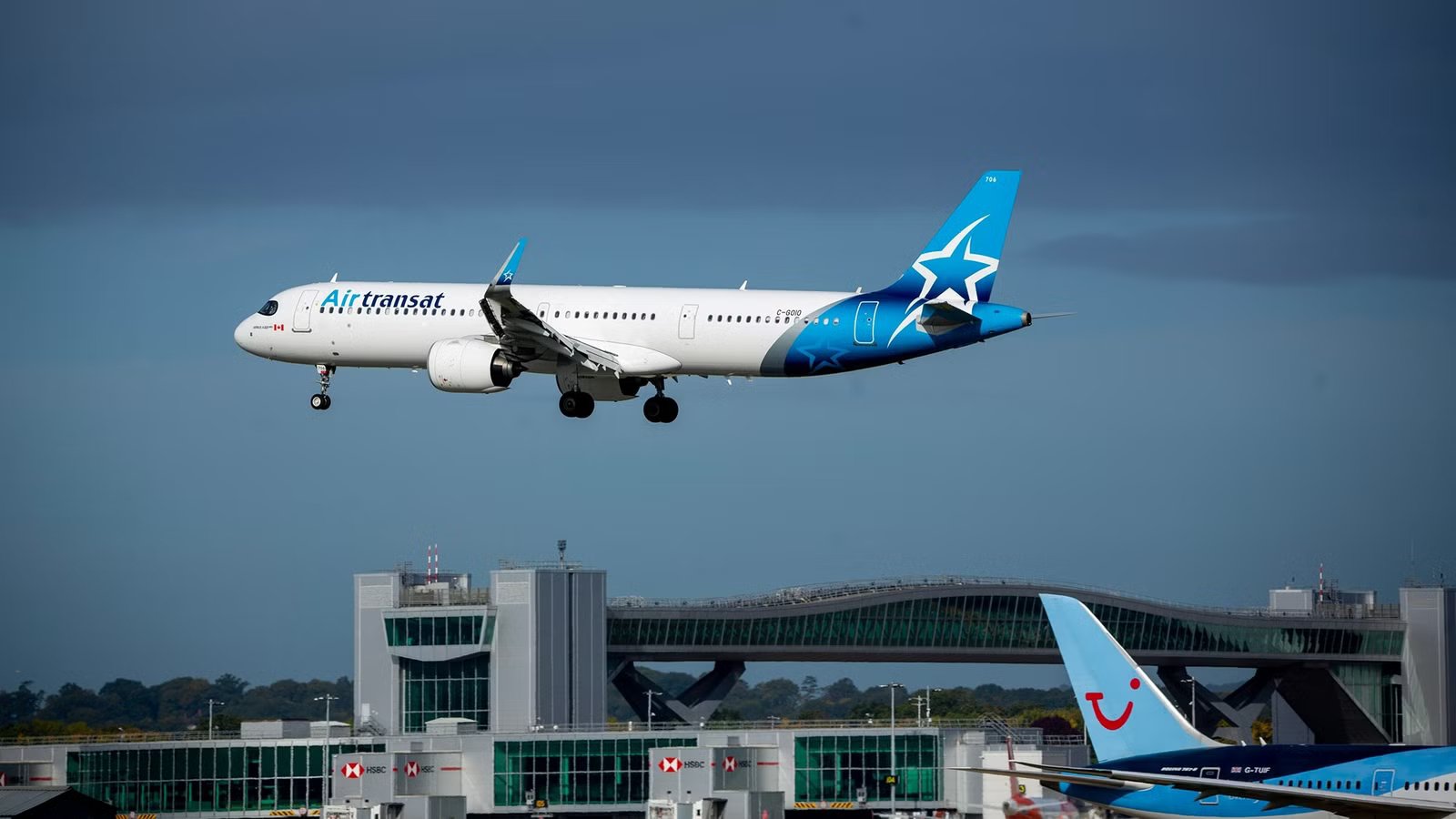
Canada’s Air Transat has begun gradually suspending its operations after the Air Line Pilots Association (ALPA), the union representing the airline’s 700 pilots, issued a 72-hour strike notice on December 7, 2025. As a result, Air Transat will progressively cancel its flights from December 8 to December 9, with the possibility of a strike beginning on December 10, 2025.
The strike notice follows nearly a year of negotiations by Air Transat pilots, who are seeking a “modern contract” with industry-standard pay, benefits, work rules, and job security to replace the outdated 2015 agreement, according to the airline’s pilots.
Air Transat Pilots Ready To Strike

Air Transat pilots have been negotiating for better pay and a modernized contract for nearly a year. With no progress, 99% of the airline’s 750 pilots voted on December 2 to authorize their leadership to call a strike if necessary, according to ALPA. A strike could begin as early as 3:00 AM ET on Wednesday, December 10, if no agreement is reached.
In response, Air Transat described the strike threat as “premature,” arguing that negotiations have made progress and that the company has presented generous proposals. The airline said ALPA has not shown “openness,” and that talks have failed to produce an agreement. Air Transat stated it has offered a 59% salary increase over five years, along with major improvements to pilots’ working conditions.
The company characterized the union’s demands as unreasonable and warned that ALPA’s premature actions could have serious consequences for customers, the airline, and its 4,300 other employees. Meanwhile, in a statement released by ALPA on December 7, 2025, Captain Bradley Small, Chair of the Air Transat Master Executive Council (MEC), said that the carrier has left the pilots with “no choice.”
“There is still time to avoid a strike but unless significant progress is made at the bargaining table, we will strike if that’s what it takes to achieve a modern contract.”
Impact On Air Transat Operations

Based in Montreal, with major hubs at Montréal–Trudeau International Airport (YUL) and  Toronto Pearson International Airport (YYZ), the Canadian leisure airline is expected to feel significant effects from the possible pilot strike and gradual cancellation of its flights, given the approaching winter holiday season.
Air Transat operates approximately 71 flights per day and about 500 flights per week, according to a report by the Montreal Gazette. As for its fleet, the carrier operates 43 aircraft with an average age of 14.3 years, according to ch-aviation data. Its fleet consists of 19 Airbus A321LRs, 14 Airbus A330-200s, eight Airbus A321-200s, and two Airbus A330-300 widebody aircraft.
|
Aircraft |
Number Of Units |
|---|---|
|
Airbus A321LR |
19 |
|
Airbus A330-200 |
14 |
|
Airbus A321-200 |
8 |
|
Airbus A330-300 |
2 |
Air Transat operates a fleet of more than 40 aircraft serving domestic and international destinations across Africa, Central America, the Caribbean, the United States, Mexico, South America, and Europe. Its largest international network is in Europe, with destinations in Germany, Belgium, the Netherlands, France, Italy, Spain, Portugal, and the United Kingdom, among others.

Air Canada Flight Attendants Could Strike As Early As Next Week
A major development in the months-long negotiations between Air Canada and its cabin crew. Here’s what will happen next.
Industrial Action At Air Canada In 2025

This year,  Air Canada employees also went on strike in pursuit of a better agreement. The dispute centered on demands for better working conditions, unpaid work, and higher wages. Similar to Air Transat now, Air Canada was forced to cancel several flights after the Canadian Union of Public Employees (CUPE), which represents 10,000 of the airline’s flight attendants, issued a 72-hour strike notice in mid-August 2025.
Air Canada flight attendants pushed not only for higher wages but also for pay for ground duties, which were uncompensated. Flight attendants sought to be paid while boarding passengers and waiting around the airport before and between flights.
Under the new tentative agreement, flight attendants are now separately paid for work performed on the ground, as per Air Canada.