dailynewsnblog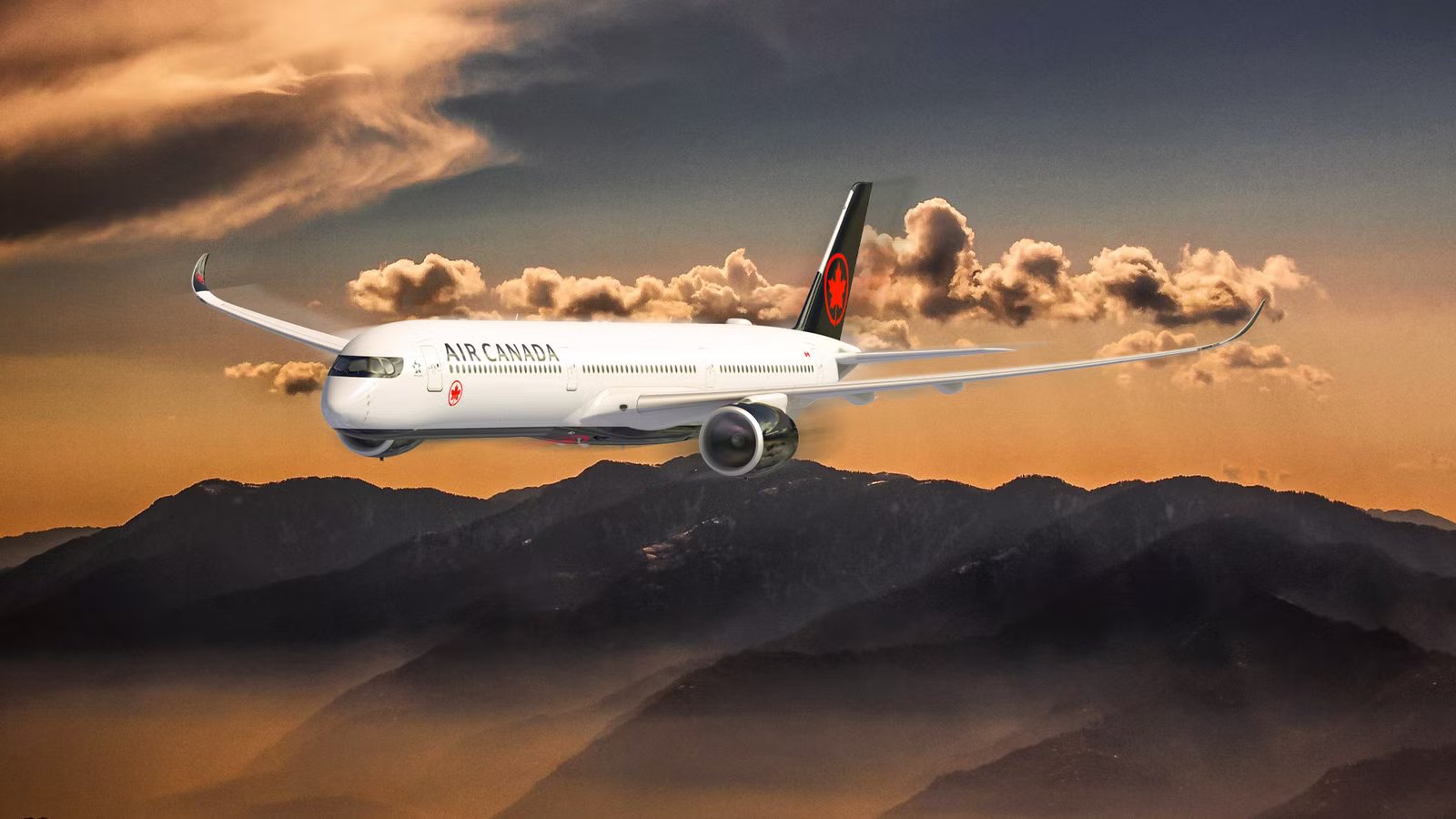
The horizon of Canadian aviation is shifting as the nation’s flag carrier embarks on a transformative journey to redefine the limits of its global network.  Air Canada recently confirmed a firm order for eight Airbus A350-1000 aircraft, a decision that signals the end of an era and the beginning of a significantly more ambitious chapter in international connectivity. For a carrier that has long relied on
  Boeing for its heaviest long-distance operations, this move to Airbus represents a strategic realignment aimed at conquering the most demanding routes on earth.
The necessity of this move becomes clear when examining the current state of the long-haul fleet, where the veteran Boeing 777-300ERs are beginning to show their chronological limits. With an average age of over 16 years, these aircraft are approaching the point where maintenance requirements and fuel consumption start to impact the bottom line. The A350-1000, in contrast, is a massive technological leap that provides the range and endurance required to link Canada with the furthest reaches of the globe in a single, nonstop bound.
Time To Move On?

For nearly two decades, the Boeing 777-300ER stood as the titan of the Maple Leaf fleet, serving as the lifeblood of the international network. It was the aircraft that allowed Air Canada to compete with the world’s elite carriers, offering the capacity and prestige necessary to serve major global hubs. However, the requirements of the modern traveler and the harsh realities of volatile fuel prices have gradually altered the definition of a successful flagship.
The story of the 777 at Air Canada is one of reliability and immense scale, yet even the most legendary machines have a ceiling that is too strong to break. As these aircraft age, they struggle to maintain the efficiency required for the ultra-long-haul missions that define the post-pandemic travel landscape. Replacing them with the A350-1000 is a calculated move to ensure that the airline remains competitive in an era where sustainability and operational range are the primary currencies of success.
This transition marks a fundamental shift in the fleet composition, moving away from the all-Boeing widebody strategy that defined the early 2000s. Bringing in the Airbus flagship, the airline gains access to a platform designed from a clean sheet for the specific rigors of 17-hour missions. It is a necessary evolution that honors the service of the 777 while acknowledging that the future of Canadian aviation requires a different kind of endurance to reach markets far beyond without compromise.
Pushing To Further Unknowns

The mathematical reality of ultra-long-haul flight is one of keeping fuel weight down and revenue payload as high as possible. For the Boeing 777-300ER, the mission profile begins to suffer once the flight time exceeds 14 hours, as the massive weight of the fuel required to stay aloft starts to eat into the available space for passengers and cargo. Bridging the 1,300-nautical-mile (2,408-kilometer) gap between the legacy fleet and the new Airbus flagship is no easy feat, requiring the flight envelope limits to be pushed much further than before.
This range extension is achieved through a combination of aerodynamic refinement and the massive weight savings provided by a 70% composite airframe. The 777 relies on raw power from its massive GE90 engines to haul its aluminum frame into the skies. In contrast, the A350-1000 utilizes the high-bypass Rolls-Royce Trent XWB-97 to achieve a significantly better lift-to-drag ratio. This allows the aircraft to carry a full load of passengers across distances that would leave the older Boeing variant severely payload-restricted or requiring a technical fuel stop in a city like Anchorage.
|
Feature |
Boeing 777-300ER |
Airbus A350-1000 |
The Advantage |
|
Max Range |
7,370 nm (13,649 km) |
9,000 nm (16,668 km) |
+1,630 nm (3,019 km) |
|
Endurance |
~15 Hours |
17–18 Hours |
Reaches Sydney/Singapore |
|
Fuel Burn |
Baseline |
25% Reduction |
Massive cost savings |
|
Material |
Mostly Aluminum |
70% Advanced Composites |
Lighter, stronger airframe |
The commercial implications of this range increase are profound for a carrier headquartered in a northern geography like Canada. It transforms the way the airline views thin routes where demand is high, but the distance is punishing. Eliminating the need for a refueling stop, Air Canada can shave three or four hours off total travel times, providing a superior product that competitors using older metal simply cannot match. This is the difference between a flight being a logistical hurdle and a seamless, high-yield bridge between continents.

The Aircraft Set To Replace The Iconic Boeing 777-300ER
The clock is ticking for this aviation legend. Airlines have more than one option as a replacement, but which will they pick?
Direct To The People

The true value of the A350-1000 is measured in the specific dots it can connect on a map that were previously out of reach. For years, routes like Toronto to Sydney or Montreal to Singapore have been the holy grail of the Air Canada network, desired for their high business-class demand but avoided because the 777-300ER could not complete the journey with a full cabin. The new Airbus flagship changes this equation, moving these destinations from the realm of theory into the active flight schedule, making Air Canada’s leadership naturally very excited about the future.
Flying from Vancouver to Delhi already pushes the current fleet to its limits, and routes that lie on the limits often require seats to be blocked off to ensure the aircraft remains light enough to carry sufficient fuel. With the A350-1000, these restrictions vanish, allowing every single seat to be sold alongside a belly full of high-value cargo. This unrestricted performance is what makes the aircraft a game-changer; it provides the 17,000-kilometer (10,563-mile) reach needed to turn Toronto into a truly global jumping-off point for much of the globe.
|
Route |
Distance |
Current Status (777-300ER) |
A350-1000 Capability |
|
Toronto (YYZ) to Sydney (SYD) |
8,414 nm (15,583 km) |
Not Possible Nonstop |
Full Payload Nonstop |
|
Montreal (YUL) to Singapore (SIN) |
7,998 nm (14,812 km) |
High Payload Restrictions |
Unrestricted Nonstop |
|
Vancouver (YVR) to Delhi (DEL) |
6,000 nm (11,112 km) |
Seasonally Restricted |
Year-Round Reliability |
For an airline to actually achieve ultra-long-haul success, it is predicated on the ability to fly point-to-point without the complexity of a hub connection. Removing the need for passengers to transit through hubs like Los Angeles or Hong Kong, Air Canada captures a larger share of the premium market. The A350-1000 provides the mechanical freedom to design a network based on passenger preference rather than the physical limitations of the fuel tank.
Plenty Of Passenger Benefits

The 20-hour mark is being broken by today’s modern airliners, and so naturally, the focus of aeronautical design has shifted from the mechanical endurance of the machine to the biological endurance of the passengers. If the A350-1000 is to successfully bridge the gap between Montreal and Singapore, the experience inside the metal, or in this case, the composite, must be radically different from the long-haul flights of the past. Air Canada has recognized that the success of these new routes depends entirely on a traveler’s ability to step off an 18-hour flight feeling like a human being rather than a victim of atmospheric pressure.
The technical secret to this wellness revolution lies in the aircraft’s ability to maintain a cabin altitude of just 6,000 feet (1,828 meters) even while cruising at much higher altitudes. In contrast, the older Boeing 777 fleet is typically pressurized to approximately 8,000 feet (2,438 meters). This difference may seem minor on paper, but for the human body, it can change a pounding headache to feeling fully refreshed. The lower altitude allows for higher oxygen absorption in the blood, which directly combats the effects of jet lag and dehydration.
The A350-1000 introduces a sophisticated humidity management system that prevents the dry, scratchy throat common in older aluminum aircraft. Composite fuselages do not corrode when exposed to moisture, meaning Airbus can keep the cabin air significantly more humid than was ever possible on the 777. Combined with the Airspace cabin’s oversized overhead bins and vertical sidewalls, the environment opens up on the A350, offering passengers far more perceived space.

The Real Reason Why Rolls-Royce Owns The Airbus A350 Engine Slot
A closer look at the host of advancements offered by the Trent XWB, and how it continues to develop.
Diving Into The Power

To get a real understanding behind this multi-continental reach, it is important to look closely and understand the specific differences under the cowlings. For the A350, the Rolls-Royce Trent XWB-97 was designed from the ground up to be the most efficient large aero-engine in service today. The 777-300ER’s GE90-115B, the world’s most powerful jet engine for years, is a product of 90s technologies that favors raw thrust over modern fuel economy. The Trent XWB-97 represents the modern new philosophy, utilizing advanced materials and a high bypass ratio to deliver the 431 kilonewtons (97,000 pounds) of thrust required for a heavy A350-1000 takeoff while using significantly less fuel.
A 25% reduction in fuel consumption per seat translates into millions of dollars in annual savings across the fleet. This efficiency is paramount, as carbon taxes and sustainability mandates become a more significant part of the operational landscape. In this light, the engine itself may well be the difference maker for Air Canada, ticking many boxes that the older fleet cannot.
Rolls-Royce has designed the Trent XWB with on-wing time in mind, utilizing digital twin technology to monitor engine health in real-time as the aircraft flies over the Arctic or the Indian Ocean. This predictive maintenance capability ensures the flagship fleet stays in the air longer, reducing the costly AOG (aircraft on ground) incidents that can disrupt a complex global schedule. By the time the first of these eight jets arrives in 2030, the Trent XWB will have millions of hours of proven reliability, giving Air Canada the confidence to launch its boldest routes yet.
The Dream Team

Where the A350-1000 applies to Air Canada’s fleet is with the upcoming A321XLR, working in unison to create a hub-and-spoke network of unprecedented flexibility. The A350 handles the massive intercontinental leaps, while the smaller XLR will serve as the feeder, bringing passengers from secondary cities across North America and beyond directly into the hubs at Toronto, Vancouver, and Montreal. This synergy allows Air Canada to offer a seamless, all-Airbus ‘Airspace’ experience from the moment a passenger leaves a regional airport until they arrive in a distant capital.
Air Canada will soon have eliminated the need for many of the stressful connections that currently define transpacific and Southeast Asian itineraries. Whether it is the quieter engines of the Trent XWB-97 or the improved cabin humidity, the focus of the airline has shifted from simply moving people to moving them with a level of care that was technically impossible during the era of aluminum jets.
The arrival of the A350-1000 shows a declaration of intent for the Canadian flag carrier. It positions Canada as a primary global crossroads, capable of reaching any major economic center on the planet without a single stop. As the first of these eight jets rolls off the assembly line in Toulouse, it will carry with it the aspirations of a carrier that has finally found the machine capable of matching its global ambitions.