dailynewsnblog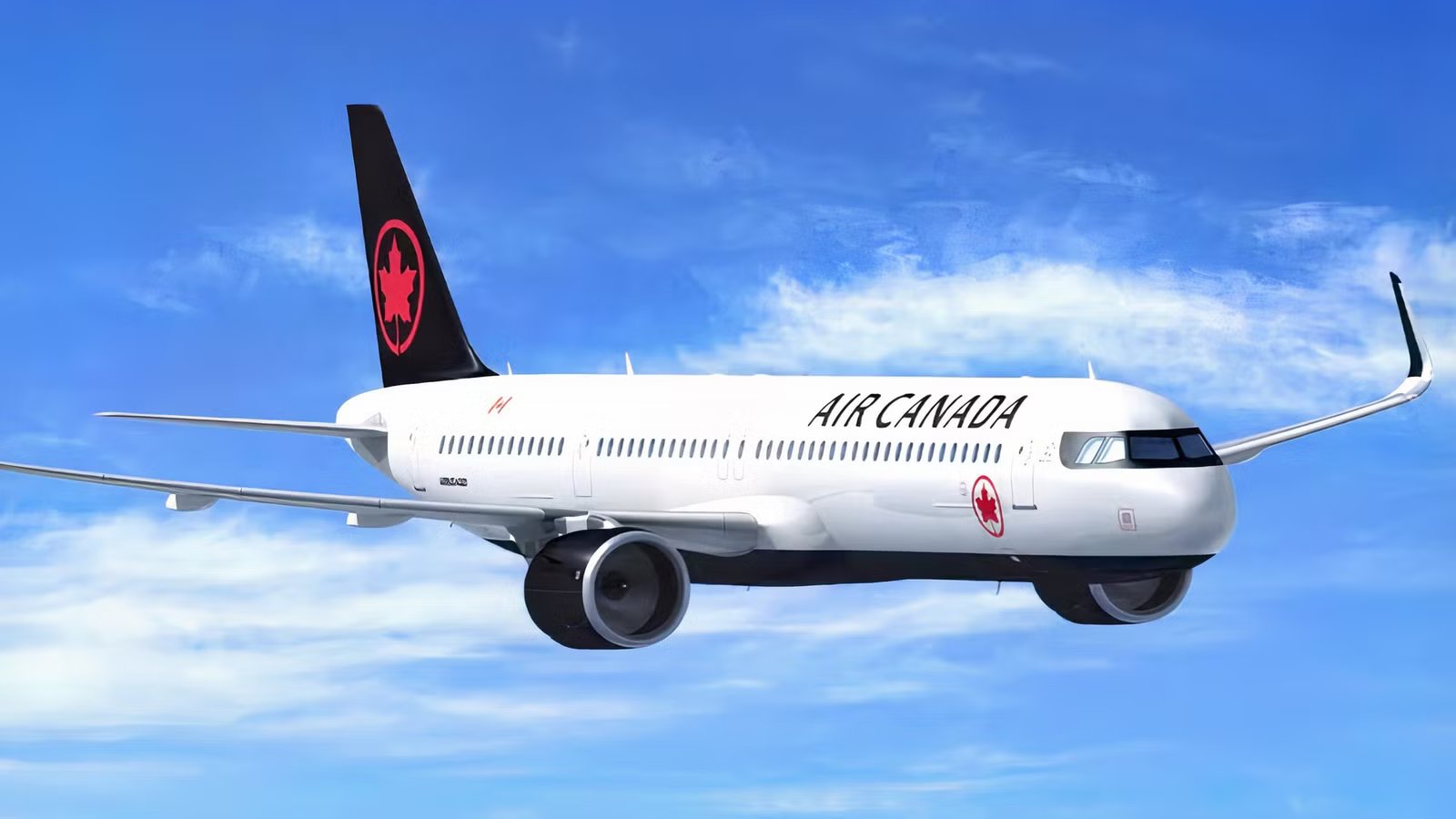
Seven airlines currently have the Airbus A321XLR: Aer Lingus, American Airlines, Iberia, IndiGo, Qantas, Qanot Sharq, and Wizz Air. IndiGo will use the variant to Greece later this month. Other airlines will fly the XLR this year, including Saudia—whose frames will have just 144 seats—and Air Canada.
The XLR will be important equipment in  Air Canada’s fleet. It has ordered 30 of them, which were originally due to arrive in 2024. The first frame is now set to arrive in early 2026. All aircraft will have 182 seats, which is a pretty standard amount for the variant. They will have 14 fully flat business seats (1-1) and 168 seats in economy (3-3).
These Nine Routes Are Already Known

Everyone knows that long-haul narrowbodies have considerably lower trip costs than widebodies. That’s their fundamental selling point. It is somewhat counterbalanced by having a higher seat-mile cost and, therefore, requiring higher seat-mile revenue.
But as they require far fewer passengers to break even at a particular percentage point, single-aisle aircraft are usually a far less risky proposition. However, they may encounter payload restrictions, particularly during the peak summer in hot countries.
They may have multiple roles. They may enable new, long thin routes, which is the most commonly considered development. A route that is currently served seasonally may become year round, increasing competitiveness and market share, without excess additional capacity. They may enable a route to switch from a twin-aisle, whether fully or at quieter times of the year, to improve loads, fares, yields, and overall performance. Many of these things, and more, apply to Air Canada’s already known XLR network.
|
Start Date* |
Route** |
XLR Operations Only*** |
|---|---|---|
|
May 1 |
Montreal to Calgary |
Up to daily. Currently scheduled until early September |
|
May 15 |
Montreal to Dublin |
Four weekly. The XLR is currently only scheduled for May. Then switching to the 787-9 |
|
May 15 |
Montreal to Toulouse |
Four weekly to daily (year round). Replaces the 787-8 |
|
June 2 |
Montreal to Edinburgh |
Three to four weekly, with the XLR only scheduled in June. Then switching to the 737 MAX 8. The MAX 8 was used last year |
|
June 3 |
Montreal to Porto |
Four to five weekly (seasonal). Replaces the A330-300 |
|
June 17 |
Montreal to Palma de Mallorca |
New route. Only eight round-trip flights on the XLR in June. Then switching to the 787-8 |
|
July 2 |
Montreal to Berlin |
New route. Three weekly (seasonal) |
|
July 31 |
Montreal to Nantes |
New route. Three to four weekly (seasonal). MAX 8 initially operates |
|
August 1 |
Montreal to Vancouver |
Daily (seasonal). Currently scheduled through early September |
|
* As of January 15, and subject to change |
** Other routes, such as Halifax-London Heathrow, were scheduled on the XLR, but then removed |
*** Exceptionally likely to change, so treat it as a snapshot |
Air Canada From Montreal To The Scottish Capital

Edinburgh has seen substantial development to/from North America recently. According to OAG data, more than a million two-way seats were available for the first time in 2025. One part of it involved the Canadian flag carrier’s launch of Montreal flights in late June last year. It was the first time the market, which covers 2,634 nautical miles (4,878 km) each way, had been served.
It is the kind of market for which narrowbody equipment is designed. In the first season, the 169-seat 737 MAX 8 was deployed, running three weekly. This year, flights start on June 3, a few weeks earlier. The 182-seat XLR will initially be used, before the MAX 8 reappears on July 7 and operates until the final Europe-bound departure of the season, on September 6. The route will mainly be served four times a week.
This year’s slightly longer season, frequency increase, and higher-gauge equipment (albeit for a limited time) mean that seats for sale have jumped by 72% year-over-year. According to the UK Civil Aviation Authority, the airline filled 78% of seats in the first year, which is a decent starting point. Evidently, it is sufficiently happy with the performance, helped by incentives or other risk-sharing agreements.

The Most Notable New Airline Routes This Week
Routes make the world go around. See which examples made the list this week.
Narrowbodies Will Have 16% Of Air Canada’s Montreal-Europe Flights

Let’s fast-forward to August. In that peak summer month, Air Canada plans four transatlantic XLR-operated routes: Montreal to Berlin, Nantes, Porto, and Toulouse. The MAX 8 will have two routes: Edinburgh and Keflavik.
When all equipment is considered, Air Canada plans 702 departures from Montreal to Europe. Its offering will be up by a very healthy 12% compared to last August. In contrast, seats for sale have only risen by 4%. This reflects the growing use of narrowbodies, with August departures jumping from 35 to 114. This has contributed to Air Canada’s seats per flight dropping from 325 last August to 304.