dailynewsnblog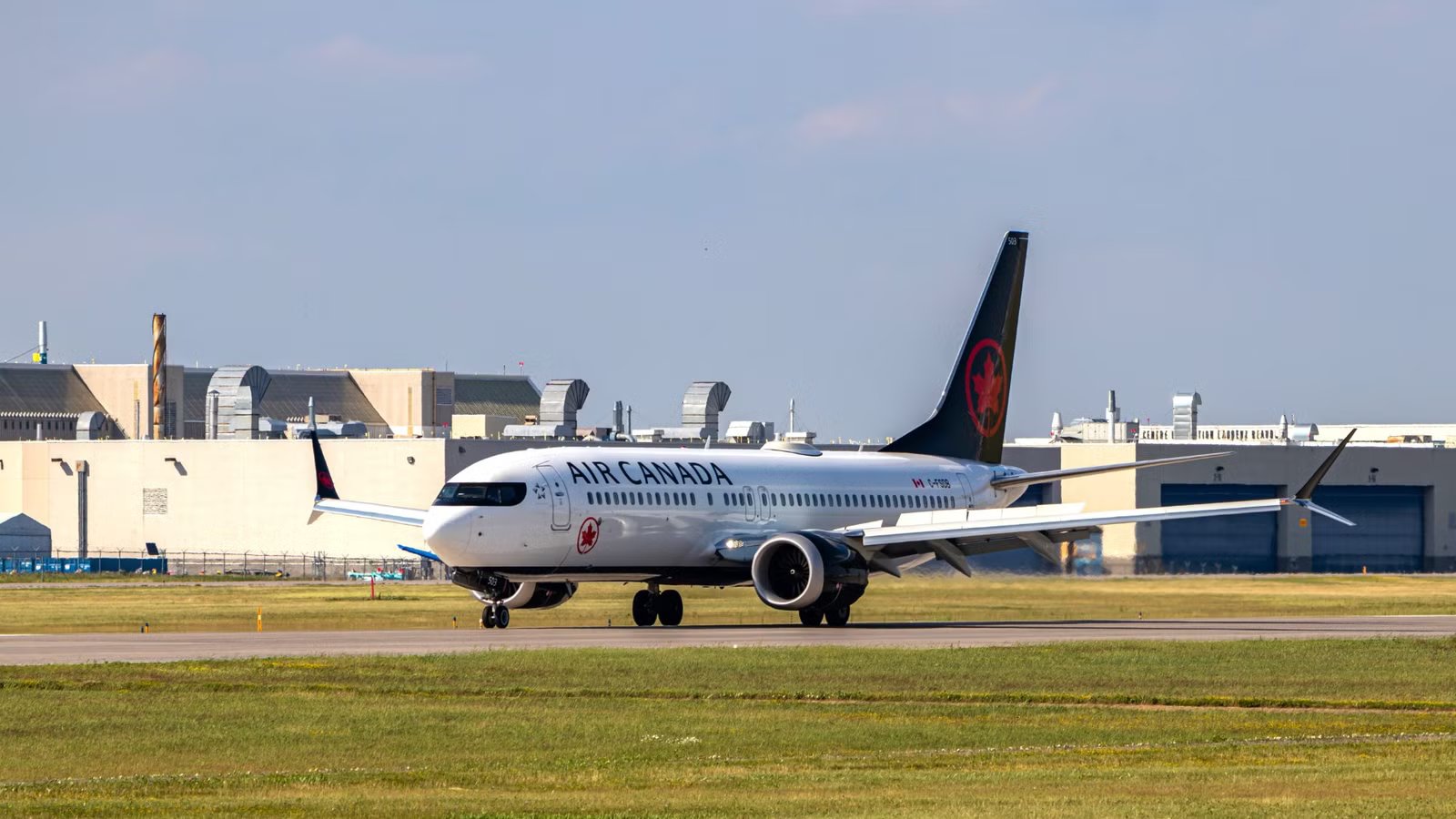
Recent years have seen long-haul airlines invest more in specialized narrowbody aircraft that they can use to serve secondary intercontinental routes where demand is lower. The advent of the Airbus A321XLR has been the most obvious evidence of this, but, at Air Canada, the  Boeing 737 MAX 8 is another example of a narrowbody that is used on intercontinental routes. Specifically, it will serve seven different transatlantic corridors in 2026.
This figure is almost twice as many as last year, when, according to historical scheduling data made available by Cirium, an aviation analytics company,  Air Canada served just four Europe-bound routes with its US-built narrowbody twinjets. Let’s crunch the numbers and take a look at what has changed.
Three New Routes

Air Canada’s longest transatlantic route with the Boeing 737 MAX 8, at 3,327 miles (5,354 km), is a brand-new corridor, and it will link its hub at Montréal Trudeau International Airport (YUL) with Nantes (NTE) in France. These services will operate three times a week between June and October, and, while they will primarily be operated by the Airbus A321XLR, Air Canada has also penciled in nine 737 MAX departures in June and six in July.
Elsewhere in Europe, June 18 will see Air Canada commence thrice-weekly Boeing 737 MAX 8 operations between Halifax (YHZ) and Brussels (BRU). These will run until September, with 35 departures penciled in this year. From Toronto (YYZ), it will also fly the MAX to Ponta Delgada (PDL) three times a week between June and September, with 38 rotations planned. Mark Galardo, Air Canada’s EVP and CCO, explained last year that:
“From Canada to Ponta Delgada, Nantes, and Brussels, we are strategically increasing new non-stop routes across Europe to bring convenient access to key destinations, while strengthening economic ties, and supporting tourism.”
Four Corridors From Last Year Have Retained Their 737 MAX Service

As previously noted, Air Canada will also serve four transatlantic routes this year that saw the type in 2025 as well. By far the most popular of these is the corridor between Halifax and  London Heathrow Airport (LHR), with near-daily coverage. Indeed, 351 departures are penciled in throughout the year, with flights operating every day from February 14 onwards. Even in January and early February, flights still operated up to four times a week.
While this annual total represented a slight decrease compared to the 355 Boeing 737 MAX 8 flights that Air Canada operated between Halifax and London in 2025, the type’s frequency on two routes to Reykjavík Keflavík International Airport (KEF) has increased. Indeed, Toronto will see 106 flights with the type to Iceland this year, compared to 95 in 2025, while Montréal’s annual frequency will jump from 76 to 85. Both routes are summer-only.
Last but not least, Air Canada will also fly the Boeing 737 MAX 8 between Montréal Trudeau International Airport and Edinburgh (EDI) in Scotland this year. The Canadian flag carrier and Star Alliance founding member has rostered the type on 39 rotations on this transatlantic route in 2026, up from 32 last year, with these spread between July and September. These services will follow seven narrowbody rotations by the Airbus A321XLR in June.

Air Canada Rouge Debuts First 737 MAX 8 With Upgraded Cabins
Air Canada Rouge’s first Boeing 737 MAX 8 takes flight launching services to Edmonton and Kelowna, before it expands internationally.
What’s It Like On Board?

According to present fleet data made available by ch-aviation, Air Canada currently has a grand total of 50 Boeing 737 MAX 8 jets at its disposal. These aircraft are just 5.7 years old on average, compared to a fleet-wide mean of 17.2 years, and, at the time of writing, five were undergoing maintenance procedures.
The airline favors a two-class seating layout on these narrowbody twinjets, with data from aeroLOPA showing that they can accommodate a grand total of 169 passengers. The best seats in the house are the 16 business class recliners at the front of the aircraft, which are laid out four-abreast in a 2-2 configuration and offer 38 inches of pitch. Meanwhile, of the 153 economy class seats, 54 are designated as ‘Preferred’ with additional legroom.