dailynewsnblog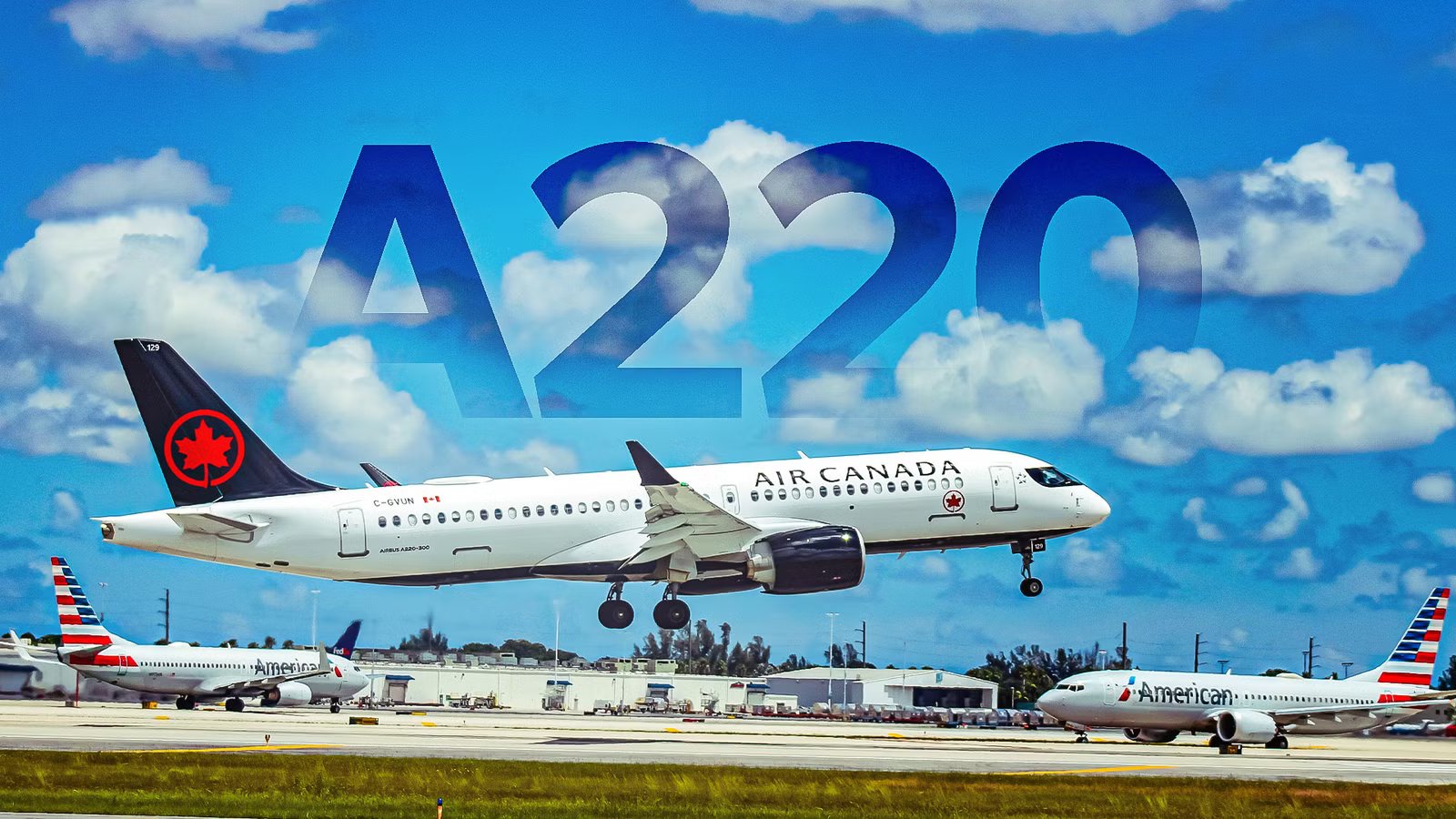
Air Canada has canceled the summer service that provides nonstop flights from Montréal–Trudeau International Airport (YUL) to  Seattle-Tacoma International Airport (SEA) aboard its Airbus A220-300 regional jets, as Ishrion Aviation broke the news on X. The seasonal service was anticipated to begin on May 1st, yet the Air Canada website does not offer any booking options at this time.
Schedule data from serum projected almost daily flights in May and June 2026. In lieu of the non-stop route, travelers will need to connect in Vancouver, Toronto, or Chicago in order to make the trip if they book through Air Canada.
Air Canada’s Quiet Changes

There has been no public announcement of the route cancellation. With the nonstop service no longer an option,  Air Canada offers a layover at Vancouver International (YVR) or Toronto Airport (YYZ) with a connection that continues to Seattle. The other alternative is for flyers to connect with a United Airlines flight at Chicago O’Hare International Airport (ORD) and continue to Seattle from there.
The originally anticipated nonstop service window from YUL to SEA was to begin May 1st and run until October 13th, 2026. Schedule data on serum showed that Air Canada was expected to offer 3,699 seats aboard 27th scheduled flights for May 2026. In June, the service would be just one trip fewer in capacity and offer 3,562 seats for the month.
It remains unclear what the root cause behind the abandoned route could be, but politics may well be a play. Since Donald Trump took office as the President of the United States in 2025, cross-border traffic has taken a significant hit with his ongoing trade war and vitriol targeting America’s closest ally, which has reduced Canadian appetite for travel to the US almost to zero.
Canadian travelers have also begun canceling trips to the Caribbean due to the alarming rise in American military activity as well as continued threats from the Trump administration against other nations in Latin and South America, such as Cuba. CBC recounted this comment from a Canadian tourist online:
“We’re debating our mid-February trip … Frankly, if a war was happening 50 nautical miles away from where I’m supposed to be having a relaxing vacation, I wait until things have settled.”
Canadians Boycott America

In early 2025, Canadians launched a widespread boycott of American products and travel, largely in response to the trade war, tariffs, and controversial rhetoric from the Trump administration, including suggestions of annexing Canada as a ’51st state.’
The boycott’s most severe impact is in the travel sector, where Canadian visitors, traditionally the largest international group for the US, have plummeted. The movement, often tagged as #ElbowsUp, has seen a massive shift in consumer behavior. Polling indicates that roughly 85% of Canadians are actively replacing American products with ‘Made in Canada’ alternatives. Data suggests that bookings for the summer of 2025 were slashed by as much as 75% due to the political tension.
WestJet has suspended flights to 10 US cities this summer, according to Global News. Air Canada expects a 10% capacity drop to most American hot spots, while Air Transat is expected to cancel all flights this year to US destinations, according to Palm Beach Post. As of early 2026, statistical reports show a 24% drop in travel from Canada to the US, in a year-over-year comparison.

Air Canada Forecasts Significant Dip In Bookings For The Next 6 Months
Tariffs have forced Canadians to cancel trips to the US.
The End Of The World’s Biggest Open Border?

The US travel industry lost an estimated $4.5 billion in 2025 due to the missing Canadian tourists. Some specific attractions have been hit harder than others. For example, Canadian bookings for tours of US National Parks plunged by 93%. On top of this enormous economic blow that the US has taken thanks to Trump, the status of the world’s longest undefended border is the most volatile it has been in over a century.
Donald Trump has threatened to use economic force to pressure Canada into joining the United States or to use massive tariffs to ensure compliance with his exploitative trade policies. He has gone so far as to threaten to block the opening of a new $4.5 billion bridge connecting Detroit, Michigan, to Windsor, Canada, according to the Grand Pinnacle Tribune.
The doubt of the public, as well as the Canadian government, has even led to the undermining of the once unshakable military Alliance. The Royal Canadian Air Force (RCAF) was anticipated to purchase 88 Lockheed Martin F-35 stealth fighters. Concerns over the security of the prohibitively expensive 5th-Generation fighters may mean that the RCAF will opt for a different airframe altogether. This would weaken the US defense industrial economy as well as the North American Aerospace Defense Command (NORAD) alliance.