dailynewsnblog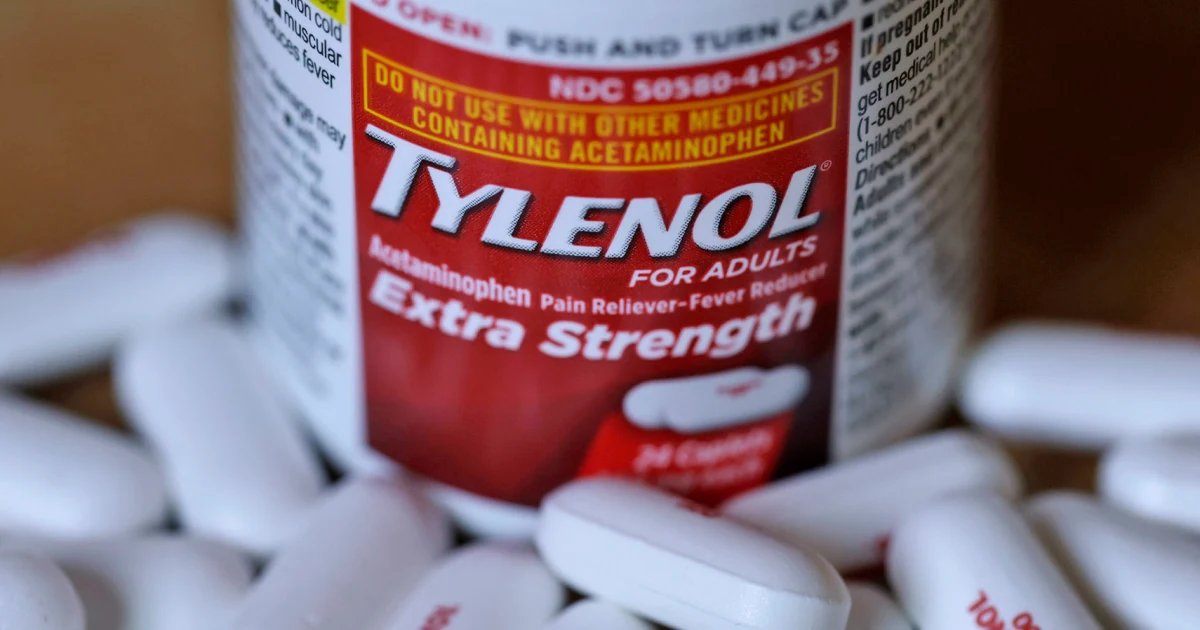
“Don’t take Tylenol. Don’t take it. Fight like hell not to take it.”
That was the message from President Donald Trump when he and Health Secretary Robert F. Kennedy, Jr. announced in September that women should avoid Tylenol during pregnancy due to what they described as a link to autism.
The risk had not been substantiated by robust scientific evidence when Trump issued the warning. Now, a group of researchers have responded with what may be the most thorough analysis yet of the existing science on the topic.
Their review, published Friday in the medical journal The Lancet Obstetrics, Gynaecology, & Women’s Health, found no link between acetaminophen — the active ingredient in Tylenol, also known as paracetamol — taken during pregnancy and autism, attention-deficit/hyperactivity disorder or intellectual disability.
The authors said they undertook the research, in part, to clear up confusion after Trump’s statements, since an untreated fever can pose health risks to a mother and baby.
“After this declaration, there were a lot of mothers who actually were scared to take paracetamol,” said Dr. Francesco D’Antonio, one of the paper’s authors and a professor of fetal medicine at the University of Chieti in Italy. “The day after this declaration, actually, we had a massive increase in phone calls and emails from women.”
The report’s main takeaway is that acetaminophen is safe during pregnancy, according to Dr. Asma Khalil, another one of the paper’s authors and a consultant obstetrician and fetal medicine specialist at St. George’s Hospital in London.
“It remains to be the first line treatment that we would recommend if the pregnant women have pain or fever,” she said on a call with reporters.
In a press release, The Lancet referred to the paper as a “gold-standard evidence review.”
The description echoes language from members of the Trump administration. During the September announcement, Kennedy said the National Institutes of Health would unleash “unbiased, depoliticized, gold standard scientific research and academic freedom” in its investigation of autism’s causes.
Four researchers who weren’t involved in the new paper praised its rigor.
“I don’t think there’s a better way to analyze the data than this Lancet paper does,” said David Mandell, a psychiatry professor at the University of Pennsylvania.
The seven-person team behind the new paper, from the U.K., Italy and Sweden, used three methods to evaluate studies published through September.
First, they excluded studies that did not compare pregnancies in which Tylenol had been used to those without it, as well as research that did not disclose pregnant women’s health histories or which medications they were taking. They also did not include studies that asked women to self-report whether they had taken Tylenol and whether their child had autism. Instead, the researchers relied only on studies that used medical records or questionnaires administered or reviewed by a health care provider. Out of thousands of studies, 43 made the cut.
Next, the researchers rated the studies based on their quality and whether any factors may have biased the results. They excluded poor quality ones, such as those that didn’t follow study participants for very long or didn’t clearly define the health outcomes.
Finally, they did a closer assessment of the two most robust studies on Tylenol use and autism, which each compared large groups of siblings — one that had been exposed to Tylenol in utero and one that had not. The siblings shared genetics and were raised in roughly the same environment, with the same socioeconomic and educational backgrounds, so the researchers could presume that those factors did not influence the study results.
All three methods led to the same conclusion: There was no link between Tylenol use in pregnancy and neurodevelopmental disorders.
“No matter which way they analyze them, they find that acetaminophen doesn’t cause ADHD or autism or intellectual disability,” Mandell said.
When asked about the findings, an official from the Health and Human Services Department said the analysis does not resolve the question of whether Tylenol use is linked to autism. The official alleged that the paper engineers a finding by excluding evidence and designing a study with a bias toward showing no association.

“According to HHS, many experts have expressed concern of the use of acetaminophen during pregnancy,” said Andrew Nixon, a spokesperson for the department.
Nixon named, in particular, Dr. Andrea Baccarelli, dean of faculty at the Harvard T.H. Chan School of Public Health, whose review last year, published in the journal Environmental Health, found an association between autism and Tylenol use in pregnancy. The Trump administration cited the research as evidence of Tylenol’s purported risks. Baccarelli did not respond to a request for comment.
Khalil said that Baccarelli’s review and other small studies that have found such associations probably didn’t do enough to exclude confounding factors.
Mandell also said Baccarelli’s review did not comb through nearly as many papers as the new analysis did.
“At the very least, it suggests a sloppy search,” he said.
In the months since his initial statements about Tylenol, Trump has doubled down, writing on Truth Social earlier this month: “Pregnant Women, DON’T USE TYLENOL UNLESS ABSOLUTELY NECESSARY.”
However, a written warning that the Food and Drug Administration sent to physicians — which Trump and Kennedy announced in September — just said to “consider minimizing the use of acetaminophen.” The warning also said the medication was still the safest over-the-counter option for reducing pain and fevers during pregnancy and described the supposed association between Tylenol and autism as “an ongoing area of scientific debate.”
Autism researchers say there’s no reason to debate the topic any longer.
“The question has been answered,” said Alycia Halladay, chief science officer at the Autism Science Foundation, who wasn’t involved in the new paper. “There was never a relationship between acetaminophen and autism. We can stop talking about this now and focus on what does cause autism instead of confusing families and continuing to blame the mother.”