dailynewsnblog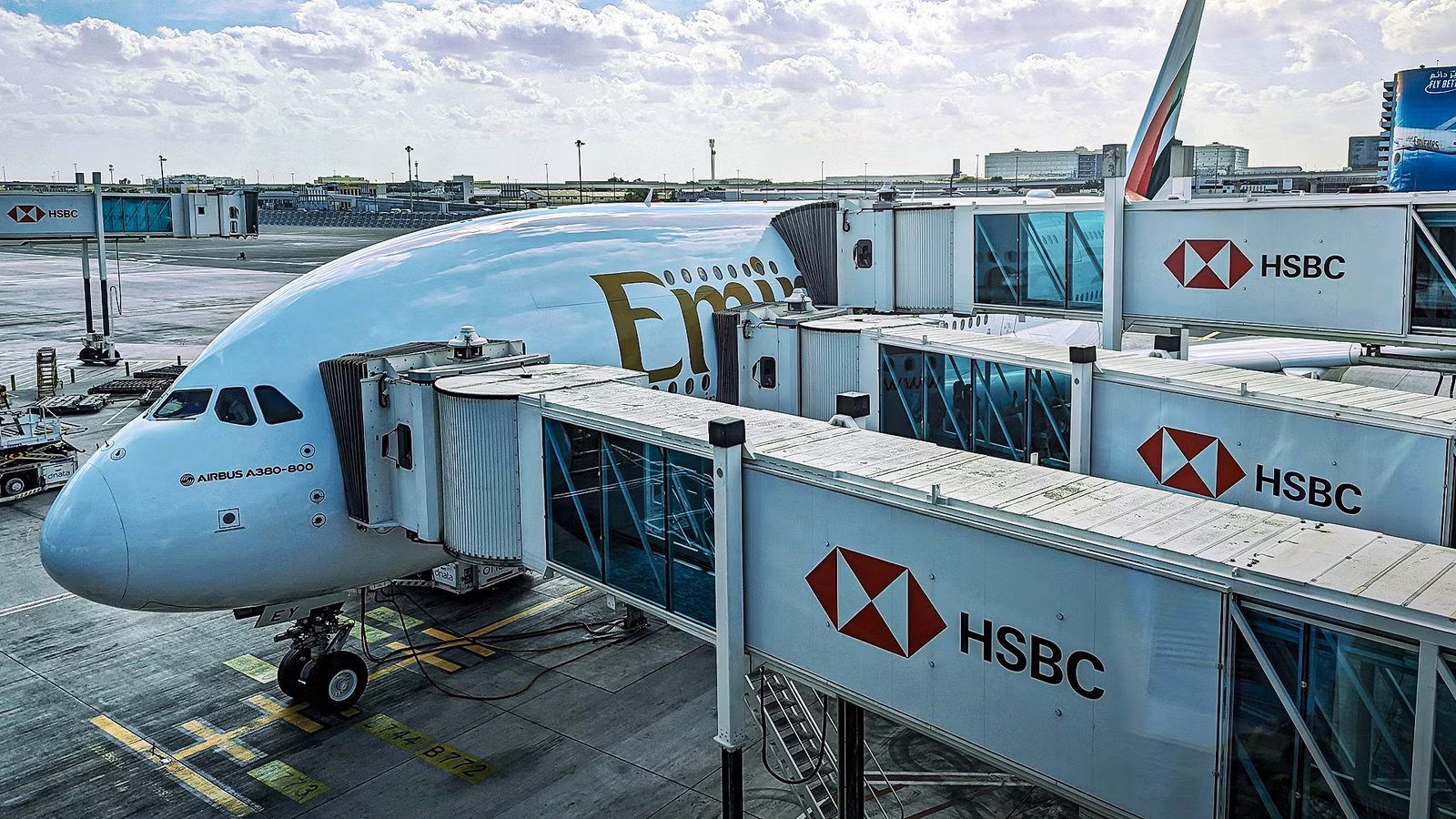
The Airbus A380 is the largest passenger aircraft ever built, and its awe-inspiring dimensions have required significant reworks at airports around the world, including in the United States, Europe, and Australia. Largely, the A380’s impact was mostly felt in the late 2000s and early 2010s, when the type was first entering service and demand was expected to be relatively high, but then cooled off as the Airbus A380 failed. The COVID-19 pandemic appeared to be the death knell for the A380, but in the years since, the double-decker has made a resurgence.
As it turns out, many airports around the world still need to accommodate the Airbus A380, and Denver International Airport received its first-ever Airbus A380 flight in 2025, 18 years after the A380 first entered service. Reworking an airport to accommodate the A380 can be an expensive ordeal, but airports are getting a return on their investment as the A380 continues to soldier on, with no signs of going away anytime soon.
A Brand New Destination For The Airbus A380 In The 2020s

After the COVID-19 pandemic, airlines began returning their previously grounded Airbus A380s to service. Some operators now fly the A380s to different destinations than before the COVID-19 pandemic, and in 2025, Lufthansa grabbed headlines when it began flying the A380 nonstop from Munich Airport to Denver during the summer season. It would serve Denver from April 30 to September 30, and it will return later in 2026, albeit only from July 1 to September 27.
 Denver International Airport (DEN) had only ever received one A380 before this, an Air France A380 that diverted in 2018. Despite this, Denver already had much of the infrastructure required to support the A380. Its runways were long enough for the double-decker, and what’s more, the airport has two gates that are striped for a Code F aircraft, A37W and A41W. These gates, in fact, were built well before the Airbus A380 entered service.
|
ICAO Gate Codes |
Maximum Wingspan |
|---|---|
|
Code A |
49 feet (15 meters) |
|
Code B |
78 feet (24 meters) |
|
Code C |
118 feet (36 meters) |
|
Code D |
170 feet (52 meters) |
|
Code E |
213 feet (64 meters) |
|
Code F |
262 feet (80 meters) |
Denver needed to upgrade its pushback bars to be able to accommodate the heavy superjumbo, but this was the only notable upgrade required. Denver International Airport is famous for being the world’s largest airport, and it was designed to handle large aircraft with significant room for expansion, too. The towbars were the main restriction for A380 service (which prevented the Air France A380 diversion from parking at a gate in 2018), but this was a relatively minor restriction.
Airport Alterations In Preparation For The A380

Denver International Airport is larger than most towns, and it was designed with larger aircraft in mind. As such, it was extremely easy for  Lufthansa to send the A380 to Denver. Other airports, however, have more traffic and are far more constrained. Many of these airports are also the ones where passenger demand is highest, and in turn, where airlines have the most need to send their largest aircraft. These include airports such as Los Angeles International Airport, New York JFK, and London Heathrow.
The Airbus A380 actually requires slightly less runway length than the Boeing 747. However, it requires wider runways than other widebody aircraft, and it requires wider taxiways as well. This is due to its wingspan of roughly 262 feet (79.8 meters), which is roughly 38 feet (11.6 meters) wider than the Boeing 747-8. In addition, the A380 can have a Maximum Takeoff Weight of 575 tons, significantly heavier than any other commercial aircraft, which requires many airports to strengthen runways and taxiways.
|
Aircraft |
Maximum Takeoff Weight |
|---|---|
|
Airbus A380-800 |
575 tons |
|
Boeing 747-8 |
447 tons |
|
Boeing 747-400 |
397 tons |
|
Airbus A340-600 |
380 tons |
|
Boeing 777-300ER |
351 tons |
|
Airbus A350-1000 |
322 tons |
These same issues also apply to the ramp area. Many airport gates are designed to fit aircraft grouped in ICAO Code E or smaller (including the Boeing 747-400 and 777), but the A380 is a Code F aircraft. The Boeing 747-8 is also a Code F aircraft, but its wingspan is much narrower than that of the A380, which makes it easier to accommodate. Gates and taxiways need to be significantly revised to accommodate this increased wingspan, and the A380 also requires at least two jet bridges for efficient boarding and deboarding.

Airbus A380 Vs. Boeing 747: How Do They Compare On Ultra-Long-Haul Flights?
Does it make a significant difference to to choose one aircraft or another for a long flight? If so, that’s the thing, which is the best airliner?
Worldwide Airport Support For The Airbus A380

Hub airports for major A380 operators have had to make significant alterations to accommodate the superjumbo.  Singapore Changi Airport, hub for A380 launch operator Singapore Airlines, widened its runways and taxiways for the aircraft, while nearly 20 gates were modified to fit its 262-foot (79.8-meter) wingspan. London Heathrow Airport spent hundreds of millions to revise its apron and terminals, while a new concourse was constructed at Dubai International Airport with only Code F gates to accommodate the A380.
While the job was fairly straightforward at some airports, other airports could still only barely fit the superjumbo. At many airports, such as Toronto Pearson International Airport, the A380 is restricted from using several taxiways due to wingtip clearance, and it’s not uncommon for an A380 to require a ‘follow me’ car to enter certain parts of an airport. Even on taxiways where the A380 is cleared, its enormous wingspan can result in ground collisions if crews are not careful, requiring heightened awareness.
Beyond an airport’s apron and ramp, the A380 requires revisions to terminals as well. Operators prefer boarding the A380 on both decks, which requires modification to jet bridges. While two is a general minimum, using three jet bridges dramatically decreases turnaround times. What’s more, the interior of a terminal may need to be modified to efficiently accommodate a significant increase in passengers from a single aircraft, and baggage systems need to be reworked to maintain acceptable processing times.
The Dimensions Of The Airbus A380

The Airbus A380 is not a particularly long aircraft. Indeed, it’s shorter in length than the Airbus A340-600, A350-1000, Boeing 747-8, 777-300ER, and 777-9. In addition, while it has a massive tail that reaches 79 feet (24.1 meters) tall, this rarely impacts airport operations. Instead, it’s the wingspan that’s the main issue, as it comes close to the 262-foot (80-meter) by 262-foot (80-meter) ICAO Code F measurements, the largest size category that any airport designs its infrastructure around.
The A380 can have an MTOW of 575 tons, which is spread out across 22 wheels. In contrast, a Boeing 747-8 has an MTOW of roughly 447 tons spread out across 18 wheels, and the 747-8 has a significantly higher MTOW than an older 747-400 or a Boeing 777. While the A380’s pavement loading as a whole is not significantly higher than that of some aircraft due to the number of wheels, the immense weight has required some airports to strengthen taxiways and runways.
The A380’s upper deck has led many airports to modify jet bridges to reach it, and it requires specialized catering trucks as well as airstairs. However, the A380 can use largely the same runways as other widebody aircraft (albeit potentially needing increased width), and the lack of thrust reversers on its outermost engines decreases the risk of foreign object debris. While upgrades are often needed, they’re not always as expensive and complex as they appear.

The Airbus A380’s Unique Cabin Design That Has Allowed Airlines To Generate More Revenue
Two decks and a wide airframe enable the A380 to transport more people than any other aircraft in a style only the “King of the Skies” can accomplish.
Future Large Widebodies Serving Congested Airports

The world’s busiest airports have largely already made their upgrades to accommodate the A380. While the A380 may find itself visiting new airports in the future, it’s not likely that these airfields will need to undergo significant upgrades will need to be made to accommodate high levels of regular A380 traffic. What’s more, the A380 has been out of production for nearly five years, meaning that the worldwide fleet of A380s will only continue to shrink as the years add on.
The most direct replacement for the Airbus A380 today is the Boeing 777-9. While it’s nowhere near the size of the A380, it offers largely the same capacity as a Boeing 747-400, and more than any other in-production aircraft. In addition, it will be far more fuel efficient than the A380 while also being just as capable. It’s already been purchased by a majority of Airbus A380 operators, and it’s found significant popularity with other non-A380 users as well, including Cathay Pacific and China Airlines.
The 777-9 will be the longest passenger airliner ever built, but it’ll only be marginally longer than the Boeing 747-8. It will retain the same MTOW as the 777-300ER, and while it’ll have the largest wings of any commercial Boeing airliner ever, the 777-9 will include folding wingtips as standard. These will allow the 777-9 to park in gates already designed for a Code E aircraft like the classic Boeing 777. Boeing consciously chose to ensure that 777-9 operators wouldn’t face significant operating restrictions compared to flying older Boeing 777s.