dailynewsnblog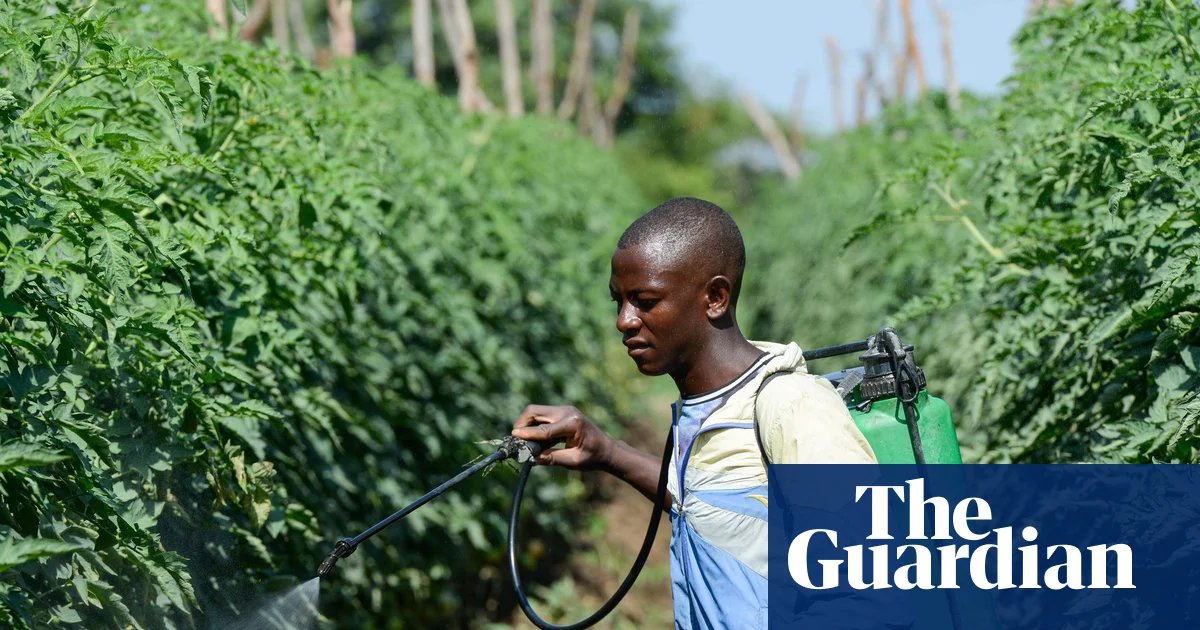
Countries in Africa, where farmers depend heavily on imported fertiliser and a large share of household income goes on food, are particularly vulnerable to supply chain disruptions caused by the war in the Middle East, experts have said.
The conflict has drastically disrupted trade through the strait of Hormuz, a vital shipping lane not just for oil and gas but also for fertiliser, which is produced in vast quantities in the Gulf.
African countries rank among the most reliant on fertiliser imports by sea from the Middle East. A new report by the UN’s trade and development agency (Unctad) says 54% of Sudan’s fertiliser arrives in this way. The figures for Somalia and Kenya are 30% and 26% respectively.
About one-third of seaborne trade in fertiliser, a vital agricultural input for productivity improvement, is transported through the strait of Hormuz.
A lot of the world’s fertiliser is produced in the Gulf, which has an abundance of cheap fossil gas – critical in the manufacture of nitrogen-based fertilisers such as urea – and produces high amounts of sulphur, a by-product used to make phosphate fertilisers.
Fertiliser prices have soared since the war started last month, and Unctad says that may increase food costs and intensify cost-of-living pressures, particularly for the most vulnerable people. Rising oil and gas prices will have the same impact.
African economies are highly vulnerable and face heightened uncertainty during big shocks, according to Unctad. Reasons include reliance on foreign markets, volatile commodity exports, high debt and weak infrastructure.
Governments across Africa are already struggling with budgetary pressures and are therefore particularly vulnerable to supply chain disruptions.
“Any disruptions, any shocks really affect all of us,” said Jervin Naidoo, political analyst at Oxford Economics Africa, an advisory firm.
XN Iraki, professor of business and economics at the University of Nairobi, said the impact of higher oil prices would be felt “acutely” in Africa because most people on the continent work in the informal sector, where there is “uncertain income”.
Rama Yade, senior director of the Atlantic Council’s Africa Center, said on X that rising oil prices pose “serious economic challenges” for many governments on the continent. Governments may be forced to increase subsidies or pass on the cost to consumers, “which could trigger social and political pressure”, she said.
African countries are bracing themselves for the potential shocks. Kenya’s energy minister, Opiyo Wandayi, recently said the country had scheduled imports of petroleum products for delivery until the end of April. He added that the ministry would “continue taking necessary actions to ensure there is uninterrupted supply”.
In Tanzania, the president, Samia Suluhu Hassan, has directed the country’s energy ministry to strengthen its strategic fuel reserves.
Ethiopia has introduced a special fuel subsidy to cushion people from the economic shock of surging global oil prices, while Zambia has warned fuel retailers against hoarding the product.
Naidoo, the political analyst, said that while some countries have mechanisms such as subsidies to cushion people against high oil prices, they may not be enough to mitigate the effects in the long term.
The continent faced similar shocks in 2022 when Russia’s invasion of Ukraine disrupted supply chains.
On the other end of the supply chain, rising crude prices may mean higher revenues for oil exporters such as Nigeria, Algeria and Angola, as other countries turn to them.
On the African supply side, the war is affecting African exports to the Middle East or through it by air and sea. Last week, Kenya’s agriculture minister, Mutahi Kagwe, said the conflict has disrupted the export of meat, tea and other food products to the Middle East.