dailynewsnblog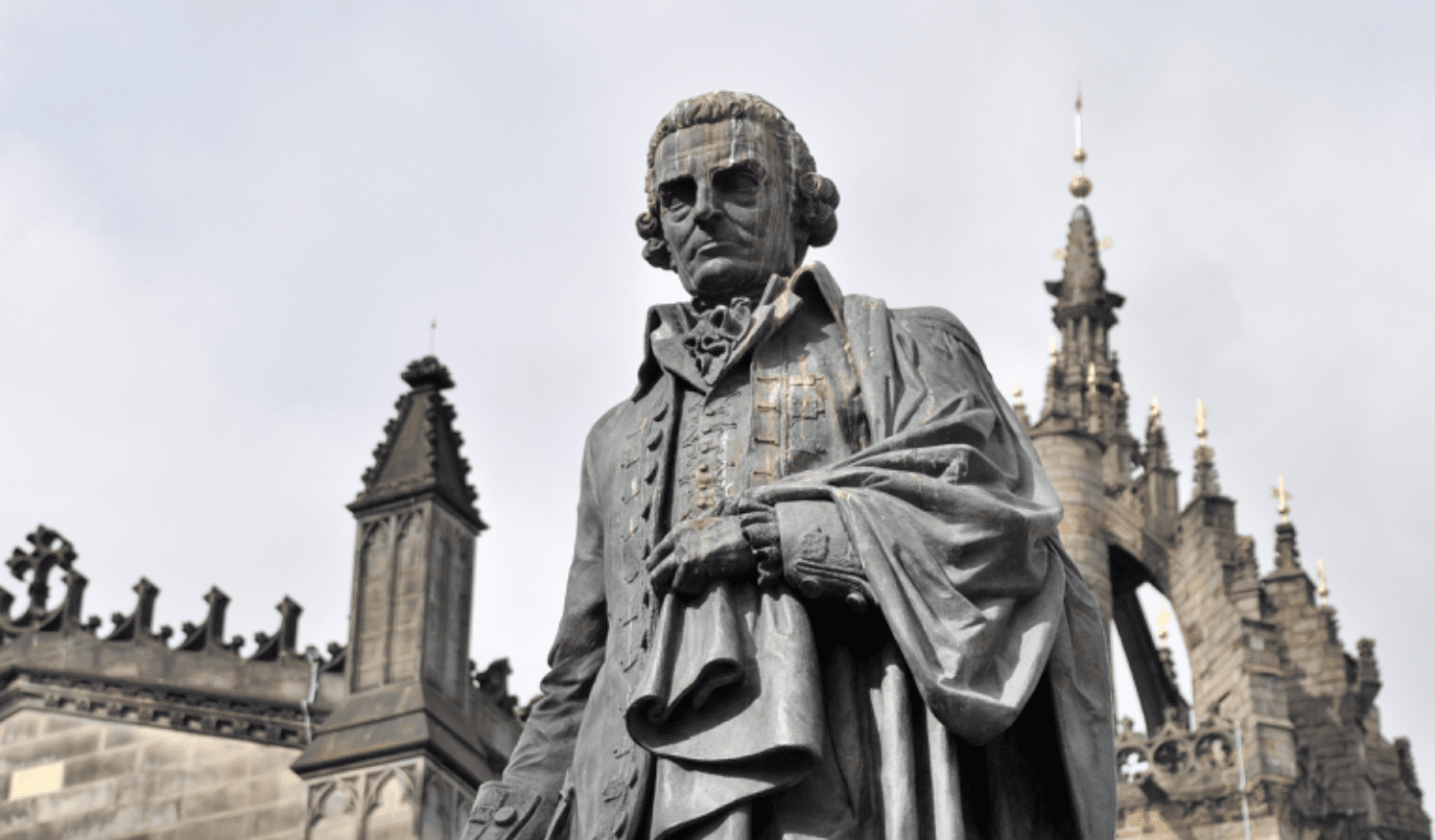
The Scottish economist Adam Smith’s seminal work, The Wealth of Nations, celebrated an important milestone this week. It was first published on Mar. 9, 1776, or 250 years ago.
I, like many others, read this book in my salad days. I’ve had a copy in my personal library for decades. It remains as important now as it was then.
The Wealth of Nations was one of the first books to discuss how a nation builds and acquires wealth. There are important chapters that focus on topics like free markets, division of labour, use of money, stock, rent, productivity, commerce and the mercantile system. Smith also referred to an “invisible hand,” which is a metaphor related to certain incentives created within a free market system that occasionally led to unintentional benefits in the public interest. As the economist put it, “He generally, indeed, neither intends to promote the public interest, nor knows how much he is promoting it. By preferring the support of domestic to that of foreign industry, he intends only his own security; and by directing that industry in such a manner as its produce may be of the greatest value, he intends only his own gain, and he is in this, as in many other cases, led by an invisible hand to promote an end which was no part of his intention.”
There’s always been one odd trait about Smith that has persisted for centuries. What we think we know about him is often very different from what we should know about him.
Conservative leader Pierre Poilievre captured this sentiment nicely in a National Post oped. “Smith is probably the best-known and least-read economist, which explains why he is so often misunderstood,” he wrote on March 10. “For example, if you google ‘Father of Capitalism,’ Smith’s name pops up, but neither his Wealth of Nations nor The Theory of Moral Sentiments uses the word ‘capitalism.’ He did not preach the supremacy of capital over labour. He wrote that ‘the annual labour of every nation’ is the true source of wealth, and he warned against profits earned through state protection rather than open competition.”
He’s right. While certain aspects of Smith’s economic analysis would fit within concepts like capitalism, he never advocated for it in the book. And while many Conservatives and small “c” conservatives feel a certain kinship to Smith, he wouldn’t have been completely onside.
Smith was, for the most part, a classical liberal. They’re on the right side of the political spectrum, but don’t necessarily fit into the Conservative camp. An old clip of the U.S. economist Milton Friedman that recently circulated on social media provides the perfect response to this distinction. “I’m not a conservative. I’ve never been a conservative. Hayek was not a conservative,” he said during a Nov. 20, 1994 interview on C-Span’s Booknotes about the 50th anniversary edition of F.A. Hayek’s The Road to Serfdom. “The book that follows this one in Hayek’s list was The Constitution of Liberty. A great book. And he has an appendix to it entitled ‘Why I Am Not a Conservative.’ We are radicals; we want to get to the root of things. We are liberals in the true meaning of that term: of and concerned with freedom. We are not liberals in the current distorted sense of the term – of people who are liberal with other people’s money.”
The ideologies of Friedman and Hayek, who both self-identified as classical liberals and libertarians, would have resonated with Smith. The Scottish economist was also a free thinker who occasionally veered away from classical liberal thinking when it came to certain political and economic issues.
While Smith supported the principles of laissez-faire economics in The Wealth of Nations, he never used this term in the book and wasn’t adverse to critiquing its supporters. He supported the concept of free banking but wasn’t opposed to banking regulation used to ensure monetary stability in countries and institutions. He supported limited government but, as David R. Henderson pointed out for EconLib, “like most modern believers in free markets, Smith believed that the government should enforce contracts and grant patents and copyrights to encourage inventions and new ideas” and “also thought that the government should provide public works, such as roads and bridges.”
This doesn’t mean conservatives, classical liberals, libertarians and others have incorrectly respected and championed Smith’s economic theories over the course of 250 years. He had plenty of ideas that perfectly fit into our political wheelhouse, especially when it comes to free markets, natural liberty and private enterprise.
There’s more. “He warned that when corporate and political power merge, the public loses,” Poilievre wrote in his National Post oped. “He knew that if greed can exist in the market, it surely can thrive in the halls of governmental power, where it operates by force and free from the accountability demanded by consumers and competitors. We can see in our own society how governments that are not subject to market competition think they can afford to play favourites and corrupt the economy.”
It’s fair to say the real Adam Smith was different from the romanticized modern version. As people begin to learn more about who he actually was, they may find that the author of The Wealth of Nations had an even greater wealth of ideas and theories to make our society better and freer.
Michael Taube, a long-time newspaper columnist and political commentator, was a speechwriter for former Canadian prime minister Stephen Harper.
The views, opinions and positions expressed by columnists and contributors are the author’s alone. They do not inherently or expressly reflect the views, opinions and/or positions of our publication.