dailynewsnblog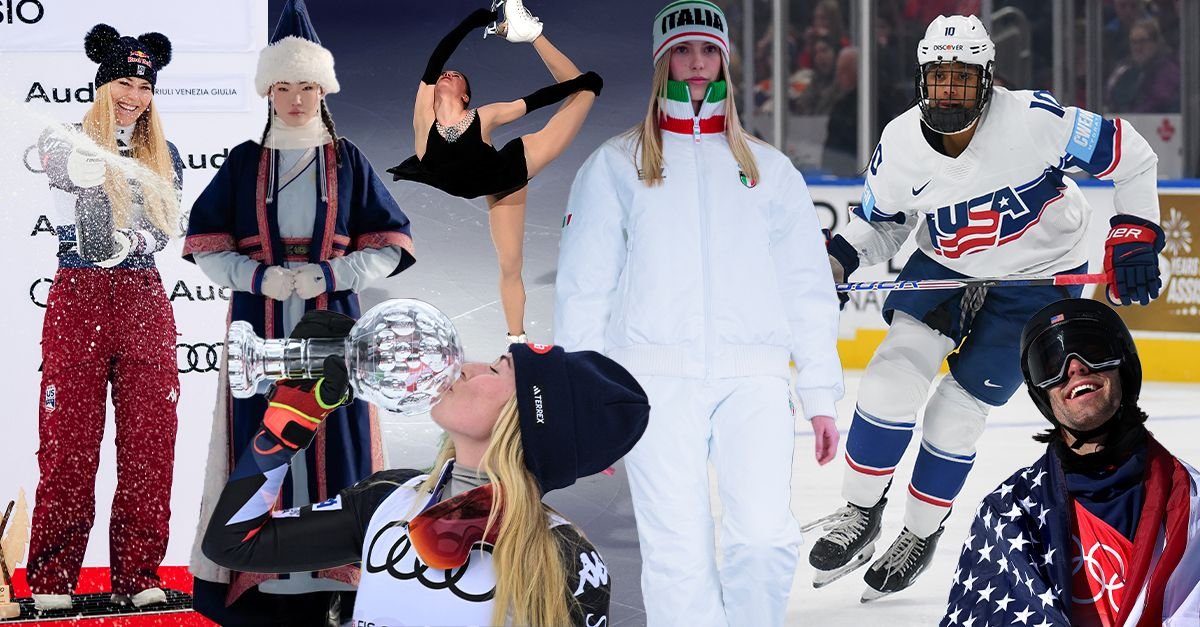
After four long years, the Winter Olympics are back, and already, we’ve borne witness to huge wins, heartbreaking disappointments, and everything in between. The festivities kicked off six days ago, on February 6, with the Opening Ceremony held at Milan‘s historic San Siro Stadium, one of the greatest sporting structures in the world. There, everyone from Mariah Carey to Andrea Bocelli performed, setting the tone for the excellence to come.
The following day, medals were doled out at the men’s snowboard big air final, where China’s Su Yiming returned to defend his gold medal from 2022 and American newcomer Ollie Martin got his first taste of the Olympic event. (The latter competed with a broken arm, ending up just off the podium, and fellow first-time Olympian Kira Kimura from Japan took gold.) On the 8th, Lindsey Vonn, a legend in the world of alpine skiing, competed in her first and biggest event of the Games, women’s downhill, a feat in and of itself after she ruptured her ACL just days before heading to Italy. Unfortunately, after an early crash, we’re unlikely to see Vonn compete in her other Olympic events, but her determination will live on as one of the biggest storylines of the Games, not to mention all of sports in 2026. The days that followed saw medals handed out at the women’s and men’s freeski slopestyle final, champions crowned at the curling mixed doubles gold medal game, and a podium decided in ice dance, where the U.S. duo of Madison Chock and Evan Bates battled against Canada’s Piper Gilles and Paul Poirier, as well as France’s Laurence Fournier Beaudry and Guillaume Cizeron.
That brings us to the present, February 12. Ten days of raw skill, elite competitiveness, and plenty of unclaimed medals lie ahead. Today alone, there’s women’s super-G on the docket, as well as the women’s snowboard halfpipe final, where two-time gold medalist Chloe Kim looks to take home her third gold medal. In doing so, she’d become the first female snowboarder to win three gold medals and the second overall. (Shaun White accomplished it back in 2018 at the Pyeongchang Games.) We also have first-time Olympic events, a buzzy few men’s (the NHL is back, baby!) and women’s hockey games, and more in store before the Closing Ceremony on the 22nd.
To ensure you can enjoy the rest of the Winter Olympics to the fullest, we’ve created a guide to the Games below. Information on the stars, newcomers, storylines, brand partners, and more is at your fingertips. Just keep scrolling.

(Image credit: Carmen Mandato/Getty Images)
The Basics
This year, the Winter Olympics returned to Italy for the first time since 2006, when the Games were held in Turin. Before that, you’d have to go all the way back to 1956 to remember the last time athletes gathered in Cortina d’Ampezzo, where this year’s games are being held as we speak. (Events are actually being hosted across around 8500 square miles of Northern Italy in a total of 13 venues, including some in the fashion capital of Milan, a five-or-so-hour drive from Cortina.) It’s the most widespread Games in Olympic history, one of many records set to be broken between now and February 22. More factoids to know? At this year’s Winter Olympics, a total of 16 sports are represented, with 116 total medal events handing out 735 total medals. This year, Norway will hope to defend its title as the most awarded country in the history of the Games. In 2022, the country won 16 gold medals and 37 total medals, the most of any at the Beijing Games. Norwegians hold an all-time total of 406 medals, with the Americans a distant second with 330. To track the current medal count for each country at the 2026 Games, check out CBS Sports’ tally. Or just watch along as the world’s greatest sporting competition unfolds on NBC and Peacock.

(Image credit: Getty Images)
The Stars
All of the winter-sport stars are on location somewhere between Milan and Cortina right now, whether they’re skiing, snowboarding, or skating. From young talent that’s already breaking incredible ground in their respective fields to established athletes that might very well bid farewell to the Winter Olympics for good in the next few days, everyone’s battling it out, ready to risk it all for a chance at that coveted gold medal. Meet some of the names with the most fanfare below. Though, they’re not the only people bringing excitement to the Games, notably, Ilia Malinin, Alysa Liu, Erin Jackson, Breezy Johnson, and more.

(Image credit: David Ramos/Getty Images)
Chloe Kim has been a staple of the snowboarding world ever since the 2015 X Games, when 14-year-old Kim won gold in superpipe. Since then, she’s taken home six Winter X titles and two halfpipe world titles. Her Olympic debut came at the 2018 Pyeongchang Games, where, at 17, she made history as the youngest woman to win an Olympic snowboarding gold medal. (She actually qualified for the 2014 Games in Sochi but was deemed too young to compete.) She’s also the first athlete to win all four major snowboarding titles in the Olympics, Worlds, Youth Olympics, and the X Games. Suffice to say, she’s a household name in the world of winter sports. Heading into the 2026 Winter Olympics, Kim has two gold medals and is seeking her third, which would add another notch to her personal record books. The task won’t be easy, though, especially after she tore her labrum and dislocated her shoulder just one month before the Games. Following the injury, she took to Instagram Reels to share an update. Despite everything, she expressed her determination to compete: “I will be good to go for the Olympics,” she said. And for that, we are all eternally grateful.

(Image credit: Matthew Stockman/Getty Images)
If you, like us, have been devouring the new Netflix series Glitter & Gold, then you’re probably very locked in to the world of ice dance, where three skating partnerships lead the charge, one of which is made up of Madison Chock and Evan Bates, who are representing the U.S. at this year’s Winter Olympics for their fourth and perhaps final time. Their competition? Canada’s Piper Gilles and Paul Poirier, as well as France’s Laurence Fournier Beaudry and Guillaume Cizeron. Chock and Bates, however, are the three-time reigning World Champions and just claimed a seventh U.S. Figure Skating Championship, their fifth national title in a row. The duo, who began pair skating in 2011 and got married in 2024, placed fourth in the ice dance event in Beijing in 2022 but still won team gold. This time around, they competed in all four ice dance events, taking home a silver ice dance medal and a gold medal for the team event.

(Image credit: Lintao Zhang/Getty Images)
In addition to recently being named 2025’s fourth-highest-paid female athlete in the world by Forbes, with earnings equal to $23.1 million, freestyle skier Eileen Gu is also one of the athletes we’re most excited to watch compete in the ongoing Winter Olympics. She’s the all-time leader in freeskiing World Cup wins for one, and the defending gold medalist in big air and halfpipe from the 2022 Games in Beijing, where she made history as the first freestyle skier to win three medals at a single Games. (In addition to her two golds, she also earned a silver medal in slopestyle.) She was 18 at the time, setting a new record as the youngest Olympic freestyle skiing champion. She’s the ultimate triple threat—plus, Gu is an IMG model, a Stanford student studying quantum physics, and an IWC brand ambassador. “I feel this renewed sense of infatuation with skiing itself, with competing for the sake of sportsmanship and Olympic values, and with the art and craftsmanship that is inherent to this sport,” she wrote on Instagram ahead of the Opening Ceremony. “No matter what results follow, I am here to have the most fun and be fully present in this experience.”

(Image credit: Mattia Ozbot/Getty Images)
Lindsey Vonn’s comeback has become the biggest storyline of the Olympic season by far. There’s no question about it. She retired in 2019 after multiple injuries made it nearly impossible for her to compete in the sport she’s always loved and excelled in. A partial knee replacement changed all that, allowing her to mount a return for the history books, and there’s no better way to end a story like hers than with a gold medal. This is said to be her final ski season, and nothing about it has been easy. Just a few days before the start of the 2026 Games, Vonn crashed in a race in Crans-Montana, Switzerland, rupturing her ACL in her left knee. For anyone else, an injury like this one would put her out of contention for the rest of the season, but not Vonn. “I haven’t cried. I have not deviated from my plan. I have been determined,” the 41-year-old said in a press conference on February 4. “I am not letting this slip through my fingers. I’m gonna do it.” Vonn competed on the 8th, unfortunately crashing early on during the downhill race. In the process, she suffered a “complex tibia fracture” that, while currently stable, will require multiple surgeries to fix, according to her most recent update on Instagram.

(Image credit: Patrick Smith/Getty Images)
You’ll be on the edge of your sofa every time freestyle skier Alex Hall starts a run over the course of the Winter Olympics—and that’s a promise. The 27-year-old was born in Alaska and raised first in Zurich, where he first put on skis, and then in Park City, so it’s no wonder skiing is practically in his blood. Count his medals for proof. At the Beijing Games in 2022, he won gold on his first run of the men’s slopestyle final, daring to pull a high-difficulty trick on his last jump. He’s also a 10-time World Cup winner and a six-time X Games gold medalist. At this year’s Games, he’s competing in two events, slopestyle and big air, offering viewers plenty of chances to watch him flex his jaw-dropping skills on the world’s stage. He already won a silver medal in the first, with the second coming to a TV near you on the 15th.

(Image credit: Joe Klamar/AFP via Getty Images)
Otherwise known as the undisputed GOAT of alpine skiing, Mikaela Shiffrin is the winningest ski racer of all time. The 30-year-old from Vail, Colorado, is the reigning World Champion and the first alpine skier to record 100 International Ski and Snowboard Federation (FIS) World Cup wins. In 2014, she made her Winter Olympics debut in Sochi, Russia; she was only 18 at the time, making her the youngest-ever Olympic slalom champion. The other two Olympic medals that call her personal trophy case home were won in 2018 at the Pyeongchang Games, where she won gold in giant slalom and silver in super combined. The 2022 Games saw Shiffrin record three DNFs (did not finish) in events she’d previously medaled in, making Milano-Cortina an even bigger deal as she works to get back to her previous Olympic dominance. Over the course of the Games, she’ll compete in giant slalom, slalom, and team combined, alongside Breezy Johnson.

(Image credit: Leila Devlin/Getty Images; Ryan Pierse/Getty Images; Jamie Squire/Getty Images)
The Newcomers
As much fun as it is to root for the bigwigs of the Winter Olympics, it’s just as exciting to see new athletes enter the biggest and most acclaimed winter-sporting arena. These are people who have worked their entire lives with one goal in mind: to compete with the best of the best on the world’s stage. And we get to watch as they achieve their dreams. It’s an honor and a privilege, and one that we sports fans take very seriously. Ahead, learn about three of the most exciting new names making their big debuts at this year’s Winter Olympics.

(Image credit: Leila Devlin/Getty Images)
Laila Edwards makes history at the 2026 Winter Olympics as the first Black woman to compete for the U.S. women’s hockey team. The 22-year-old is a forward on the NCAA level at the University of Wisconsin, not to mention one of the players who helped the U.S. national team dominate in the Rivalry Series, an annual tournament between the U.S. and Canada, which took place in late 2025. The two countries are by far the best in the world of women’s hockey, competing in every gold medal match bar one (2006) since the introduction of the sport to the Olympics in 1998. America has only won twice, in 1998 and 2018, but the outlook is good for 2026 to be next after such a successful run in the aforementioned tournament, especially with Edwards on the roster, along with other stars like Hilary Knight, captain Kendall Coyne Schofield, Megan Keller, and goalie Aerin Frankel.

(Image credit: Jamie Squire/Getty Images)
Philadelphia-born and Mount Holly, New Jersey–raised figure skater Isabeau Levito is just 18, but she’s already emerged as one of the most technically precise athletes on the ice. She won gold at the 2022 World Junior Championships at the age of 15 with a program soundtracked by The Swan by French composer Camille Saint-Saëns. In it, her elegance and poise on the ice were already on full display, traits she’s continued to hone in the years following. Her 2024 performance at the World Championships, one of the most highly regarded of her career so far, resulted in a silver medal and set her up for success ahead of her Winter Olympics debut in Milan, where her mother, who introduced her to the sport, is from.

(Image credit: Ryan Pierse/Getty Images)
Before 31-year-old Mystique Ro became one of the leading athletes in the world of women’s skeleton, she competed in track and field, including hurdles, sprints, and javelin, at Queens University of Charlotte in North Carolina. According to an interview posted by the college’s athletics department, her entrance into skeleton wasn’t intentional; in fact, it happened mostly by chance. When her eligibility for track and field ran out, Ro started looking for another sport to get involved in, joining one of her teammates at a combine for USA Bobsled/Skeleton. She did well enough at the camp to be invited back, upon which she was told she was too small for her first-choice sport, bobsled. They suggested skeleton instead. “I was terrified the first run,” she said. “This is insane—I’m not doing this. But they convinced me to give it another try and just relax in it and be more accepting.” Over time, she got more comfortable with it. “I just swapped spikes,” she says. “Still doing the same thing—pushing fast, running fast.” Last year, at the FIL World Championships, Ro became the first American in 12 years to win a world medal in women’s skeleton, coming in second. In that same competition, she won gold in the mixed-team event alongside Austin Florian, a brand-new Olympic event that she’ll be competing in at the 2026 Winter Olympics.

(Image credit: Rich Graessle/NHLI via Getty Images; Martin Silva Cosentino/NurPhoto via Getty Images; Leila Devlin/Getty Images; Joe Scarnici/Getty Images for USOPC)
The Storylines
There’s certainly no shortage of buzz when it comes to this year’s Winter Olympics. When the Games are in session, everyone wants to tune in, not just by watching the events unfold on TV but also by learning everything there is to know about the athletes they’re rooting for. What’s everyone talking about between bronze-medal games and final runs? We’re about to tell you. From the return of NHL players to Olympic men’s hockey to the brand-new events debuting from now until Closing Ceremonies, every storyline making headlines at the 2026 Games is below.

(Image credit: Rich Graessle/NHLI via Getty Images)
Yesterday, the men’s hockey portion of the 2026 Winter Olympics officially kicked off. The tournament will run throughout the remainder of the Games, wrapping up on the 22nd with the all-important gold medal game. And for the first time since 2014, NHL players will participate in the final match. The announcement of their return came a decade after they left, in 2024, bringing a renewed sense of excitement around the sport at the Olympic level. During the Games between 2014 and 2026, men’s Olympic hockey was mostly played by amateur players and professionals participating in leagues other than the NHL, the sport’s premier league. This time around, we’ll get to see the stars return to the ice, including Canada’s Sidney Crosby, a two-time gold medalist and the captain of the Pittsburgh Penguins, and America’s Jack Eichel, a first-time Olympian and the center for the Vegas Golden Knights. Other stars to watch are Canada’s Connor McDavid from the Edmonton Oilers, Nathan MacKinnon from the Colorado Avalanche, and America’s Auston Matthews from the Toronto Maple Leafs.

(Image credit: Joe Scarnici/Getty Images for USOPC)
One of the biggest triumphs of the Winter Olympics happened before the Games even began. Following the 2024 Paris Olympics, the first Olympic Games with full gender parity, this year’s Winter Olympics will likewise be largely gender balanced, with 47% female participation, making it the most gender-balanced Winter Olympics in history, according to the International Olympic Committee (IOC). The U.S. team is also almost evenly split between men and women, with 232 total athletes competing, 117 men and 115 women.
As exciting as this all is, there remains inequality in this year’s Games, with one sport in particular being left out of the competition—not for everyone, though. Just for women. Nordic combined is the only Winter Olympic sport without a women’s event after the IOC denied its participation, deeming the sport “not applicable for the women’s category,” according to ESPN. Men’s Nordic combined, a sport that blends cross-country skiing and ski jumping, has been a part of the Winter Olympics since 1924, and in the Milano-Cortina Games, it will have three total events. The news of its denial by the IOC was especially disappointing for American Nordic combined skier Annika Malacinski, who took to Instagram following the news. In a poignant post, she wrote, “Today, Olympic teams were named. Dreams were confirmed. And once again, I am not missing because of my level. Not because of my work. Not because of my commitment. I am missing because I am a woman.” The title of her statement was especially impactful: “Because equality should never have to wait another 4 years.”

(Image credit: Martin Silva Cosentino/NurPhoto via Getty Images)
As part of the IOC’s initiative to increase gender balance in the Winter Olympics, four existing disciplines will now be extended to women’s athletes for the first time, including dual moguls, mixed-team skeleton, doubles luge, and individual large hill ski jumping. But these are just four of the eight total new events being introduced at the Games this year. It will be the first year that athletes in ski mountaineering, or “skimo” for short, can compete for a chance at Olympic glory. The sport is a unique test of speed and endurance, involving hiking up rugged terrain on foot and then immediately skiing down the same mountain in as little time as possible. Men and women will compete individually in fast-paced sprint races lasting only three minutes and also battle alongside one another in longer, endurance-focused mixed relays lasting roughly half an hour. To round out the list, a refreshed ski jumping medal event has been introduced for 2026, called super team.

(Image credit: Leila Devlin/Getty Images)
The first puck drop of the women’s Olympic hockey tournament took place before the Games even officially began, with Italy’s group stage game against France kicking off the action on February 5 at the just-finished-in-time Santagiulia Arena, followed by a matchup between Canada and the U.S. The competition couldn’t start soon enough for fans of the Professional Women’s Hockey League (PWHL).
For a fairly new league—it launched on the first day of 2024—the PWHL has seen exponential growth in its first three seasons, with teams in eight cities—including New York, Boston, Montréal, Ottawa, Seattle, Toronto, Minnesota, and Vancouver—and plenty of broken attendance records in its short but sweet history. It currently holds the worldwide attendance record for a women’s hockey game, with 17,228 people attending the matchup between the Montréal Victoire and the New York Sirens at Capital One Arena in Washington, D.C., in early 2026, but with an upcoming matchup between the Sirens and the Seattle Torrent being held at Madison Square Garden on April 4, a venue that seats over 18,000 hockey spectators, that record could soon be broken.
With so much buzz surrounding the league and its players—some of whom will be facing off against their PWHL teammates on the ice at Milano-Cortina—and the 2026 Winter Games being the first since the PWHL was founded, it’s no wonder that so many are already tuning in for women’s Olympic hockey. Unfortunately, the new arena doesn’t have quite the capacity of D.C.’s, so we won’t be seeing that attendance record broken, but there will still be plenty of excitement surrounding the gold medal game on February 19.

The Must-See TV
Not sure what to watch over the next 10 days? Here’s a very condensed version of the complete 2026 Winter Olympics calendar. As much as we’d like to rot in front of our TVs all day watching event after event, there’s still work to be done, families to take care of, and chores to begrudgingly check off the to-do list. So if you want to partake in the Games without dedicating all your time to it, try tuning in to the above competitions, from alpine and freestyle skiing to snowboard halfpipe, figure skating, and ice hockey.

(Image credit: Ralph Lauren; Emporio Armani; Moncler; Goyol Cashmere)
The Brand Partners
We’re fashion people at heart, so of course, we couldn’t write a guide to the Winter Olympics without talking about the fashion brands that have signed on as official partners of the various countries and teams participating in the Games. Below, we’ll talk about the big ones, like Ralph Lauren (Team USA) and Emporio Armani (Team Italia), as well as others that are either returning to the Games after a hiatus or coming back for round two after debuting in Paris back in 2024—Moncler and Goyol Cashmere, respectively. But those aren’t the only brands shaping the athletes’ wardrobes in Milan and Cortina right now. For example, a recent post by @upnextdesigner, founded by PR expert Albert Ayal, shed a spotlight on Team Haiti’s uniforms, which were designed by Stella Jean, who crafted them in Italy. Each piece was hand-painted, with the artworks inspired by the works of Edouard Duval-Carrié. Among the other team brand partners are Le Coq Sportif for France, Lululemon for Canada, and both Adidas and Ben Sherman for Great Britain.

(Image credit: Ralph Lauren)
It’s been nearly two decades since American heritage brand Ralph Lauren was named the official designer of the U.S. team, and still, the designer drums up some of the coolest, most sought-after Olympic gear in the world. For the 2026 Games, Ralph Lauren unveiled the Opening and Closing Ceremony parade uniforms in early December, selling them online and in selected stores in the U.S. and Italy. They sold out almost immediately—from $75 T-shirts to nearly $2000 outerwear. “The significance and sheer magnitude of dressing our nation’s incredible athletes—on the most dramatic stage in sport as they pursue their lifelong dreams—is an honor that never fades,” David Lauren, chief branding and innovation officer at Ralph Lauren Corporation, said in a press release. “Our design philosophy has always been about creating dreams and telling stories through style, and these uniforms, both timeless and modern, reflect the passion, optimism, and relentless pursuit of excellence that embody the American spirit.” For the Opening Ceremony, the uniforms were designed around a statement winter-white wool coat, an American flag wool turtleneck, and tailored wool trousers in the same snowy shade. At the end of the Games, American athletes will don uniforms inspired by vintage ski racing kits, featuring color-blocked puffers, wool turtlenecks, and white utility pants.

(Image credit: Emporio Armani)
Italians are always among the best dressed people in the world, and their most revered athletes are hardly the exception to that precedent. Since 2022, Emporio Armani’s sport line EA7 has been the official technical outfitter of Italy’s Winter Sports Federation (FISI), a role it’s continuing to fill at the 2026 Winter Olympics. This year’s athletes will wear a kit designed to embody the sporting elegance and Olympic spirit of Emporio Armani through “clean lines, high-performance materials, and distinctive details that express national identity and pride,” a release states. All include the word “Italia” on the back and details featuring the colors of the country’s flag: red, green, and white.

(Image credit: Moncler)
The 2026 Winter Olympics mark the return of Moncler as a supplier, with the Italian brand becoming the official sponsor of the Brazilian Olympic Committee for the opening and closing ceremonies and the technical sponsor of the Brazilian alpine ski team. The last time we saw Moncler at the Olympics was in 1968, when the Games were held in Grenoble, France. “Returning to the Winter Games means a lot to Moncler, not only as a celebration of our heritage and where we come from, but also as a statement of what we stand for as a brand, continuing to push the boundaries of high performance and high style, now on the world’s biggest stage for winter sports,” said Moncler’s CEO and chairman, Remo Ruffini, in a press release. “Being part of this incredible moment, in our home country, through the energy and heart of Lucas Pinheiro Braathen, the Brazil Olympic Committee, and the Brazilian Snow Sports Federation, makes us even more proud.” Braathen, a Norwegian-born Brazilian World Champion alpine ski racer, is one of Moncler’s top brand ambassadors and a specialist in slalom and giant slalom. He, like the rest of the Brazilian team, will be donning a collection of down pieces during the two ceremonies of the Games, designed by Brazilian designer Oskar Metsavaht, with the country’s flag being a prominent feature on the long, floor-sweeping coats in particular.

(Image credit: Goyol Cashmere)
Everyone, whether they’re usually invested in sports fashion or not, is talking about Goyol Cashmere’s uniforms for Team Mongolia. The brand made an exciting debut at the 2024 Paris Olympics and followed it up two years later with an equally impressive offering for the Winter Games, for Team Mongolia’s athletes to wear both casually and during the official Opening and Closing Ceremonies. The designers behind them were “guided by the noble mission of presenting Mongolia’s distinctive national identity and cultural heritage on the Olympic stage—a global symbol of unity and peace,” a post on Goyol Cashmere’s Instagram stated. “Rather than merely blending traditional garments with modern design, this collection aims to reintroduce the ancient Mongolian clothing culture—an inseparable part of our great history and cultural heritage—to the contemporary world and share it on a global stage,” the post continued. They drew inspiration from the attire of the Great Mongol Empire of the 13th to 15th centuries, integrating functional skirt slits, raised collars, and closed overlapping fronts. Fine Mongolian cashmere was used to keep the athletes warm in the Alps of Italy, and silk trimmings embroidered with traditional horn motifs added elegant, culturally rich accents.