dailynewsnblog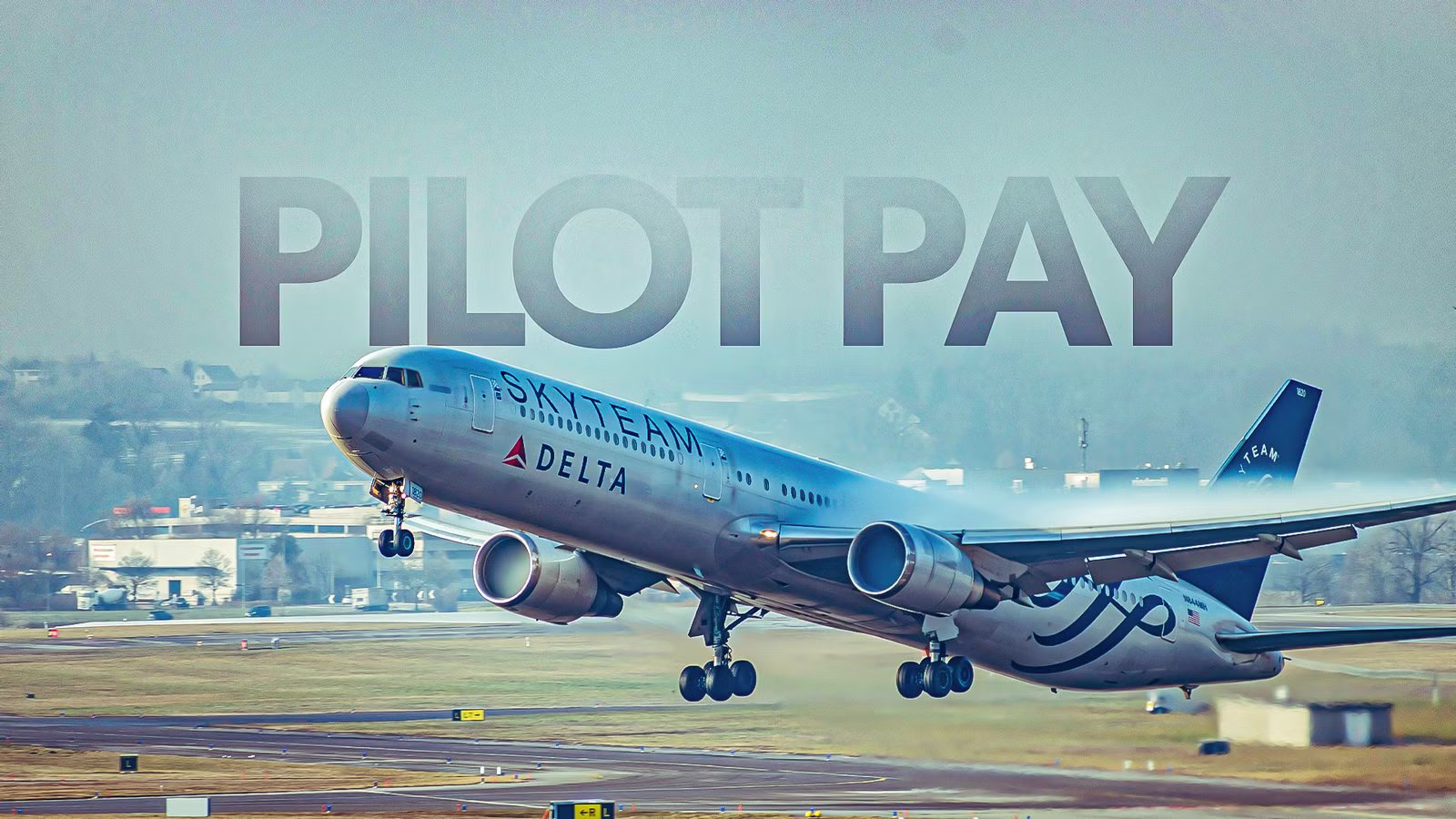
In the United States, the largest single driver of a pilot’s pay is seniority, and as a rule, only senior pilots fly widebody aircraft. A typical pilot’s progression in career starts out with smaller aircraft, moving onto larger aircraft. The pilot may become a Captain of a regional aircraft, but go back down to First Officer on a narrowbody. They may then become a narrowbody Captain, before going back down again to First Officer on a widebody.
In this linear progression, becoming a widebody aircraft Captain is the pinnacle of a commercial pilot’s career, although some may quit and enjoy life in the slow lane as a private jet pilot. While this is generally the path followed, there are plenty of exceptions, and the market is constantly adapting to pressures, including pilot shortages that may move pilots up faster. Let’s examine what you need to know about widebody Captain pay in the US.
Progressing Through Regional & Narrowbody Aircraft

A pilot starts their career with around two to three years of training and early flight experience. After that stage has been mastered, pilots generally move on to flying regional aircraft for around two to five years. After that, they move on to flying narrowbody aircraft for five to 12 years. They can go straight from regional aircraft to narrowbody aircraft with major airlines, or there can be another stepping stone with low-cost carriers in the middle.
Ultra-low-cost carriers like Frontier famously offer pilots lower pay than major carriers, and they have a high turnover in pilots. As such, pilots often view airlines like Frontier as a stepping stone on their career ladders. It should also be noted that regional carriers also pay pilots lower salaries, which works both for the young pilots looking to gain experience and progress their careers, and for the regional carriers who don’t have as many paying passengers on each flight.
It’s worth noting that most commercial aircraft operating in the United States are narrowbody or regional aircraft. The share of single-aisle aircraft is increasing, with around 80% of aircraft deliveries now being narrowbody jets. Globally, Boeing sees an outlook for 1,545 regional jets, 33,285 narrowbody aircraft, and 7,815 widebody aircraft by 2044. Most US airlines only operate narrowbody or regional aircraft, with only Delta, United, American, Hawaiian, and now Alaska Airlines operating widebody commercial passenger aircraft.
Senior Pilots Fly Widebody Aircraft

Widebody aircraft are typically reserved for senior pilots who have progressed through the stages. These are paid the most, although this isn’t necessarily because they are flying widebody aircraft per se, but because they are senior pilots. In the United States, a pilot must have a minimum of 1,500 hours to obtain an Airline Transport Pilot certificate.
First Officers typically start flying on widebody aircraft when they have 4,000 to over 8,000 hours of flight experience and eight to 15 years of aviation experience from their first flight training. When pilots are hired by a major airline, they typically start as a First Officer, normally flying narrowbody aircraft, before bidding for a widebody aircraft. There can be more stages than this, or they can skip stages; it depends. First Officer widebody aircraft pilots are typically 30–35 years old when they start.
Widebody Captains are considered to be very senior and have around 10,000 to over 20,000 flight hours of experience. They often have had airline careers of 15 to more than 30 years, including at least 10 years with a major airline before becoming a widebody Captain. These Captains are typically 45 to 60 years old. Overall, they are typically around 20 or more years into their flying careers when they become widebody Captains.
.

A Look At The Salaries Of The US Big 3 Airline Pilots In 2025
Airlines are in a fierce competition for top talent, and pilots are reaping the rewards. Uncover the factors reshaping the economics of flying.
How Much Are Widebody Captains Paid?

According to Acron Aviation, a year 12 legacy widebody Captain typically has an annual base pay of $300,000 to over $400,000 or around $325 to over $400 an hour. Thrust Flight doesn’t provide estimates for widebody aircraft Captains, but it does for major airline Captains flying narrowbody aircraft after 12 years of experience. These Captains can expect $339,000 with American Airlines, $337,000 with Delta Air Lines, $247,500 with Hawaiian, and $344,000 with United Airlines.
The big three airlines (American, Delta, United) are often listed as paying their 12-year experience narrowbody Captains around $100,000 more than those flying with smaller and low-cost airlines. ATP Flight School says that “established airline pilots are very well paid, and, with the annual earnings of senior captains around $450,000, some pilots can expect a ten million dollar career in total earnings, according to the typical career progression.”
For reference, this is around a fourfold increase in pay compared with those just starting with a major airline. First Officers starting with major airlines can expect base pay of around $98,680 a year, meaning that their base pay multiples by more than four to $450,000 by the time they become widebody Captains. Actual compensation can be significantly higher after bonuses, allowances, retirement contributions, retention payout, and profit-sharing are accounted for.
Only A Handful Of US Airlines Fly Widebodies

Cargo airlines like UPS, Atlas Air, and FedEx all operate widebody aircraft, with Atlas Air even operating a fleet of passenger charter  Boeing 747s. Only five airlines in the US currently operate commercial scheduled passenger widebody flights. According to data from Planespotters.net, United has the largest fleet with 53 Boeing 767s, 96 Boeing 777s, and 84 Boeing 787s for a total of 223 widebody aircraft out of its mainline fleet of 1,091 aircraft.
Delta Air Lines has the second-largest widebody fleet in North America with 81 Airbus A330s, 40 Airbus A350s, and 58 Boeing 767s. This gives it a widebody fleet of 177 aircraft out of its total mainline fleet of 994 aircraft. American Airlines has 67 Boeing 777s and 70 Boeing 787s for 137 widebody aircraft, and a total mainline fleet of 1,020 aircraft. Hawaiian Airlines is one of the smallest major US carriers, with less than 2% of the overall domestic market share. It has a fleet of 71 aircraft, of which almost half (34) are widebody Airbus A330s.
|
Widebody US commercial airlines |
Number in service (per Planespotters.net) |
Types of widebody aircraft |
|---|---|---|
|
Alaska Airlines |
5 |
Boeing 787 |
|
American Airlines |
137 |
Boeing 777, Boeing 787 |
|
Delta Air Lines |
177 |
Airbus A330, Airbus A350, Boeing 767 |
|
Hawaiian Airlines |
34 |
Airbus A330 |
|
United Airlines |
223 |
Boeing 767, Boeing 777, Boeing 787 |
Until its recent acquisition of Hawaiian Airlines, Alaska Airlines only operated narrowbody aircraft. Now the airline is seeking to expand its network with long-haul widebody flights by taking over Hawaiian’s purchase of Boeing 787s. So far, it has five Boeing 787s in service. In all, this means that US carriers operate a total of 576 widebody aircraft across five airlines.

These 2 Small Middle Eastern Countries Fly As Many Widebodies As All US Majors Combined
Qatar and the UAE operate a similar number of widebody passenger jets as all of the US carriers combined.
There Are No Extra-Large Widebody Aircraft In The US

US-based airlines operate from dispersed bases, with the major carriers having around half a dozen major hubs each. This is the wrong model to operate extra-large widebody aircraft like Emirates does from its singular Dubai hub. Because of this, US carriers have been moving away from extra-large widebody aircraft for decades. Pan Am was the first airline to introduce the Boeing 747 in 1970, but that era came to an end in 2017 as Delta and United retired the last of their 747-400s without direct replacement.
No US-based carrier purchased Boeing’s final Boeing 747-8 passenger variant, and none purchased Airbus’s massive A380 either. For a while, it seemed like they wouldn’t purchase the Boeing 777-300ER either, although United placed a late order for 22 examples and American ordered 20. Despite the US being the largest aviation market in the world, it only purchased 5% of the world’s 777-300ERs.
No US-based carriers have ordered the upcoming Boeing 777X, with United Airlines saying it is too big for its model. At the same time, narrowbody aircraft are becoming an ever larger share of the US market. The A350 is now the largest aircraft Delta flies, and it seems the Boeing 787 is the only widebody aircraft United and American are interested in ordering. Put another way, US widebody Captains may be among the best paid in the world, but they don’t get to fly the world’s largest widebody jets.
Widebody Captains Earn Up To Half A Million Dollars A Year

US widebody pilots are some of the industry’s most experienced pilots and are in the second half of their flying careers. They often only obtain the position after they are 45, giving them less than 20 years of flying career left before compulsory retirement at 65. As a pilot, pay is primarily based on seniority; their base pay typically ranges from $300,000 to over $450,000 a year.
Additionally, almost all of the United States’ widebody commercial passenger aircraft are operated by the big three airlines (Delta, United, American), and these tend to offer higher salaries to their pilots than other airlines. Alaska Airlines has only become a widebody operator within the last few months, and it is unclear what the pay for its widebody pilots will be relative to the other airlines. No US pilot flying for major airlines can fly the Boeing 747, A380, A340, or perhaps the Boeing 777X going forward.
With that being said, Atlas Air does have a fleet of Boeing 747 for passenger chartered service, complete with first class seating on some examples. Atlas Air has the largest Boeing 747 fleet in the world, mostly freighters. Speaking of the cargo airlines, Thrust Flight lists cargo airline Captain salaries with years of experience as $172,000 for Atlas Air, $326,000 for FedEx, $266,000 for Kalitta Air, and $329,000 for UPS. It doesn’t itemize widebody aircraft pilot salaries, and these airlines operate a mixture of narrow and widebody cargo airliners.