dailynewsnblog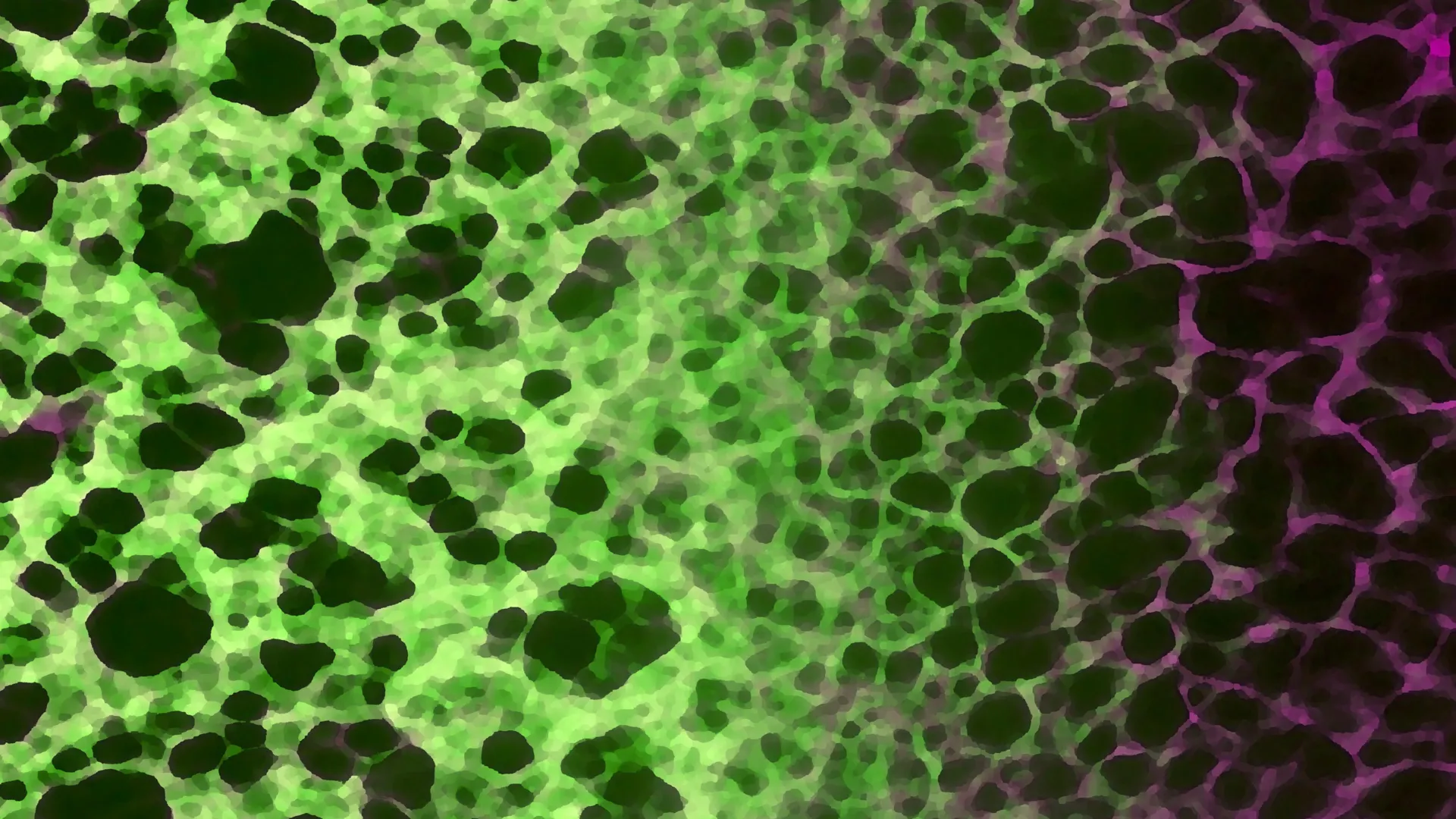
Advances in public health and medicine have helped people live longer than ever before. However, those extra years are often affected by poor health rather than vitality. While aging is unavoidable, it greatly increases the risk of many chronic illnesses, including cancer, diabetes, and Alzheimer’s disease.
Understanding why aging so often goes hand in hand with disease is the central focus of the lab led by Kris Burkewitz, assistant professor of cell and developmental biology. His team is investigating whether it is possible to separate the biological process of aging from the development of disease, with the goal of helping people remain healthier well into later life. To do this, the lab studies how cells organize their internal structures, known as organelles, and how changes in those structures influence cellular performance, metabolism, and disease risk.
A New Way Cells Adapt to Aging
In a recent study published in Nature Cell Biology, Burkewitz and his colleagues describe a newly identified way cells respond to aging. Their research shows that cells actively reshape the endoplasmic reticulum, or ER, one of the largest and most complex structures inside the cell. Rather than remaining static, the ER undergoes controlled remodeling as organisms grow older.
The team discovered that this remodeling happens through a process called ER-phagy. During ER-phagy, cells selectively break down specific regions of the ER. Identifying ER-phagy as part of the aging process suggests it could one day become a target for drugs aimed at age-related conditions, including neurodegenerative disorders and metabolic diseases.
Looking Beyond Cellular Parts to Cellular Organization
“Where many prior studies have documented how the levels of different cellular machineries change with age, we are focusing instead on how aging affects the way that cells house and organize these machineries within their complex inner architectures,” Burkewitz said.
How well a cell functions depends not only on what molecular tools it contains, but also on how those tools are arranged. Burkewitz compares the cell to a factory that produces many complicated products. Even if every machine needed for production is present, efficiency depends on placing those machines in the right locations and order. “When space is limited or production demands change, the factory has to reorganize its layout to make the right products,” Burkewitz said. “If organization breaks down, production becomes very inefficient.”
The ER plays a central role in this cellular organization. It forms an extensive network of sheets and tubules that helps produce proteins and lipids while also acting as a structural framework for the rest of the cell. Despite its importance, scientists previously had limited understanding of how the ER’s structure changes as animals age.
Visualizing Aging Cells in Living Organisms
“We didn’t just add a piece to the aging puzzle — we found a whole section that hasn’t even been touched,” said Eric Donahue, PhD’25, the study’s first author. Donahue is a medical student in the Medical Scientist Training Program who completed his doctoral research in the Burkewitz lab, where he studied ER-phagy, ER remodeling, and aging.
To observe how the ER changes over time, the research team used new genetic tools along with advanced light and electron microscopy. They studied living Caenorhabditis elegans worms, a well-established model organism for aging research. These worms are transparent and have short lifespans, allowing scientists to directly observe cellular changes inside intact animals as they age.
What Changes Inside the ER With Age
The researchers found that aging cells significantly reduce the amount of “rough” ER, the form associated with protein production. In contrast, the tubular form of the ER, which is more closely linked to lipid or fat production, declines only slightly. This pattern aligns with well-known features of aging, such as reduced ability to maintain healthy proteins and metabolic changes that contribute to fat accumulation in new tissues. However, additional research is needed to confirm direct cause-and-effect relationships.
The study also showed that ER-phagy plays an active role in reshaping the ER during aging. Importantly, ER-phagy was linked to lifespan, suggesting it contributes directly to healthier aging rather than simply reflecting cellular decline.
What Comes Next for Aging Research
The Burkewitz lab plans to continue examining how different ER structures influence metabolism at both the cellular and whole-organism levels. Because the ER helps organize many other components inside the cell, understanding how its remodeling affects the broader cellular landscape will be a key next step. “Changes in the ER occur relatively early in the aging process,” Burkewitz said. “One of the most exciting implications of this is that it may be one of the triggers for what comes later: dysfunction and disease.”
If researchers can identify exactly what initiates these early ER changes, they may be able to prevent the cascade of events that leads to age-related disease.
Here’s to a long, healthy life for us all! Thank you, science.
Go Deeper Into the Research
The paper “ER remodelling is a feature of ageing and depends on ER-phagy” was published in Nature Cell Biology in February 2026.
This research was conducted in collaboration with the Vanderbilt University labs of Jason MacGurn, associate professor of cell and developmental biology, Andrew Folkmann, assistant professor of biochemistry, Rafael Arrojo e Drigo, assistant professor of molecular physiology and biophysics, and Lauren Jackson, associate professor of biological sciences, along with collaborators from the University of Michigan and the University of California, San Diego.
This work was supported by funding from the National Institute on Aging, the National Institute of General Medical Sciences, and the Glenn Foundation for Medical Research/American Federation for Aging Research.