dailynewsnblog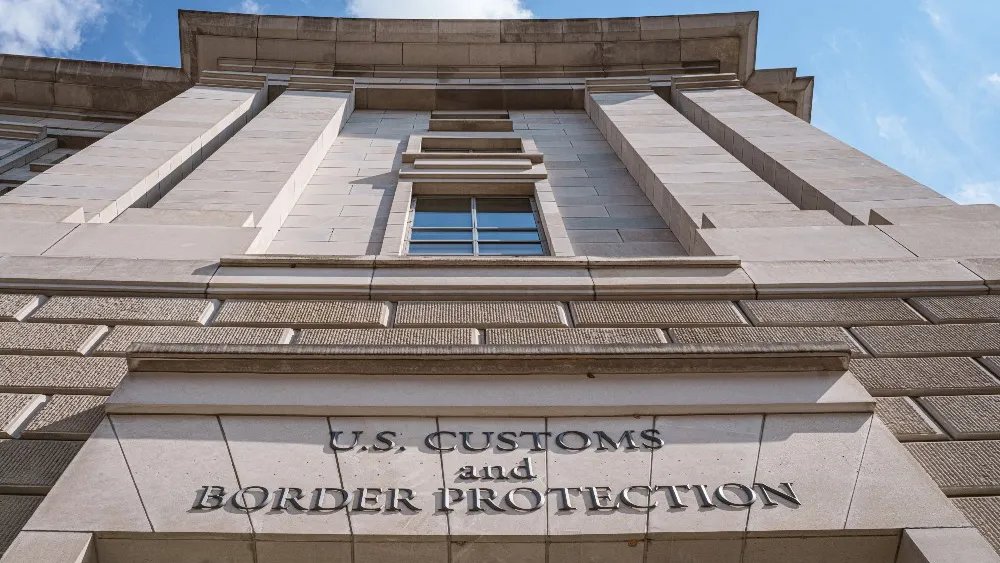
As President Donald Trump works to revitalize America’s industrial base, we recognize that the centerpiece of this effort is the negotiation of bilateral trade agreements and the implementation of a tariff regime intended to bolster American manufacturing and level the playing field.
The U.S. textile industry and our 471,000 American workers view strong customs enforcement as critical to the success of any tariff structure to ensure the integrity of our trading system.
Yet for decades, this strategically important industry has been undermined by rampant customs fraud and chronic underinvestment in trade enforcement. Our industry manufacturers critical products for our U.S. military, lifesaving PPE, and components to our infrastructure. Yet customs fraud has cost American jobs, closed factories and raided the U.S. Treasury of key revenue.
These are challenges that the Trump administration is well positioned to address and fix.
These illegal practices have harmed American manufacturers that play by the rules, invest in local communities, and provide good-paying manufacturing jobs. The U.S. textile industry is not immune, facing the closure of over 40 plants over the past two and a half years.
Yet enforcement has not kept pace. According to U.S. Customs and Border Protection (CBP) data, enforcement activity declined significantly from fiscal year 2018 through fiscal year 2023. Recent data on enforcement activities for our sector hasn’t been published in years.
Alarmingly, even as imports increased, commercial fraud penalties in FY 2023 totaled just $19.3 million—a fraction of the roughly $105 billion in textile and apparel imports into the U.S. at that time and roughly the same level as five years earlier.
What is also especially troubling is declines in forced labor enforcement under the Uyghur Forced Labor Prevention Act (UFLPA). Roughly 20 percent of the world’s cotton is produced in China’s Xinjiang region, and more than 80 percent of cotton products made in China contain Xinjiang cotton tied to forced labor.
CBP’s previous report on ULFPA activity in the textile and apparel sector revealed the average number of UFLPA reviews per month is down by roughly 85 percent by value in the first several months of 2025 compared to 2024.
This is why we are calling on the Department of Homeland Security (DHS) to develop and implement a comprehensive U.S. Customs textile enforcement plan.
Key elements of a textile enforcement plan should include:
- Maximum civil and criminal penalties for repeat violators
- Blacklisting and suspension of trade privileges for repeat offenders, including denial of trade privileges for chronic offenders.
- Enhanced enforcement and verification of duty-free claims under the U.S.-Mexico-Canada Agreement (USMCA) and the U.S.-Dominican Republica-Central America Free Trade Agreement (CAFTA-DR)
- Expanded use of lab and isotopic testing to verify origin, and regular public reporting of textile enforcement statistics
Such a plan would not only help bolster domestic manufacturers and workers; it would also generate substantial additional revenue for the federal government by ensuring that lawfully owed duties are actually collected.
Textile and apparel imports from around the globe rightly face some of the highest duty rates of all imports into the U.S. and they generate significant revenue for the United States. In fiscal year 2024, the sector produced $15.7 billion in duties—about 17 percent of all U.S. tariff collections—on $124.9 billion in imports. China alone accounted for nearly 21 percent of those imports by value.
Recovering unpaid duties, penalties, and interest from fraudulent importers could generate billions more for the U.S. Treasury—funds that could help reduce deficits or reinvest in enforcement capacity.
We recognize that CBP may require additional personnel, technology, and investigative resources to execute such a plan effectively. The surge in tariff revenue under the president’s trade agenda provides a compelling fiscal rationale for reinvesting a portion of those collections into stronger enforcement.
Trade policy does not end when an agreement is signed or a tariff is imposed. It succeeds only when the rules are enforced—consistently, transparently, and without exception.
A comprehensive enforcement plan would send a powerful signal: that the United States will not tolerate fraud, will not allow bad actors to exploit our trade agreements, and will not permit predatory actors to hollow out a strategic domestic industry.
A strong enforcement plan would protect American workers, strengthen national security supply chains, and ensure that tariff revenue owed to the American people is fully collected.
As the administration works to restore American manufacturing strength, we urge it to pair bold trade policy with equally bold enforcement and we stand ready to work with them to achieve these goals.
Kimberly Glas is the president and CEO of the National Council of Textile Organizations (NCTO) and former Commerce Deputy Assistant Secretary for Textiles, Consumer Goods and Materials.