dailynewsnblog
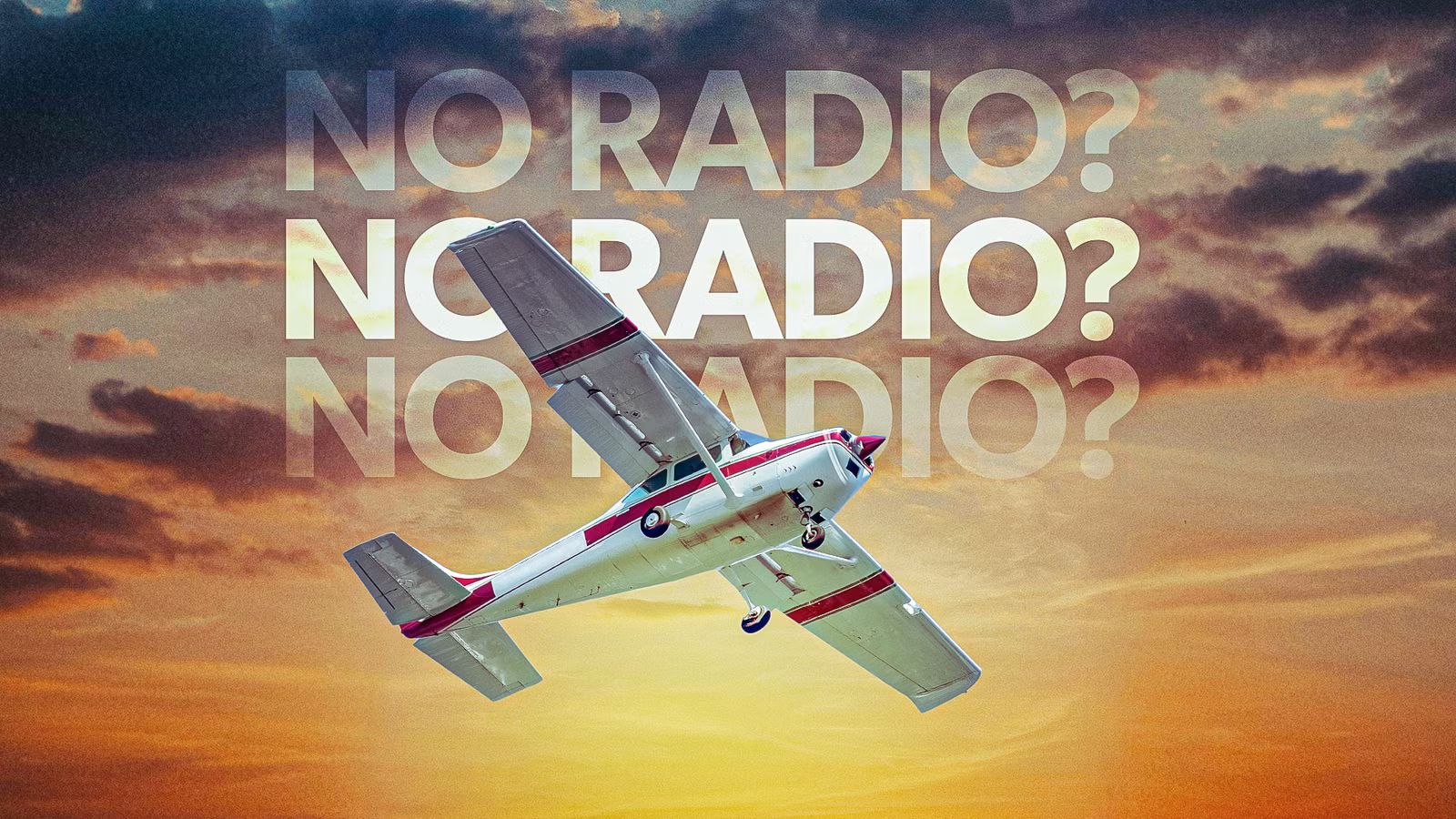
Pilots can legally fly an aircraft without an onboard radio in parts of the United States, provided the flight complies with applicable airspace, operating, and equipment requirements. Under visual flight rules (VFR), Class G airspace generally does not require routine two-way communication with air traffic control (ATC), and much of Class E airspace has no such requirement either. This allows appropriately equipped and operated aircraft to fly in certain areas without communicating with controllers. However, the rules change near busy airports, in designated controlled airspace, and during instrument flight. The legality of flying without a radio depends on where the aircraft operates, how the flight is conducted, and which other equipment regulations apply.
The subject also requires a distinction between an aircraft that has no radio installed and one whose radio has stopped working. The first may be legal for a planned VFR flight in suitable airspace, while the second can create operational complications if the aircraft needs to enter controlled airspace or land at a towered airport. Federal Aviation Administration (FAA) regulations establish where communication is mandatory, while the agency’s Aeronautical Information Manual explains procedures for aircraft with failed communications equipment. Together, these rules show why radio-free flight remains possible without making radio communication irrelevant to aviation safety.
Class G Airspace Allows VFR Flight Without Routine ATC Communication

Class G is the clearest example of US airspace where pilots can generally fly under VFR without communicating with ATC. The FAA defines it as airspace that has not been designated Class A, B, C, D, or E. It is commonly found near the surface in rural areas and around airports without operating control towers, although its boundaries vary with location and altitude. Because Class G is uncontrolled, pilots do not ordinarily need to establish two-way radio communication with an ATC facility simply to enter or remain within it. A qualifying aircraft can therefore conduct a VFR flight without a radio, unless another applicable rule or operating limitation requires one.
This does not mean that the airspace is unregulated. Pilots must still comply with federal aviation regulations, including minimum safe altitudes, right-of-way rules, and visibility and cloud-clearance requirements. The weather rules can vary considerably by altitude, time of day, and aircraft type. For example, under 14 CFR § 91.155, minimum visibility and cloud-clearance requirements differ between lower-level Class G operations and flights conducted at higher altitudes. Pilots must consult the applicable rules rather than assume that all uncontrolled airspace permits flight in poor visibility.
Pilots also remain responsible for seeing and avoiding other aircraft when required, recognizing nearby terrain and obstacles, and identifying changes in airspace boundaries. Radio-free operation removes one means of receiving traffic information; it does not transfer collision-avoidance responsibility to another party. Some pilots voluntarily use a handheld radio or monitor a common traffic advisory frequency, even when regulations do not require communication.
Much Of Class E Airspace Also Permits Radio-Free VFR Flight

Class E is controlled airspace, but that label does not automatically mean every VFR pilot must communicate with ATC. Unlike Classes B, C, and D, Class E generally does not impose a routine two-way communication requirement on VFR aircraft simply because they enter or travel through it. Consequently, a VFR aircraft without a radio may operate in eligible portions of Class E, subject to the applicable equipment and operating rules. Class E serves several purposes, including supporting instrument flight routes and transitions between terminal and en-route environments. Depending on the location, it can begin at the surface, 700 feet (213.36 meters) above ground level, 1,200 feet (365.76 meters) above ground level, or another designated altitude. These boundaries matter because an aircraft can move from Class G into Class E as it climbs, or encounter a surface-based Class E area around an airport.
The practical question is not simply whether an aircraft is flying in controlled airspace, but whether the particular operation requires communication or specific equipment. A pilot flying VFR through Class E may not need to speak with ATC, even though controllers provide services to instrument flight rules (IFR) traffic there. By contrast, an IFR flight in controlled airspace requires appropriate clearance, two-way radio communication, and suitable navigation equipment. The equipment requirements for IFR operations under 14 CFR § 91.205 specifically include a two-way radio communication system.
Class E also illustrates why pilots cannot rely on airspace classification alone to determine whether an aircraft may legally operate without a radio. Other rules can require transponders or Automatic Dependent Surveillance-Broadcast (ADS-B) in designated locations and at certain altitudes. Those systems are not interchangeable with voice communication, and the absence of a radio requirement does not waive separate equipment obligations.
Class B, C & D Airspace Generally Require Communication

The situation changes when an aircraft approaches airspace designed to manage traffic around busier airports. Under normal circumstances, pilots must establish two-way radio communication with the appropriate ATC facility before entering Class C or Class D airspace and maintain communication while inside. Departures from airports with operating control towers also generally require communication with the tower. These requirements are set out in federal regulations governing operations in each airspace class.
Class B airspace has an additional requirement: pilots must receive an explicit ATC clearance before operating within it. The regulations also require an operable two-way radio capable of communicating with ATC on appropriate frequencies, unless an applicable authorization provides otherwise. Class B surrounds the busiest airports in the US, with boundaries and altitude limits published on aeronautical charts. These requirements mean that an aircraft without a radio cannot simply depart from an airport with an operating tower and proceed into nearby controlled airspace as though it were flying in Class G. A route that begins legally in uncontrolled airspace may become unsuitable if it crosses a Class B, C, or D boundary. Pilots planning a radio-free flight must therefore examine the entire route, including the airspace surrounding their destination, rather than focus only on the departure area.
Tower operating hours can also affect the applicable rules. Some airports have control towers that operate only during specified periods. When a tower closes, the associated airspace classification may change, depending on the published arrangement. Pilots must verify the current chart and Chart Supplement information, since a familiar airport may have different communication requirements at different times. The FAA’s published airspace boundaries and communication rules are designed to coordinate traffic where controllers manage arrivals, departures, and transitions. They are not just recommendations for convenience. Entering airspace without meeting its communication or clearance requirements can violate federal regulations and endanger other aircraft.
No Radio Installed Is Different From A Radio Failure

A pilot operating an aircraft with no radio installed is often described as flying “NORDO,” short for “no radio.” The term also applies to aircraft with inoperative radios, but the circumstances are not identical. A planned VFR flight in airspace that permits radio-free operation differs from a flight that loses communications unexpectedly near a controlled airport. The FAA’s Aeronautical Information Manual provides specific guidance for aircraft experiencing transmitter or receiver failures near towered airports. For an arriving aircraft with an inoperative receiver, the guidance generally directs the pilot to remain outside or above the Class D surface area until the direction and flow of traffic are determined. The pilot should then advise the tower of the aircraft’s position, altitude, type, and intention to land, and request handling through light-gun signals if communication remains unavailable. Procedures differ depending on whether the transmitter, receiver, or both have failed.
An aircraft already experiencing a radio malfunction should not assume that the normal rules for a planned radio-free flight automatically authorize entry into controlled airspace. If the problem occurs before departure from a towered airport, FAA guidance advises the pilot to make reasonable efforts to repair the equipment and, if that is not possible, contact the tower by telephone to request authorization to depart without two-way communication. The tower may provide instructions and arrange for the pilot to monitor the frequency or watch for light-gun signals.
Light-gun signals allow controllers to communicate limited instructions visually. Depending on the signal and whether the aircraft is on the ground or airborne, they can indicate matters such as permission to land, a need to give way, or a direction to stop. Pilots acknowledge signals using prescribed visual movements or aircraft lights, as applicable. However, these signals convey less information than a functioning radio and depend on the pilot maintaining visual contact with the tower. A communications failure therefore calls for the published procedures and sound judgment, not improvisation. The appropriate response depends on the aircraft’s location, the type of failure, the weather, and available landing options.
Equipment Rules Still Apply Even When Voice Communication Is Optional

The absence of a general radio requirement under VFR does not mean that every aircraft can fly everywhere without communication-related equipment. Under 14 CFR § 91.205, the basic equipment list for daytime VFR flight in a powered civil aircraft with a standard US airworthiness certificate does not universally include a two-way radio. The same regulation, however, specifies radio and navigation equipment for IFR operations. Aircraft-specific certification requirements, operating limitations, and other regulations may impose additional conditions.
Electrical-system rules also affect what equipment is required. For example, the ADS-B Out regulation includes exceptions for aircraft that were not originally certificated with an engine-driven electrical system, or have not subsequently been certified with one installed. Such aircraft may operate without ADS-B Out in certain specified airspace, subject to the conditions in 14 CFR § 91.225. This is a specific exception to an electronic surveillance requirement, not a general exemption from radio rules.
For many aircraft, ADS-B Out is required in Class B and Class C airspace, within specified distances of certain major airports, and in designated portions of Class E airspace at higher altitudes. Pilots must check the applicable regulations and any authorized deviations before operating in these areas. An aircraft may not need voice communication in a particular segment of Class E, for instance, but still be required to carry and operate ADS-B Out because of its altitude or location. Route planning is therefore essential. Pilots should use current sectional charts, relevant notices, and the Chart Supplement to identify airspace boundaries, tower hours, airport procedures, and equipment requirements. Although a radio may not be legally required for every VFR flight, carrying one can improve situational awareness and provide a way to receive traffic advisories or communicate when plans change.
Radio-Free Flight Will Depend On Better Planning, Not Fewer Rules

Radio-free VFR flight remains a lawful option in parts of the United States, especially in Class G and eligible portions of Class E airspace. Its continued practicality will depend less on broad regulatory relaxation than on pilots’ ability to understand increasingly layered airspace and equipment requirements. Digital charts, integrated navigation displays, and improved traffic-awareness tools can make it easier to identify boundaries and plan routes, but they cannot replace compliance with the regulations or the need to see and avoid other aircraft.
As surveillance and communication technologies evolve, pilots may gain better access to traffic information without speaking directly to controllers during every phase of a flight. However, the rules governing Class B, C, and D airspace, IFR operations, and required equipment will continue to determine where a radio-free aircraft can operate. For pilots, the most reliable approach is to plan around the airspace they can legally use, understand equipment-failure procedures, and treat radio-free flight as a specific operating option rather than a general exemption.