dailynewsnblog
19 years after buying Bioware, Electronic Arts have closed the veteran RPG developer. But as saddening as this is, bringing an end to series such as Dragon Age and Mass Effect, EA have never had an easy relationship with the studio.
Looking through old interviews with developers who worked across Baldur’s Gate, Neverwinter Nights, Star Wars: Knights of the Old Republic, Dragon Age, Mass Effect, and Anthem, the corporation immediately changed the atmosphere of the studio and never seemed to understand what exactly they had bought, or even why.
However, another thread of the conversations is that from project to project, Bioware repeated the same mistakes, getting years into projects before working out what they were trying to make. Sometimes they could pull an exceptional game out of this mess, but other times it led to costly missteps like Anthem.
Back when I was running TechRadar Gaming, features editor Jeremy Peel worked with Jon Bailes to produce the oral history of Mass Effect. I’m hideously biased, but it’s an excellent account of that game’s development. It was during the RPG’s creation that EA acquired Bioware, and developers on the game immediately noticed a change.

“What I noticed once EA came in was how the language changed at work, and started adopting more corporate-isms, like the language of corporate America,” audio design lead Steve Sim recalled. “At one time if you needed help on a project, you’d say, ‘I need more guys,’ or ‘I need more people to help me out with this.’ And then it turned into, ‘I need more resources.’ So the biggest change I found was just the change in the language, especially amongst producers and that type of crowd. They were assimilating into the Borg, it seemed.”
It’s the kind of language that you will find through the open letter published by EA’s chief operating officer David Tinson and chief studios officer Cam Weber. The first reference to Bioware’s closure is tied up in the euphemism “Saying no to some things we’re passionate about”. Doing so, they say, “allows us to focus our teams and resources so we give our biggest opportunities everything they need to succeed.”
Also speaking in the Mass Effect oral history, director of technology and Bioware co-founder Trent Oster describes the immediate costcutting EA enacted on taking over the studio. “When we were acquired we were all looking forward to it like, ‘Yeah, we’re owned by EA, they’re going to give us a budget, we finally don’t have to keep constraining ourselves and crushing things down and cutting corners.’ And one of the first things they did was like, ‘OK, based on your budgets, we need to cut across the company 10%.’ And we were like, ‘Oh, so we’re not getting more, we’re getting less.’ That was a bit of the EA feeling. We call it the EA butter knife. It just seemed arbitrary, and not very smart.”

The corporate cost cutting Oster describes took place nearly 20 years ago, but it continued throughout EA’s ownership. Most recently, in 2023 when 50 staff were laid off to “shift [Bioware] towards a more agile and more focused studio”. Then in 2025, more staff were laid off, this time it was described as “taking [the] opportunity between full development cycles to reimagine how we work at BioWare”.
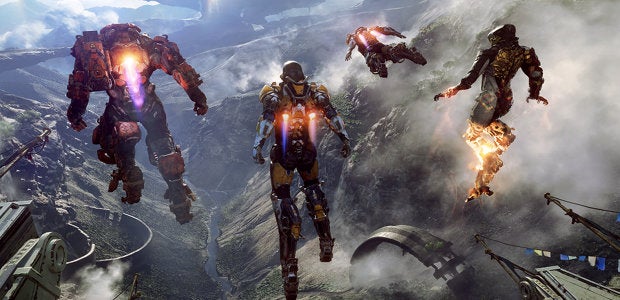
It becomes particularly clear with Anthem, Bioware’s launched-but-quickly-shuttered live-service game, how EA’s influence manifested at the studio. Interviewed in the Summer Eternal Anthology, long-time Bioware writer David Gaider explains the design concept for the game seemed to be formed from executive demands. “The nearest I could tell, working in a corporate environment, was that it was a sifted-down list of bullet-point requirements, that no single person ever took responsibility for,” Gaider explains. “It just kind of happened like that. There needs to be this project, so it was willed into existence, but nobody would say that before this project is actually kicked off, someone needs to take responsibility for the vision.”
Mark Darrah echoes this in his own interview in the anthology. “Casey pitched the exact thing [EA execs] wanted to hear,” he says. “Always online, live service, infinite revenue. Multiplayer.” Darrah describes it as “a near-perfect pitch deck.” But, he also questions whether “Bioware is the company to make a live service looter shooter.”
However, while those ideas may have filtered down from EA and then been pitched back to them by Bioware leadership, it meant that work would begin on a project long before it had crystalised into a clear premise. “The idea was that they could kick the project off, and that the designer, the design department, or the creative director, particularly, would then create the vision,” Gaider says. “But at that point, the project’s already happening. So each time it felt like trying to catch a bronco bull who’s already out and running and bucking, and you’re just trying to keep up.”
For that reason, Gaider claims “Anthem was doomed from the start.”

Development on Anthem began in 2012, but when Gaider joined the project 18 months later, it was struggling. “The team on it was just going around in circles,” Gaider says. They didn’t know what they wanted.” Hudson then left Bioware in 2014 and Darrah says “they basically ran with no leadership, for two, three years.” In 2017 Hudson returned and Darrah was brought over from the team working on the next Dragon Age project. Over the next two years Anthem took shape before it eventually released in 2019, but, in doing so, it meant the Dragon Age team was also then left without leadership for the next two years.
“My biggest regret,” Darrah says, “is I kind of feel like I should have told EA ‘no’ when they asked me to take over Anthem. I should have just let whatever was going to happen, happen at that point.” He adds that leaving “Dragon Age running without an executive producer from 2017 to 2019 was bad. That was a huge mistake.”
Darrah says he doesn’t feel like he had a choice, however, because “EA was very good at making Bioware feel like things were very dire.” Though, he points to the fact that Hudson’s replacement as Bioware’s general manager, Gary McKay, was able to delay Dragon Age: Veilguard through multiple financial years. “That tells me either he’s magic, which is possible, or it was never quite as ‘gun to our head’ as we thought it was,” Darrah says.
(Bear in mind Darrah was being interviwed ahead of Bioware’s closure and he’s referring to events in the past five years.)

However, while pressure from EA may have significantly impacted the development and direction of Bioware’s games, it appears that the studio repeated the same mistake for decades. Gaider, Darrah, and the developers that contributed to the Mass Effect oral history, all say Bioware consistently got deep into projects without having a vision of what they were trying to build.
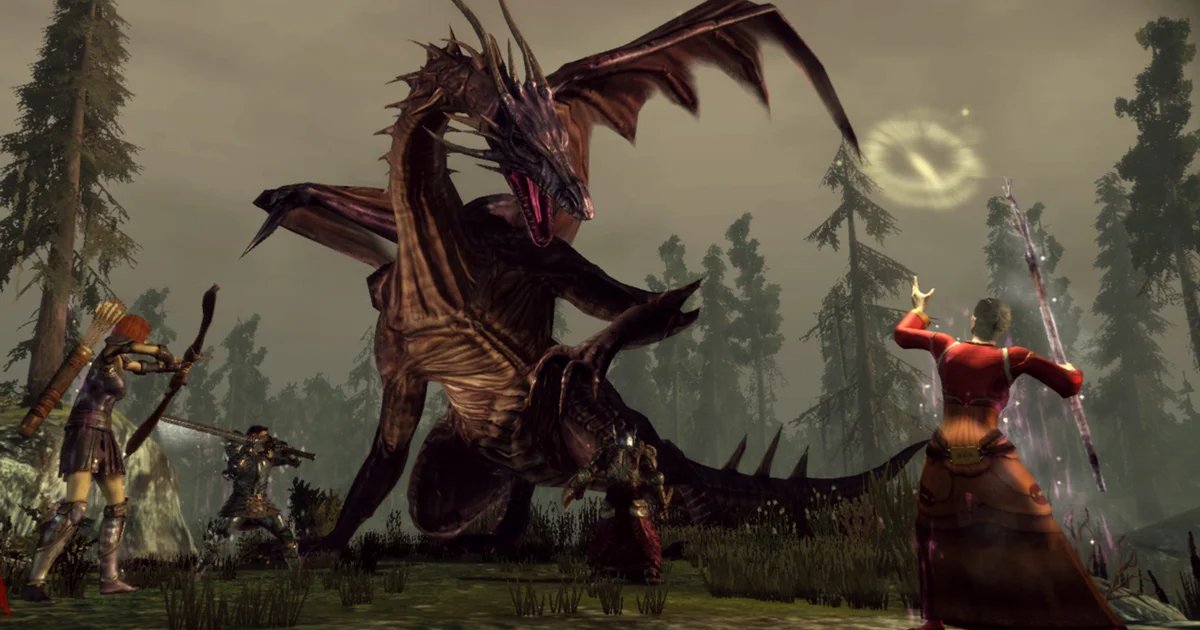
“When we started, Dragon Age’s big premise was ‘It’s D&D, but it’s not’,” Gaider says in his Summer Eternal interview. “We’ll just file the ID numbers enough to make it our own. We went through a long period of going around in circles on Dragon Age.” Edwin’s covered this as a push and pull between teams that thought they were making Conan, others thinking it was Lord of the Rings, and still others thinking they were making a new Diablo.

Gaider believes the only reason EA allowed Bioware to complete the original Dragon Age was because the team “were already halfway through development, and [EA] considered it sunk cost. They said, ‘Well, you’ve got to finish this.’ But it was clear that Electronic Arts considered Dragon Age, our initial vision, to be too old fashioned, too slow, and too ponderous.”
Gaider says Mass Effect had the benefit of Casey Hudson, who was able to pull together a single vision for the project much sooner. Though this may be something of a grass is greener situation, because the developers on Mass Effect describe being on the game for three years before it started coming together and even then it was only because they had to prepare something for E3.
“It was the first time we pulled together playable moments in the engine that really proved to us what the game was capable of,” Hudson says in the oral history. “Until you pull things together, it’s all sort of theoretical, and you think you know what game you’re making. But once you have that moment in time, where everything’s pulled together, you know exactly what the game needs to be.”
It was only after the vertical slice was completed, lead designer Preston Watamaniuk says, “that the team understood what we were building and was able to then work autonomously, without as much hands-on direction.”
This approach continued through the years. In 2012 Bioware began work on Mass Effect: Andromeda. Three years into development they scrapped the plans and tech they were using to procedurally generate worlds switching to a more traditional style of RPG, making the bulk of the game in its final 18 months. In 2015 they started work on a their next Dragon Age project, which was shelved in 2017 in favour of the project that would become Veilguard, but that would then take another seven years to complete, with a live service component first adopted from Anthem and then dropped after Anthem’s failure.
Watch on YouTube
It looks to have still been a problem for the studio with its current Mass Effect project. First announced back in 2020, initially as part of the “N7 Day” and then followed up with a teaser trailer at The Game Awards, the new Mass Effect was still described in EA’s open letter as in “early-development”. Developers who worked on the cancelled game are saying they believe they were “making something special”, and aimed build on what they saw coming out of Larian and CD Projekt Red, but six years is a long time to still be in early development and sounds a lot like the project could have fallen into the “going around in circles” Darrah described of Dragon Age and Anthem.
I am saddened by Bioware’s closure. The team have put out incredible games over the decades, and it sounds like they were never a natural match for EA’s executives or the corporation’s goals. However, it also sounds like the studio have continued to face the same challenges on projects year after year without really learning how to avoid them.
Still, it would have been much better that they be allowed to spin off and become independent or be sold to another publisher who knows what the talented team can create, than to be closed down after years of staff layoffs and project cancellations.