dailynewsnblog
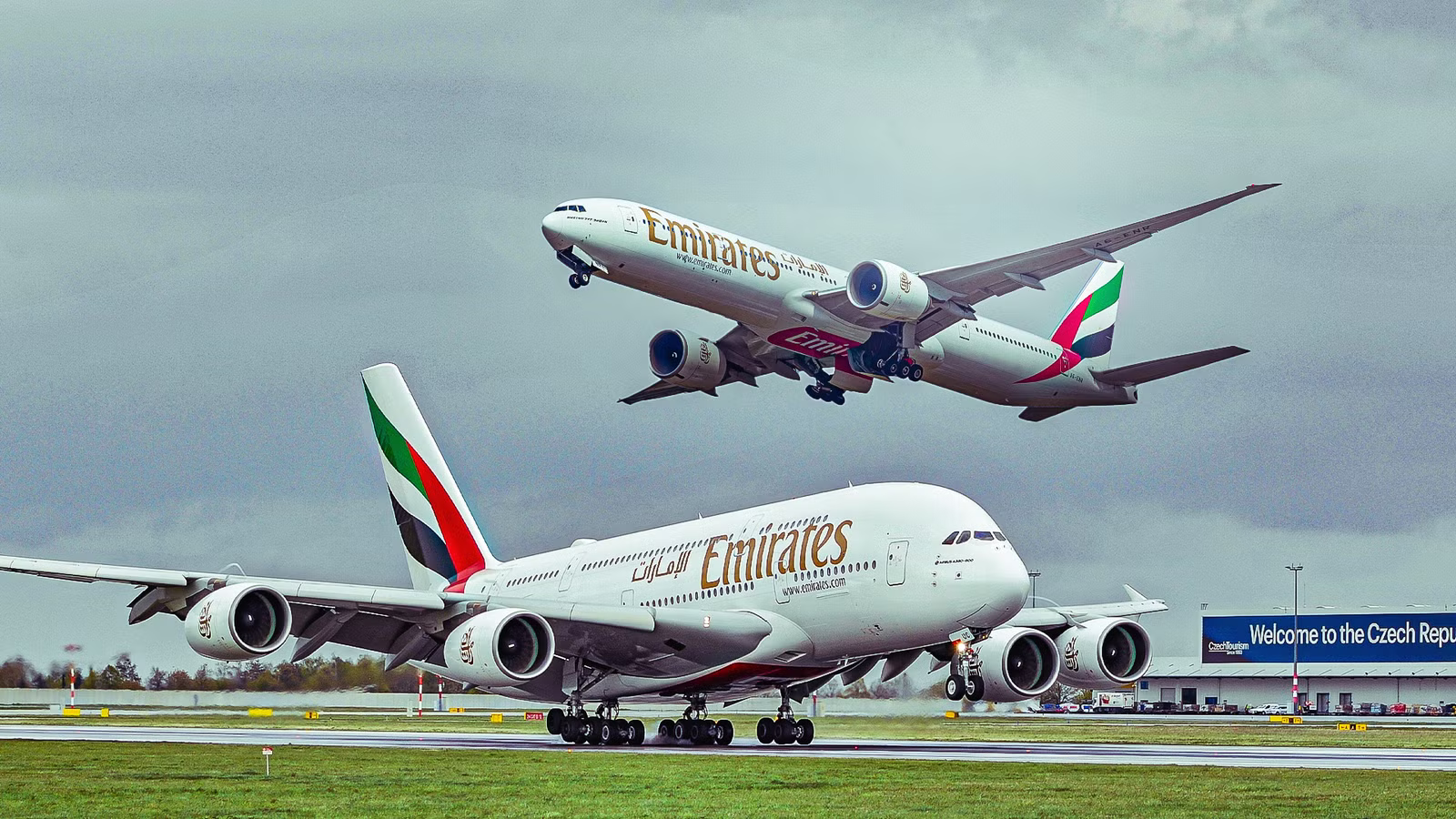
 Emirates is spending $300 million on engine maintenance, but a key part of the investment is aimed at reducing the amount of work it sends elsewhere. With GE Aerospace helping it develop advanced piece-part repair capabilities, Emirates is moving deeper into territory traditionally occupied by engine manufacturers and specialist MRO providers.
The agreement, announced on May 14, 2026, gives the investment an interesting angle. GE Aerospace is providing technical consultancy, training, and knowledge transfer to help Emirates repair components for the GE90 engines powering its Boeing 777 fleet and the Engine Alliance GP7200 engines as part of its Airbus A380 fleet. It also raises the question of why GE is helping Emirates develop capabilities that could reduce its reliance on outside suppliers.
Emirates Is Bringing More Engine Repairs In-House

Emirates has committed $300 million to expand the Emirates Engine Maintenance Centre (EEMC) in Dubai, with GE Aerospace providing the technical support needed to establish comprehensive piece-part component repair capabilities for the GE90 and GP7200. According to Emirates, the May 14 agreement includes technical consultancy, training and knowledge transfer for Emirates’ engineering workforce.
Piece-part repair goes beyond removing an engine, replacing a module, or carrying out an inspection. Once an engine is disassembled, individual components may require highly specialized inspection and repair work. Airlines have historically relied on OEMs and specialist repair shops for much of this activity.
Emirates already has a substantial engine MRO operation. According to Emirates Engineering, the EEMC has operated since 2014 and can complete 250 to 300 full-engine shop visits annually. It already handles induction, module replacement, cleaning, inspection, minor repairs, and recertification for both the GE90-115B and GP7200. That raises the question of what GE Aerospace can bring to the project beyond Emirates’ existing engineering expertise.
What Does GE Aerospace Give Emirates?

GE’s role centers on specialist knowledge and repair expertise. GE Aerospace is helping Emirates establish the repair processes rather than simply handing over equipment and walking away. According to Aviation Week, the agreement signed on May 14 will support the $300 million expansion of the EEMC and the development of piece-part repair capability for the GE90 and Engine Alliance GP7200.
Repairing an individual engine component involves more than fixing a damaged part. It must be inspected against approved technical data, repaired using the correct process, and checked before returning to service. The facility also needs trained personnel, appropriate tooling, quality systems, and regulatory oversight.
Emirates already has much of the infrastructure surrounding that process. Its engineering operation includes engine shops, technical services, and an advanced test facility. According to Emirates Engineering, the engine test cell occupies a 258,334-square-foot (24,000-square-meter) site, has six engine workstations, and can test engines producing up to 150,000 pounds (66,679 kg-force) of thrust.
The test cell is certified by the UAE’s GCAA, EASA, and FAA and can handle both the GE90-115B and GP7200. That means Emirates can already test these engines after maintenance. The GE agreement helps cover some of the more specialized work between disassembly and final testing. The new capability should give Emirates greater control over turnaround times while reducing the number of components sent out of Dubai for repair. However, it also means the airline is taking on more responsibility for work requiring highly specialized technical and regulatory expertise. That becomes especially important given how heavily Emirates relies on its widebody fleet.
Can In-House Repair Change Emirates’ Engine Economics?

For Emirates, one of the biggest advantages is having more control over the maintenance cycle. Sending a component to Dubai for repair creates another dependency in an already complex supply chain. Keeping more work within the EEMC could let the airline reduce logistics, shorten turnaround times, and schedule repairs around its fleet requirements.
According to Emirates, its engineering operation supports a fleet of more than 270 Boeing 777, Airbus A380, and Airbus A350 aircraft. The GE90 and GP7200 are particularly important because they power two of the airline’s most recognizable long-haul aircraft families. The GE90 powers Emirates’ Boeing 777s, while the GP7200 powers part of its A380 fleet. Simple Flying has previously examined how extensively Emirates continues to deploy its A380 fleet across its network.
The EEMC is already built around that scale. Emirates Engineering says the facility can handle 250 to 300 full shop visits each year, with an average of 30 engines in process at any given time. That gives the airline a significant installed base from which to expand its piece-part capabilities.
The potential savings go beyond simply avoiding an outside repair bill. Before an engine component returns to an aircraft, it may pass through several organizations: it must be removed, packaged, transported, processed by a supplier, returned, inspected, and installed again. Each additional handoff can add time and cost.
Emirates — Live Flights
Doing more of that work in Dubai could save both time and money. The more stages Emirates handles internally, the fewer external handoffs it needs to manage. In other words, Emirates is taking on more work it previously sourced from outside suppliers. That distinction matters because Emirates’ broader engineering plans suggest this isn’t an isolated engine project.
Why Does Emirates’ $5.1 Billion Dubai South Project Matter?

The scale of the EEMC investment becomes clearer when viewed alongside Emirates’ $5.1 billion engineering complex at Dubai South. On May 18, just four days after announcing its agreement with GE, Emirates broke ground on the new facility. The complex is designed to handle 28 widebody aircraft at once and, according to Emirates, is expected to become a major MRO center for the airline and potentially the wider aviation industry.
Aviation Week reported that the project follows the GE agreement and reflects Emirates Engineering’s strategy of expanding vertical integration. The publication noted that the complex will bring more skills, infrastructure, parts production and specialist capabilities under one roof. The new facility will cover approximately 11.8 million square feet (1.1 million square meters) and include workshops, storage, logistics, office and training facilities. Its hangar complex is designed to accommodate 28 widebody aircraft at once.
The engine investment is part of a much larger engineering strategy. The aim is to bring more maintenance skills, equipment and processes under Emirates’ control, and Emirates is taking a similar approach with another engine manufacturer.
Why Is The GP7200 Only Part Of Emirates’ A380 Engine Strategy?

The GP7200 is only one piece of Emirates’ A380 maintenance strategy because the airline also operates the Rolls-Royce Trent 900. In November 2025, Emirates and Rolls-Royce signed an agreement allowing Emirates to perform MRO on its own Trent 900 engines from 2027. According to Rolls-Royce, Emirates will perform fan-case repairs at a new facility, while Rolls-Royce will retain module repair capability within its global network.
Emirates also confirmed the arrangement, saying the airline planned to build its own capability because it expects to operate its A380 fleet into the 2040s. As Simple Flying has already covered, Emirates’ long-term commitment to the A380 remains unusually strong, despite the type’s retirement elsewhere. Rather than handling every aspect of engine maintenance itself, Emirates works with each manufacturer to bring specific repair tasks in-house.
With GE, the airline is developing piece-part repair capability for the GE90 and GP7200. With Rolls-Royce, it will initially perform fan-case repairs on the Trent 900 while Rolls-Royce retains module repair capability. That approach makes particular sense for the A380. Emirates is the world’s largest A380 operator, so it has a much stronger incentive than most airlines to invest in specialist maintenance infrastructure for the type. It also raises the possibility that Emirates could eventually use some of these capabilities for third-party MRO work. As Simple Flying has examined, Emirates is already undertaking major engineering work to keep dozens of its A380s in service, making the airline’s growing investment in in-house maintenance capabilities particularly significant.
Could Emirates Eventually Become A Major Third-Party Engine MRO Provider?

Emirates’ expanding maintenance capabilities could eventually support third-party work, but that does not appear to be the main goal for now. The airline has plenty of work for its own engineering operation, with hundreds of widebody aircraft and a growing number of maintenance tasks being brought in-house. Building the capability around its own fleet also gives Emirates a steady workload as it develops new repair processes.
For now, the more important development is Emirates’ push toward greater vertical integration. The $300 million EEMC expansion, the GE Aerospace partnership and the planned Trent 900 capability all point toward the same goal: keeping more maintenance expertise and decision-making within the airline rather than relying on outside suppliers for every specialized task. Dubai South will take that approach further. The facility is expected to open in 2030 and will be able to accommodate 28 widebody aircraft at once, along with workshops, logistics, training and other engineering facilities. Together with the expanded EEMC, it should give Emirates considerably more room to carry out maintenance work within its own network.
The next few years will show how much of that work Emirates can realistically bring in-house. The GE partnership must translate into approved repair processes and trained personnel, and the first Trent 900 induction is expected in 2027. If those programs work as planned, Emirates should have more control over component availability and repair times, with fewer parts having to travel to outside MRO providers.
For passengers, the difference will be largely invisible. An Emirates A380 or Boeing 777 will look the same whether its engine component was repaired in Dubai or elsewhere. For an airline operating such a large long-haul fleet, that control can be valuable. Emirates is unlikely to stop working with engine manufacturers altogether, but it is clearly trying to reduce its dependence on them for routine and specialized maintenance. The GE agreement could therefore be less about replacing outside suppliers and more about deciding exactly which parts of the maintenance process Emirates wants to own itself.