dailynewsnblog
For Ontario’s automotive industry, the governments are directing $2.5 billion toward protecting existing manufacturing operations while helping automakers transition toward electric and connected vehicles.
The federal and Ontario governments are committing billions of dollars to help Canada’s steel and automotive industries withstand U.S. tariffs, as QP Briefing first reported last Tuesday.
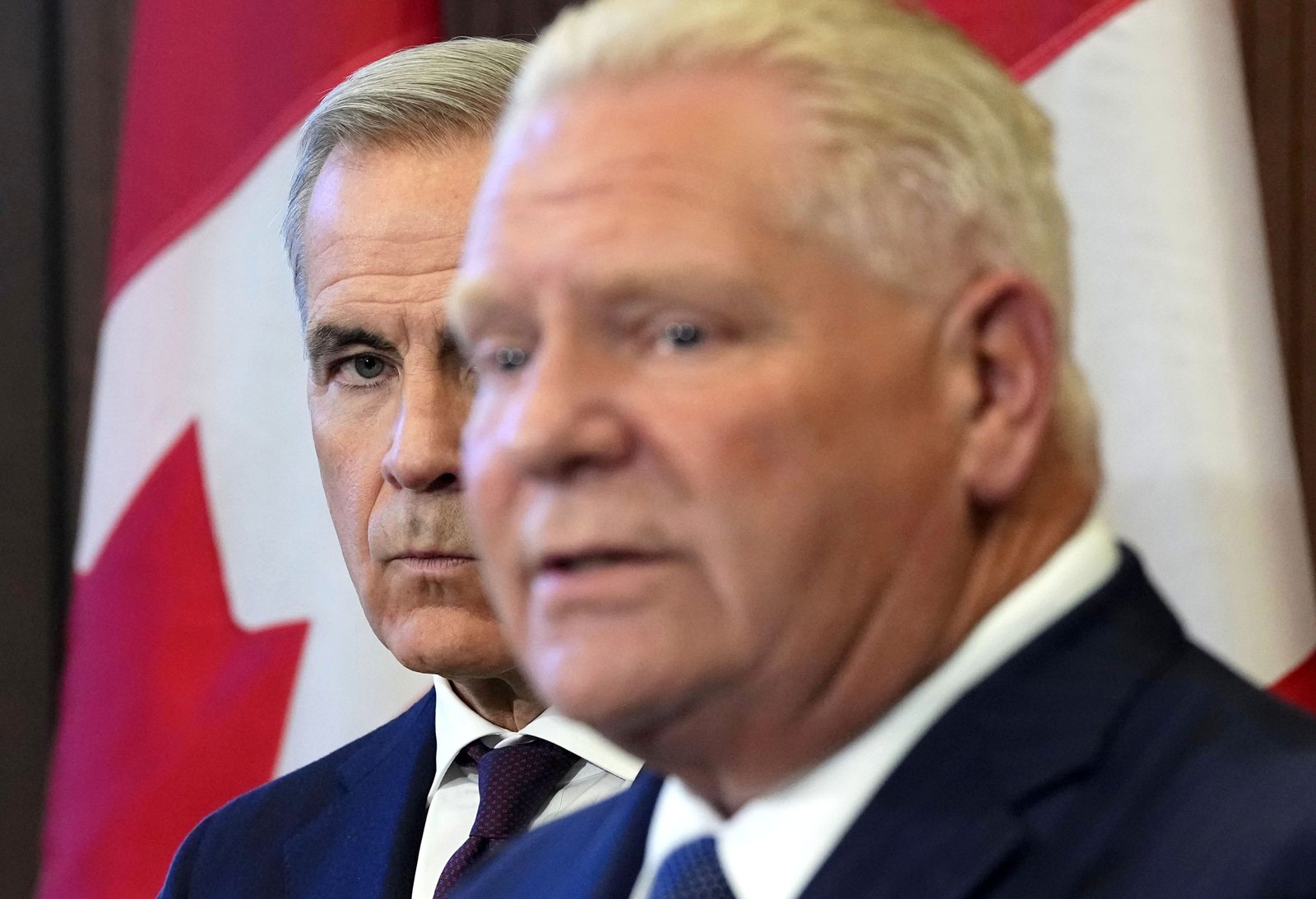
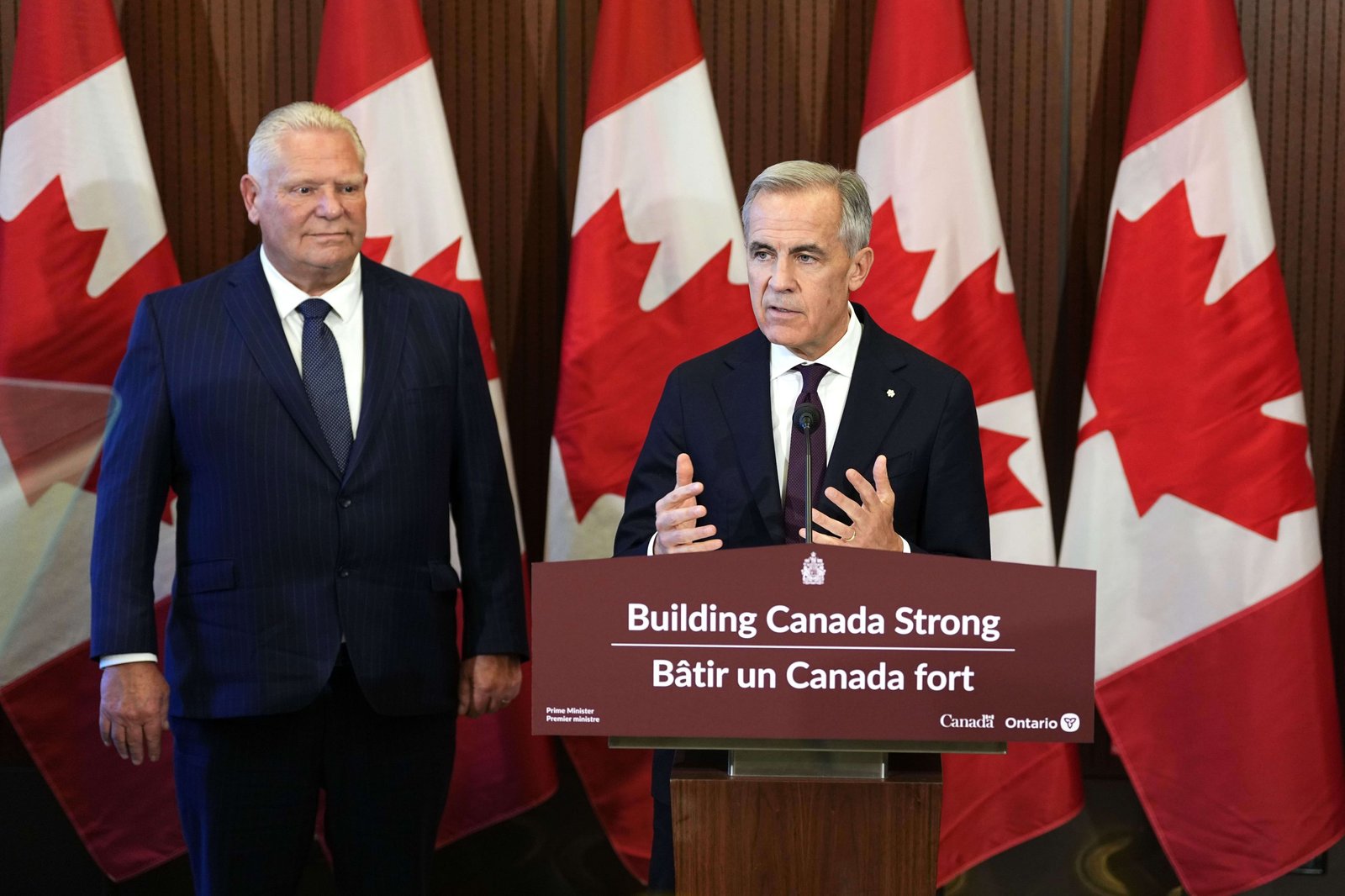
The two leaders announced a $9-billion Canada-Ontario action plan Wednesday, including more than $5 billion for steel manufacturers and another $2.5 billion to support automotive production and investment in next-generation vehicles.
The package comes as Ontario’s manufacturing sector faces mounting pressure from U.S. President Donald Trump’s trade policies, including 50-per-cent tariffs on Canadian steel and ongoing uncertainty surrounding the future of North America’s integrated automotive industry.
Carney said the measures are intended not only to preserve existing jobs but also to help Canadian manufacturers adapt to a changing global economy.
“U.S. tariffs have upended a trade bargain that has existed for decades,” Carney said. “They have raised costs for American families, while putting Ontario workers and businesses at a disadvantage and under a cloud of uncertainty.”
The largest portion of the package will go toward a new Joint Steel Action Fund, worth more than $5 billion, designed to help Canadian steelmakers modernize their facilities, expand production and develop products for domestic and international markets.
The federal government estimates the investment will help protect more than 100,000 jobs in the steel sector, including those in major manufacturing centres such as Hamilton and Sault Ste. Marie.
The announcement follows recent layoffs at Stelco, whose U.S.-based owner announced plans to eliminate nearly 500 positions, underscoring the challenges facing Canadian steel producers amid the trade dispute.
Carney said Canadian steelmakers must become less dependent on demand from the automotive industry and pursue opportunities in infrastructure, defence, transportation and energy projects.
Despite Canada’s substantial domestic steel production, the country imports more than 6.5 million tonnes of steel annually, partly because Canadian mills do not manufacture all the specialized products required by domestic industries.
“Today’s investment will enable mills to upgrade machinery and manufacture more products Canada needs and expand to meet demand in non-U.S. markets,” Carney said.
Ottawa also plans to strengthen Canada Border Services Agency enforcement against foreign steel dumping, while a new federal-provincial working group will examine ways to reduce transportation costs and expand markets for Canadian-made steel.
For Ontario’s automotive industry, the governments are directing $2.5 billion toward protecting existing manufacturing operations while helping automakers transition toward electric and connected vehicles.
The investment is intended to safeguard more than 120,000 direct automotive jobs and support improvements to manufacturing facilities, production lines and advanced technologies.
The announcement comes during a difficult period for Ontario’s auto industry.
Stellantis has faced mounting pressure over the future of its Brampton assembly plant, while Honda previously suspended its planned electric vehicle investments in Alliston. Volkswagen’s PowerCo has also delayed construction of its multibillion-dollar battery facility in St. Thomas.
Carney acknowledged the damage tariffs have done on the highly integrated North American automotive industry, where vehicle components can cross the Canada-U.S. border multiple times before final assembly.
Canadian automotive exports to the United States have fallen by more than 10 per cent, while American exports to Canada have declined by more than 20 per cent.
“Nobody wins from this. Tariffs make both our industries weaker and reduce choice for families,” Carney said.
He said that Canada remains willing to negotiate a new trade arrangement with Washington but suggested the country can no longer rely on the United States to pursue the same economic priorities.
“But we recognise these are not the objectives of the current U.S. administration. Their approach has changed, and so must ours.”
The governments will also establish a joint automotive working group to implement the measures, strengthen the domestic market and improve Canada’s international competitiveness.
The broader agreement also includes a $1-billion federal contribution to match Ontario’s existing $1-billion commitment toward road infrastructure in the Ring of Fire region of northern Ontario, where governments hope to accelerate access to deposits of nickel, chromite and other critical minerals.
The two governments will coordinate permitting processes and establish a working group to engage Indigenous communities on economic development, conservation and protected areas.
Ford described the agreement as an opportunity for both levels of government to work together to defend Ontario’s industrial base.
“This is going to be a transformational announcement today to make sure that we protect workers, protect companies, protect communities,” Ford said ahead of the announcement.
More to come…