dailynewsnblog
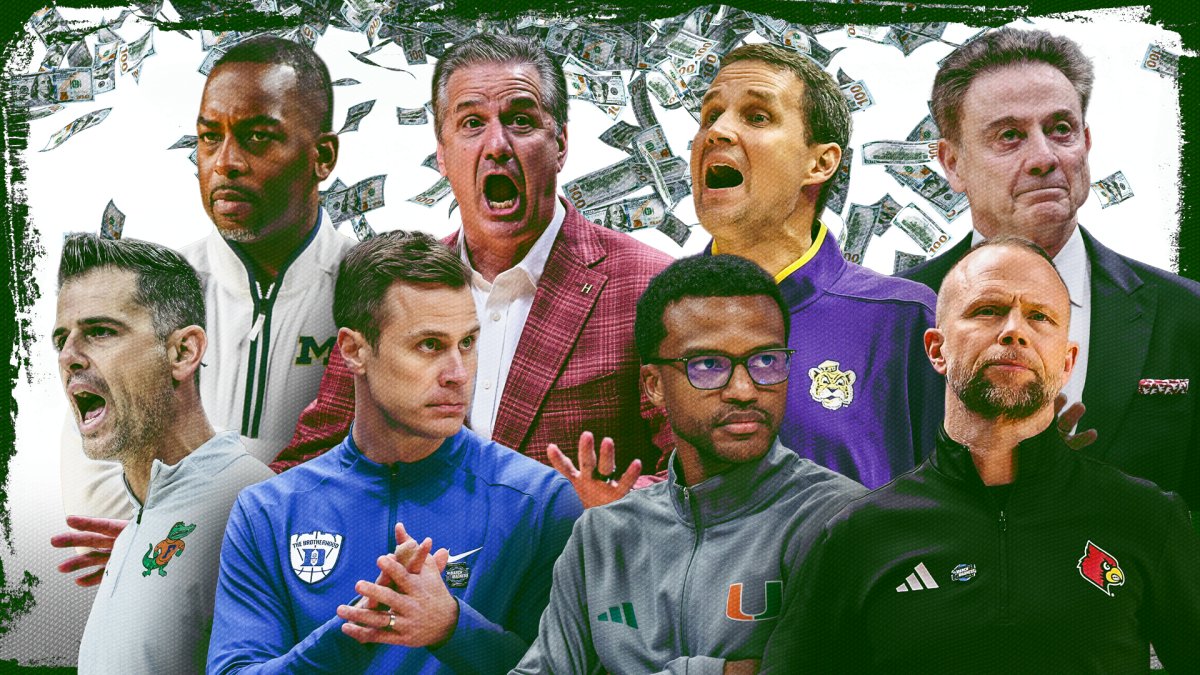
How much does it cost to build the typical high-major college basketball roster in 2026? The answer is a thick $13.5 million.
That’s the number CBS Sports can reveal after an exhaustive research project that lasted nearly six weeks and relied on more than 100 sources across college sports. The $13.5 million is the average number across all 79 Power Five programs, plus Gonzaga, which has operated as a high-major outfit for well over a decade. The numbers and details in this story represent the most accurate information to date on how much college basketball teams are paying in order to keep up with an ever-escalating market.
Predictably, the 2026 offseason brought another massive hike in spending. A year ago, the average price of a power-conference squad was in the realm of $7 million. But for the fourth straight offseason, the open market spiked yet again, leading to the most unruly portal frenzy yet. Numerous big-man-needy teams entered free agency with $4 million earmarked for a star center. That wasn’t enough. Many of the best bigs in free agency earned close to a $5 million payday. Elite guards and wings usually commanded a price that encroached on $4 million. The market was further sent into commotion in the summer when dozens upon dozens of players sued for a fifth year of eligibility after an NCAA rule change in late June exposed them to (still very much ongoing) litigation.
The season is less than two weeks away. We still don’t know which players who have lawyered up will win out.
With those circumstances in mind, our ambitious endeavor to uncover the NIL capacities at every high-major program had a few stipulations and non-negotiables. The first was how we defined the terms that place each program into one of our seven spending tiers. Every school listed is based on the hypothetical that every player who is trying to get eligible as of Oct. 21 will remain eligible.
Very important context: There are a lot of schools that would drop down a tier if they didn’t wind up having to pay these fifth-year guys. But they are financially tied to paying them for now, so they have been slotted into their appropriate levels.
Additionally, some schools have incentives in their player contracts, though the structure of those incentives and the amounts vary wildly depending on the player. Nevertheless, if a school is in a position to reward its players with incentives and ultimately would have to pay those bonuses at the end of the season, that cost was also added to every program’s total.
There are also some programs that, by nature of having some international players, will receive a tax break with some of their payments. But the players will still make that money, even if the school is catching a break on the front end. As a result, all schools are listed based on their rosters’ current projections on maximum earning opportunities — not what the school is paying/has on the books as of October.
The trickiest part of a project like this: an understandable motivation for some people to lie about their school’s actual number. We are not the IRS, so there’s only so much we can do to corroborate the information. In an effort to get the clearest picture possible of which schools are spending how much, CBS Sports’ sourcing is based on conversations (and longstanding relationships) with head coaches, assistants, athletic directors, general managers, agents and even some third-party consultants who have access to teams’ NIL contracts. In some instances, sources provided a team’s spending ledger under the agreement that documents and/or screenshots would not be shared to anyone else.
College Basketball Final Four tiers: Ranking the preseason Top 25 by their chances to reach final weekend
Cameron Salerno
There are definitely a group of schools listed below that are believed by their competition to be operating with a budget that’s 10%, 15%, even 20% larger than where we’ve slotted them. In many cases, we independently double-sourced a school’s number. Sometimes a coach would give one number, and we would discreetly reach out to another person in an athletic department to verify. There were only a few instances when the number wasn’t effectively the same. In those instances, we did our diligence and further vetted the information. There were only two cases where two numbers were not in alignment (the difference being more than $1.5 million but less than $2.5 million). We took the higher number both times.
More than half of the programs provided an exact number on background. Most others gave a narrow range they fell into. From there, we were able to compile a reasonably accurate listing of all 80 schools.
And from that list, we have an approximate average cost of every roster at the high-major level for the upcoming season. The SEC is comfortably No. 1, with the basketball-first Big East firmly taking second place in the spending hierarchy.
Mike Meredith | CBS Sports
Before we get to the seven tiers for all 80 schools, a note on every conference:
- The SEC has five of the 15 biggest spenders in the sport. The correlation: The SEC ranks No. 1 in all advanced metrics heading into the season and has the most teams in the preseason AP Top 25 (seven).
- The Big East is not burdened by the spending sprees of power-conference football, so it’s no surprise to see the league taking advantage of a much larger revenue-sharing pile. There is a gap between the top two and the rest of the league, but the conference is poised to remain competitive in the years to come.
- The Big Ten would be No. 2 if not for having one-third of its league limited to less than $10 million in spending in men’s basketball. While some programs have definitely improved their year-over-year standing relative to where they ranked nationally a year ago, there’s still a lot of places that are hitting a fiscal ceiling that could be reflected in the year-end standings.
- The Big 12 is barely behind the Big Ten; the difference is negligible. While there are obviously still gaps between the top teams and the bottom ones, this league has the widest middle. Nine of its 16 teams are separated by less than $6 million, and some of its most successful programs are spending about $2 or $3 million less than a lot of its competitors believe.
- The ACC has the widest gaps by far of any high-major. The usual suspects are in the stratosphere, while the conference also has 12 of its 18 teams under the national average of $13.5 million. There’s more variety in NIL situations and changes and upward and downward trends in this league than any other.
And now, the deep dive. Here is where every school slots on spending in men’s basketball for the 2026-27 season.
Mike Meredith, CBS Sports
Tier 1: $20 million plus
Schools in this range: Duke, Florida, Kentucky, Illinois, Louisville, Michigan, North Carolina, St. John’s, Tennessee, Texas, Texas Tech
Last season there were only two teams believed to be operating at $20 million-plus: Kentucky and (maybe) Louisville; 2026 seriously escalated college basketball’s spending ceiling.
Preseason No. 1 Florida and its huge retention situation with All-American Thomas Haugh (who comfortably projects as the highest earner sport), DPOY Rueben Chinyelu, All-SEC forward Alex Condon and Co. have a collective valuation north of $25 million, putting them alongside the likes of two bluegrass blue bloods, Louisville and Kentucky, and ranking among the richest rosters in college hoops. What’s more, the Gators didn’t rely on a spate of portal pickups like many others occupying the top end of this tier. According to our research, Louisville has spent more on players in the past three years than any program in college basketball. The Cards’ spending is evidenced by their elite portal class, led by high-end transfers Flory Bidunga, Jackson Shelstad, Seth Trimble, Karter Knox and Alvaro Folgueiras. Those five alone value at just north of $15 million.
Kentucky, which only trails Louisville in overall spending across the past three offseasons, showed its ever-reliable passion and commitment to roster-building by landing arguably the portal’s most cherished player, Iowa State transfer Milan Momcilovic. There was also an expensive retention piece with big man Malachi Moreno, in addition to guards who came with a hefty price tag: Furman transfer Alex Wilkins and fellow point guard Zoom Diallo, via Washington. Mark Pope had a roller coaster of an offseason, but in the end he brought in a haul — and now faces heightened pressure to finish near the top of the SEC.
The Duke Discount?
For those who think Duke is No. 1 or 2 in player spending, a twist: Jon Scheyer’s program obviously pays extremely well, but it’s not at the top of the pyramid. (We know, we know: Some of you will scream this isn’t true.) Duke benefits from something increasingly referred to as the “Duke Discount,” a catchphrase many believe is legitimate, while some others roll their eyes. The Blue Devils offer a brand/marketing setup that’s 1-of-1 in college basketball. Multiple programs that had to recruit against Duke either for blue-chip high school players or high-end transfers in the past couple of years admitted, on background, that they lost out on those players despite offering a substantially higher number than they were told the player took to go to Duke.
The Blue Devils still had to put up big cheddar to land the likes of John Blackwell (Wisconsin) and 17-year-old phenom Joaquim Boumtje-Boumtje this year, but the marketing upside of wearing that uniform remains such a tempting draw and easy moneymaker for guys who prove their worth. Duke’s NIL outlook right now will likely wind up growing by a couple more million come March if the Devils are as great this year as they’ve been the past two.
North Carolina is nearly running stride-for-stride financially with their Tobacco Road rival, by the way. Michael Malone’s first year did not come with a huge downturn in spending capacity relative to most others at the top of the sport. Carolina had pockets deep enough to remain in many a recruiting battle it entered back in the spring.
Tennessee and Texas were a couple of SEC programs on the receiving end of a money jolt back in the spring and went out and proved their seriousness in the portal. As a result, both got rewarded with preseason top-10 rankings this week.
Meanwhile, Illinois and Michigan are the top dawgs in the Big Ten. Retention was not cheap for the Illini, but keeping David Mirkovic, Andrej Stojakovic and the rest of the Balkans was well worth the price of admission. The Illini were prepared to dole out top-of-the-market money for Year 2 of Keaton Wagler, but he went pro (smart decision), so the Illini’s Final Four hopes hinge heavily on just how good Providence transfer guard Stefan Vaaks and five-star guard Quentin Coleman can become. The money is one of the bigger reasons why Michigan was able to retain nearly its entire rotation, even after Dusty May left for the Dallas Mavericks. Elliot Cadeau and Trey McKenney may be pound-for-pound the best backcourt duo in college hoops next season. Michigan had to re-negotiate a bit to keep the portal poachers away, but new coach Mike Boynton Jr. got the job done.
Some more context on this tier that’s important: There are a few schools in this range that are not spending $20 million as of now, but would hit that number with incentives (thus our “maximum earning” verbiage at the top of this story). Michigan is one of those schools, but the most obvious is Texas Tech. There might not be a school in the country with a wider delta between its maximum spending output vs. its True Number if its five-for-five cases don’t go through. The Red Raiders will easily clear $20 million if JT Toppin returns to full strength this season alongside three players trying to maintain their eligibility through lawsuits: Darrion Williams, Donovan Atwell and Jamichael Stillwell. If the latter three all don’t get cleared? TTU’s valuation plummets.
Key quote: “We definitely have a well-compensated team this year, but this is really the first year where we’ve been at the top, in terms of that conversation,” Florida coach Todd Golden told CBS Sports. “The year we won the national championship, I think we probably had the seventh or eighth, maybe even the ninth-compensated team within our league. I think one thing that, at Florida, we’ve been able to build is that loyalty and excitement with our alums, with our donors to retain talent. I think that’s something that’s a little different than a lot of other programs in America are doing. We’re not going into the portal every year spending $20 million. We’re retaining talent, guys that are growing within our program. … [Haugh and Condon] were zero-dollar NIL guys coming out of high school. They’re not zero-dollar NIL guys anymore. They’ve earned it. … We’ve built up the equity that’s allowed us to compensate our players like this.”
Mike Meredith, CBS Sports
Schools in this range: Arkansas, Connecticut, Indiana, Kansas
This is easily our smallest group of the seven echelons we’ve tiered out — and we almost included these four in the top group. While these four schools are all on the brink of paying $20 million, none of them for sure project to hit that number as of mid-October. If Kansas is able to roster Trey Kaufman-Renn AND the Jayhawks get Tre White and Melvin Council Jr. eligible for the entire season, our information suggests KU would hit $20 million later this season, but as of this story’s publication, the Jayhawks are an eyelash away and literally as close to Tier 1 as possible. (Kansas also boasts the most expensive freshman in college basketball, No. 1 prospect Tyran Stokes).
Hoosiers’ spending overshoots preseason standing
Indiana was a big spender ahead of a big second season for Darian DeVries, but despite many a Big Ten foe believing otherwise, IU did not hit the $20 million mark. Will the investment pay off with a team worthy of Top 25 status more weeks than not this season? The Hoosiers are one of only two teams that comfortably rank in the top 15 in spending but are not ranked in the preseason AP Top 25. (North Carolina, under a first-year coach, is the other.)
Though there is a tier separating them, the reality is UConn sits a very close second in the Big East to St. John’s — and the difference in spending between the two rosters isn’t that much. If anything, it’s a surprise Connecticut isn’t in the top tier. After all, the Huskies have been the most successful program in college basketball in the past five seasons and have more NCAA titles than any program since 1999 (six).
Meanwhile, John Calipari’s Arkansas team would be in the $20 million range if not for one circumstance: he has the youngest squad in D-I. With seven freshmen rostered, most of those newbies come at a bargain compared to a proven vet (Billy Richmond) and/or higher-priced transfers (Jeremiah Wilkinson, Cooper Bowser).
There is unquestionably a clear line between these two tiers/15 schools and the rest of the sport, with a $1 million-plus gap before getting to the highest-spending school in Tier 3.
Key quote, Calipari on if the Protect College Sports Act fails: “I’ll never speak on it again in my life. I’ll go raise more money for my teams than anyone else, and we’ll go about our business, and I’ll pay whatever I’ve got to pay. I’m telling you, when they start cutting sports, I’m not going to say anything. I told everybody, this is where this is going.”
Mike Meredith, CBS Sports
Tier 3: $15.1 million to $17.5 million
Schools in this range: Arizona, Auburn, Cincinnati, Gonzaga, Houston, Miami, Michigan State, *LSU, Missouri, Oklahoma, Oklahoma State, Ole Miss, South Carolina, Texas A&M, USC, Vanderbilt
Three top-15 teams in this tier had similar offseasons: Arizona, Miami and Michigan State. All three programs retained their best two players. Jeremy Fears Jr. and Coen Carr at Michigan State, Malik Reneau (if eligible) and Shelton Henderson at Miami and Mo Krivas and Ivan Kharchenkov at Arizona. Value is so hard to find in this era of college basketball, but strong evaluation, better development, elite retention with a splash of portal and/or difference-making freshmen continues to be the backbone of a ton of good teams. Arizona, Michigan State and Miami all struck those notes in free agency.
LSU’s number the shiftiest of them all
LSU is quite literally unlike any program in the sport … and has a situation unlike anything we’ve ever seen. So Will Wade’s team has an asterisk. Many believe LSU is nudging up on $20 million, even without a full roster. This is what the Tigers are paying their current roster, and thankfully we (finally) got more clarity there on Tuesday. The Tigers would be in a higher tier if ex-Big East Player of the Year RJ Luis Jr. or Brazilian forward Marcio Santos had been cleared. The inverse is true, too. Sleek wing Saliou Niang, a 2025 draft-and-stash by the Cleveland Cavaliers, is an outstanding two-way player who commanded a tremendous market. He is slated to be one of the top hoopers in the SEC and will be paid accordingly.
Land a good coach and hand him real-deal resources? That model worked well to flip Virginia immediately from the cellar to a contender, and it could happen again at Cincinnati. New coach Jerrod Calhoun, who came over from Utah State, is a stud, and this revamped Bearcats roster is chock-full of competent players who not-so-conveniently happen to be advanced-stat darlings. Cincinnati hasn’t made the Big Dance since 2019. That changes this year.
Gonzaga, Oklahoma and Ole Miss all have serious money tied up in the five-for-five market. A judge’s call on a fifth year of eligibility will make or break the outlook for all three squads.
Missouri will clear into this range so long as Mark Mitchell and CJ Gunn are both eligible this season; the Tigers also brought in a pair of five-star studs in Jason Crowe Jr. and Toni Bryant. One school that crept into this range thanks to retaining one of the most valuable players in the country: Vanderbilt and its preseason First Team All-American, Tyler Tanner.
Oklahoma State clearly wants to be really good and ranks top-three in year-over-year budget increase relative to last year’s spending. Steve Lutz went out and landed two top-40 freshmen who can hoop in Latrell Allmond and Anthony Felesi, who could have sneaky NBA upside one day. They retained starting point guard Kanye Clary. They added four high-major starters. OSU spent like an NCAA contender.
Gamecocks another shocking big spender
South Carolina is the major stunner here. The Gamecocks were dreadful last year and were picked to finish dead-last in the SEC this season, but they are still in the same financial zip code of Final Four hopefuls like Michigan State and Arizona? It’s hard to believe. Either pundits (hand up) have pegged this roster way, way wrong, or South Carolina had to overpay. South Carolina did not land a single top-50 transfer and features a ton of unproven players at the high-major ranks. Lamont Paris enters 2026-27 on the hot seat, so this sneaky-good frontcourt of Juan Fernandez and Aleksas Bieliauskas better be way, way better than “sneaky-good.” Maybe this is just the cost of doing business in the loaded SEC where the median roster was worth approximately $16 million.
Key quote: “I don’t know that there was one new player that we got to come here that we ended up the second-highest payer,” South Carolina coach Lamont Paris told reporters in June. “I don’t think that ever happened. We were always the highest payer. So, I mean, that’s where we are. That’s what it is.”
Mike Meredith | CBS Sports
Tier 4: $12.1 million to $15 million
Schools in this range: Alabama, Baylor, BYU, Creighton, Georgetown, Marquette, Maryland, Mississippi State, Ohio State, Oregon, Pittsburgh, Providence, SMU, UCLA, Villanova, Virginia, West Virginia, Xavier
UCLA was a big talking point after Mick Cronin cut straight to the chase on the Eye on College Basketball podcast: “I will tell you exactly what our team costs: $14 (million) exactly.” Cronin said at Big Ten Media Day. “Other guys are going to tell their team cost 12, when it cost 22. I’m jealous I don’t have 24. I’m not mad at the guy who has 24. I’m trying to figure out how the hell he got it and how do I get it?”
Cronin claiming that UCLA spent a shade above $14 million on the Bruins’ roster drew some guffaws from numerous coaches. When CBS Sports doubled back to Cronin last week for some due diligence after some doubted the number, his response was blunt: “I need to lie like I need a haircut. And I couldn’t care less what someone I do not respect says.”
This neck of the woods is also where you find a hefty chunk of Big East teams — Marquette, Georgetown, Creighton, Xavier, Providence, Villanova — who can use plenty of revenue-sharing dollars to build rosters because they don’t have football. (PC would have been in Tier 3 had Dink Pate been eligible.) The hope is that much-improved money can help shore up the middle class of the Big East that has been very pedestrian of late.
Multiple teams here can’t cry poor if this season goes poorly again. Maryland dropped bags in free agency. Pitt, specifically, had more buying power than more than 12 ACC foes despite finishing just 13-20 last year. Pitt was able to land four high-major starters (Nait George, Jalil Bethea, Jonathan Powell, Baye Ndongo), a couple productive mid-major prospects and top-40 freshman Chase Foster. The advanced metrics aren’t seeing the vision, though. The Panthers check in at No. 66 in KenPom.com’s preseason projections. It’s clearly a big season for Jeff Capel III. Check the ball; the games will tell all.
Then there is Alabama, which ranks near the bottom in the SEC in spending yet is consistently a top-10 or -15 squad with a budget that is comfortably outside the top 30. Coaching.
Key quote: “You gotta piece it together,” Alabama coach Nate Oats said on the Eye on College Basketball podcast. “You’re not just looking for the best players. If you go buy the best pieces, sometimes it doesn’t fit. We’ve done this study; we’ve done the best job of improving guys’ draft stock. We don’t have the most No. 1 picks or lottery picks — although we’ve had quite a few — but there’s still a lot more money to be had in the NBA than there is in college. If you think you’re an NBA player and want to play in an NBA system, we’ve done a better job of improving guys’ draft stock than anybody in the country. We’ve told guys, ‘If you don’t think you’re going to be an NBA player, you should go take the most money you can make in college. If you think you’re an NBA player, you may have to take a discount.'”
Mike Meredith | CBS Sports
Tier 5: $10 million to $12 million
Schools in this range: Clemson, Georgia, Iowa State, Minnesota, NC State, Nebraska, Syracuse, TCU, Wisconsin
This zip code is where you find the least-funded SEC team (Georgia) … with a budget that is still easily north of $10 million. That hints at the investment in hoops for a football-obsessed league. Being good at basketball matters in the SEC.
Iowa State a consistent overachiever under Otz
T.J. Otzelberger is an awesome basketball coach. Iowa State is not teeming with money, but the Cyclones have finished inside the top-12 at KenPom in each of the past three seasons. Otzelberger continues to maximize his resources with sharp roster-building plans. Iowa State does its work early in the portal. It knows exactly who fits the scheme, and Otzelberger aggressively pounces the day the portal window opens. It also means that Iowa State (which is in this tier only if Tamin Lipsey remains eligible) just isn’t going to be in position to pay $6 million for top-shelf talents like Milan Momcilovic, who transferred to money-bags Kentucky after exiting the 2026 NBA Draft process. The margin for error at Iowa State is slim, but Otzelberger is simply really good at what he does.
There are two schools in this tier with a new coach: Syracuse and NC State. Both now stand in the top half of the ACC in spending with their beloved alums running the show.
How Nebraska, Wisconsin, Clemson make do
Nebraska’s Fred Hoiberg, Wisconsin’s Greg Gard and Clemson’s Brad Brownell have all embraced being different from a style-of-play perspective, which gives them a chance to succeed with lower budgets. Clemson always seems to find under-the-radar bigs who can execute its high-low scheme. Nebraska likes those high-feel, high-skill guys who can fit into Hoiberg’s beautiful offense, and a unique twist on the no-middle defensive scheme can help cover up some of the lack of real rim protection (the best rim-protectors usually get PAID in the portal). Wisconsin has totally modernized its offensive scheme. It’s turned guys like AJ Storr, John Tonje, John Blackwell and Nick Boyd into All-Conference performers (and made ’em a lot of money at their next stops). That proof of concept has helped the Badgers’ pitch in the portal get better and better.
Key quote: “You can throw that offensive thing that we used to have to battle out the window, kiss that goodbye,” Gard told CBS Sports at Big Ten Media Day. “Our evolution and innovativeness offensively has helped. … We have to be really strategic and really intentional; a great example is what our Brewers are doing right now. One of the smallest markets in baseball. I’m not saying we have the smallest market in college basketball, but we’re not the Yankees or the Dodgers. We have to find a way to compete with the Yankees and the Dodgers. We’ve done it, and we’ll continue to do it.”
Tier 6: $7.1 million to $9.9 million
Schools in this range: Arizona State, Butler, California, DePaul, Florida State, Iowa, Northwestern, Penn State, Purdue, Rutgers, Seton Hall, UCF, Utah, Virginia Tech
Purdue’s unique path to high-level, consistent winning
Get a load of this: Purdue has won 12 NCAA Tournament games over the last five years. The other 13 teams in this tier have combined for eight Big Dance wins in that same five-year window, with three of them coming from Iowa last March. Matt Painter has used brutal honesty and a humming offense to create an environment that most players don’t want to leave, even if there is more money elsewhere.
Purdue will take one graduate transfer to fill a specific void, but it doesn’t mine the portal for multiple starters year after year. Finding hidden gems is the secret sauce. Painter saw that there was more than met the eye in Zach Edey and Braden Smith and developed them into All-American and/or National Player of the Year talents. The Purdue Way might be impossible to replicate. Marquette certainly tried to emulate the homegrown talent approach, but that turned sour in a hurry in 2025-26. Purdue still has not taken a single transfer who was not a graduate transfer in Painter’s two-decade run leading the program. It’s one of the wildest stats of the modern era of college basketball.
Florida State is an ACC team to watch in Luke Loucks’ second season
Florida State doesn’t have elite money, but Luke Loucks did effectively triple his NIL backing in the past seven months. As a result, his club should be very feisty in the ACC. One common thread with FSU’s transfer haul is that the biggest names are post-hype sleepers. Missouri transfer Anthony Robinson and Cincinnati outcast Shon Abaev had a lot of buzz … this time last year. If Loucks can help them rediscover their form in Tallahassee, FSU can punch above its weight from a resources perspective.
Rating transfers in the portal is an imperfect, but necessary, science. It’s notable that just one of the top-80 rated players in the 2026 portal committed to one of the 14 schools in this tier. That was top-10 forward Paulius Murauskas, who chose to follow his coach, Randy Bennett, from Saint Mary’s to Arizona State. (ASU is nudging right up against the top end of this tier.) The transfer portal continues to be the most expensive place to build a roster, and the most-proven transfers — who litter the top of the rankings — all landed with teams that had $10 million or more to spend. Most teams had to dig deeper and use different strategies to build a team.
Iowa had more money to spend in this cycle, but it didn’t go overboard in the point guard market. Rival coaches believe Iowa put some money away to try and land a dynamic 2027 five-star guard, Cayden Daughtry, but the price of the brick has skyrocketed there after he put together a rocket-ship summer on the grassroots circuit.
DePaul coach Chris Holtmann revealed to CBS Sports that he tweaked his contract to shift more toward NIL, so DePaul could keep chasing analytical darlings from the mid-major market, like Tulsa’s Ade Popoola. Utah tried (and failed) to go international with star point guard Noam Yaacov, who was ruled ineligible for academic reasons. Cal, which is also creeping closer to $10 million, is a haven for high-major flameouts who want playing time. That’s the cost of doing business in this realm. Shaheen Holloway’s strategy at cash-strapped Seton Hall? Underdogs. Holloway is entering Year 5 at Seton Hall and he’s yet to land a top-100 transfer. And still, Seton Hall beat its preseason projection at KenPom by a whopping 42 spots a season ago.
Key quote: “I don’t bring in sexy names,” Seton Hall coach Shaheen Holloway said on the Eye On College Basketball podcast. “I think a lot of guys have some money and they bring in sexy names and guys that the media think are big names and good players. I bring in guys that fit me and fit what I’m about. I don’t try to get the best player; I try to get the right player for me. I like underdogs. … The media doesn’t know them too much and go, ‘Oh, they’re not going to be that good. They don’t have much money.’ But the players are bought in, and I just coach them up.”
Mike Meredith | CBS Sports
Schools in this range: Boston College, Colorado, Georgia Tech, Kansas State, Notre Dame, Stanford, Wake Forest, Washington
There isn’t a school at the high-major level paying less than $5 million this season. According to our information, the school operating with the fewest amount of funds at the high-major level for 2026-27 is Stanford. Ironic, considering the school ranks among the wealthiest and most prestigious in the United States. Kyle Smith’s program has gotten incredible bang-for-buck return: Stanford is 41-27 the past two seasons and recruited one-and-done prospect Ebuka Okorie a season ago.
Wake Forest, Washington and Colorado are only slightly ahead of Stanford, though. On Colorado, that low number won’t surprise anyone. The program has been cash-strapped in hoops from the get-go, landing just two high-major transfers in the NIL era of the portal dating back to the spring of 2021.
Boston College was able to juice its bank account to the top end of this range under first-year coach Luke Murray. The plan is for the Eagles to nearly double their funds by next spring.
Uphill financial battle for first-year coaches in Big 12, ACC
And how about Kansas State? Typically, a new coaching hire brings the goods with a serious uptick in financial backing. You can find it all over the tiers above, and even BC here. But it’s the inverse at K-State, where the program ranked among the five biggest spenders two years ago but is now in the bottom five in the country under first-year coach Casey Alexander. He’ll be given a bigger pot once K-State plays its way back into the top half of the Big 12. Georgia Tech is similarly pinched with new coach Scott Cross, but that has always been the case with that program.
Washington is in a similar spot to Kansas State, but it doesn’t have a first-year coach. The Huskies are seriously handcuffed under third-year coach Danny Sprinkle — and it’s a drastic downturn after UW easily ranked in the top half of high-major spenders just two years ago.
Key quote: “Dramatically,” Sprinkle told CBS Sports of how his program’s buying power has shifted. “Oh, it’s brutal. It changes everything. That’s all it is nowadays. In order to retain players — you see who we lost — and then to bring players in, you have to have it, or you have no chance, especially in the Big Ten. It’s the elite of the elite. You have to get the top players, and there’s a cost to it.”
So there you have it. A snapshot of college basketball’s NIL universe at this point in time. Some schools’ spots will shift in the coming weeks/months depending on player availability and/or team performance. (More winning = more money.)
College basketball has never been an equal playing field and never will be. Can money guarantee wins? Nope. Just ask Kansas State, which flopped back-to-back years after paying big money in the portal. But winning a championship in this era without a real financial investment is also nearly impossible. How many teams from Tiers 5, 6 and 7 will we see in the NCAA tourney’s second weekend? One? Maybe two?
The question is, even in a 76-team NCAA Tournament era, can you make the Big Dance when you rank in the bottom 10% of spenders? That’s where these eight teams land in the 80-school high-major hierarchy. Conversely, will spending north of $18 million guarantee every one of those 15 teams that they’ll easily qualify for March Madness? Keep that in mind when we get to Selection Sunday, and circle back to this piece to see which coaches got the most, and the least, out of their budgets this season.