dailynewsnblog
There’s a certain irony in oil making the business case for sustainability.
But that’s what happened at VF Corp. after military escalations, blockades and attacks on commercial vessels slashed traffic through the Strait of Hormuz from more than 100 ships a day to single digits and sent oil prices soaring, according to Sean Cady, the company’s vice president of global sustainability, responsible trade and government affairs.
Speaking at Textile Exchange’s annual conference in Vancouver last week, Cady described how the surging cost of oil pushed up the price of virgin polyester while that of recycled polyester, which is tied to post-consumer waste streams rather than direct petrochemical cracking, initially remained steady.
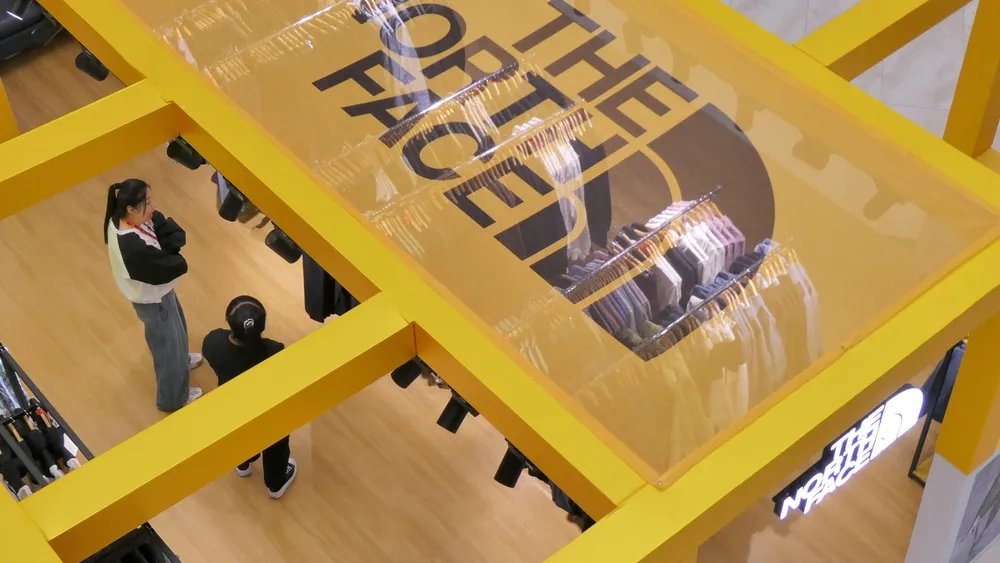
As it turned out, VF’s yearslong gambit to reduce its reliance on virgin petrochemicals also helped cushion it against price shocks. Today, more than 70 percent of the polyester used across all VF brands, including JanSport, Timberland and Vans, comes from recycled sources. At The North Face, its largest brand, over 95 percent of the polyester and 80 percent of the nylon found in its puffer jackets, fleece layers, bags and footwear are derived from recycled, responsibly sourced or renewable materials.
“We made that choice for carbon reduction and sustainability reasons and to build price and supply resilience into our supply chain,” Cady said. “This has enabled us to continue sourcing recycled polyester at very profitable prices without having to deal with the volatility of virgin polyester.”
A similar dynamic played out in ocean shipping, where VF’s decision to pay a small premium for so-called “eco-fuel” helped shield it from fuel surcharges. When oil prices climbed above $100 per barrel, companies that hadn’t done the same ended up paying more than those that had locked in eco-fuel pricing from the start.
“It was a choice we made, and it was a choice that paid off in the end,” Cady said.
As trade upheaval, geopolitical conflict and climate risks continue to collide, companies must do more than get through the current crisis; they must build supply chains resilient enough to weather the next one, too. VF’s experience suggests that sustainability investments can also offer protection against disruption. But extending those benefits across the entire network requires long-term planning and coordination.
VF routinely uses scenario exercises to explore what those disruptions could look like, Cady said. What happens if another pandemic strikes? Or an even worse trade war? What if rising temperatures shutter all the ski resorts and no one wants to buy The North Face jackets?
“So we build scenario planning like that, and we figure out what choices would we make at what time, and what are the indications or indicators we should be looking at to see if that scenario will come true,” he said. “Some are extreme scenarios, but they help us build like that muscle internal to the company on what choices can we make, and what are the indicators we should be watching for.”
For Reo Eco, a vertically integrated recycling and textile manufacturing company, building resilience means securing both raw materials and long-term demand. Anticipating a shift from bottle-to-textile to textile-to-textile recycling, the Chinese firm has already secured 100,000 tons of castoff garments for its enzymatic recycling operations, which it has scaled up from a pilot plant established a year and a half ago.
Rather than competing at the bottom of the market on price, Reo Eco seeks to “level up polyester” into higher-value products like stretch yarn, cotton-touch yarn and dope-dyed yarn, said Stefan Edkvist, business development director at Reo Eco. But moving upmarket also means assuring customers like The North Face of their materials’ recycled origins—an increasingly important requirement as regulators crack down on greenwashing.
“The market demand for textile-to-textile is huge now, not only because of cost or emissions but also because of regulation with digital product passports around the corner,” he said. “So where is that feedstock coming from? How can we secure the supply chain?”
The goal now, Edkvist said, is to share Reo Eco’s production capacity “in a smart way” with its brand customers and “grow together.” Keeping processing in-house has helped the company control quality and sidestep the extra freight costs and markups associated with outsourcing. Even so, Reo Eco’s 10,000-ton textile-to-textile recycling capacity is still a “drop in the ocean,” he said, compared with the more than 80 million tons of polyester produced globally each year.
Building resilience
For Jordan Lea, vice president of sustainable fibers at the American arm of Olam Agri, a major cotton merchant and agribusiness, delivering a commodity “produced by Mother Nature on a just-in-time basis” is fraught enough amid drought and other climate risks.
Long logistical lead times compound that uncertainty. Cotton purchased from the United States today can take four to six weeks just to get onto a ship, he said, leaving plenty of time for energy prices and geopolitical conditions to shift. To reduce delays, Olam Agri sold a warehouse in Dallas and added warehouses in Memphis and Savannah.
“You’re not my customer—you’re my partner,” Lea tells his buyers. “So how can we be a better partner? Again, that’s by making our product—the one that keeps your supply chain functional—more available to you as cost-effectively as possible. But let’s put cost-effectiveness aside and just truly talk about performance. How do we increase resilience? How do we increase dependability?”
Another priority is increasing cotton’s “fungibility”—giving customers more flexibility to substitute cotton from one origin for another. Of the roughly 45 million bales exported worldwide, about 35 million come from just three countries: the United States, Brazil and Australia.
“It sounds like a diversification of risk, but when you consider that Australia is looking at production being down by 50 percent next year and the U.S. is in a drought facing a super El Niño during the harvest season…there are enormous risks just from the production side,” Lea said. “We’re trying to work with our customers to demonstrate that cotton is getting increasingly homogeneous…and then hopefully we can diversify the supply chain beyond those borders.”
But sourcing flexibility is only part of the answer. Drought-related transit restrictions at the Panama Canal, Houthi attacks along the Red Sea route to the Suez Canal and conflict at the Strait of Hormuz have complicated efforts to move cotton around the world. One strategy, Lea said, is to position cotton closer to customers in relatively neutral locations such as Singapore or Malaysia, allowing Olam Agri to respond more quickly to their needs.
“I can’t disrupt anybody’s supply chain based on an inability to deliver,” he said. “That’s not an appropriate response.”
Even when companies invest in protection against disruption, translating that spending into lower insurance premiums is not straightforward.
For insurers, assessing exposure includes identifying where vulnerabilities are concentrated. Ridwan Bhuiyan, vice president of digital products for global resilience at Chubb, offered a hypothetical: If a supply chain depends on a single dye house—or several in the same flood zone—what happens when a once-in-a-century deluge shuts them down? Identifying those concentrations allows insurers to work with companies on preventive measures before a disruption results in major losses.
Insurers must also account for risks that don’t fit neatly into traditional underwriting categories, including climate change, heat stress and supply-chain disruptions caused by shipping lane blockades, blackouts or labor strikes, Bhuiyan said. The challenge is demonstrating that measures to mitigate those risks provide enough protection to justify lower premiums.
“We often hear our clients saying, ‘OK, if we build a $2 million flood wall at this factory in Thailand, is it going to affect our premium?’” he said. “It’s really tough to answer that because you haven’t necessarily demonstrated through that investment that it has truly protected you from that emerging risk. There’s no precedent—unlike saying that adding a sprinkler system in your facility will prevent a catastrophic fire from destroying the building.”
To build that evidence, Chubb combines historical site assessments with claims data to link previously identified vulnerabilities to actual losses.
“To be honest, it becomes more art than science,” Bhuiyan said. “You can collect all the numbers, investments, interventions and disruption planning, but as our adaptations to these inherent and emerging risks become more prevalent and we see incremental benefits from them, they will eventually trickle down to the policies we write as insurers.”
Managing geographic risk also shapes VF’s sourcing decisions. The company gives vendors with capabilities in multiple countries higher ratings in its vendor-performance matrix, positioning them for more orders than suppliers operating in just one country, Cady said. That doesn’t mean hastily shifting its supply chain in response to every disruption, however.
“We make changes that are strategic in nature, that are ‘no-regret’ decisions,” he said.
Take the “Liberation Day” tariffs President Donald Trump announced in April 2025, which Cady described as a “big shock” the company hadn’t budgeted for. Before the Supreme Court struck them down in February, citing executive overreach, VF responded with what he called a “three-pronged approach”: reducing manufacturing costs by “cutting corners”—sometimes literally, Cady said, in the case of fabric—raising prices where it could without dampening demand and absorbing some of the tariffs at the expense of its profits. It also incorporated more U.S.-made material inputs to soften the blow of import duties.
“But from a supply chain perspective, we don’t react with a knee-jerk reaction,” Cady said. “We’re taking a strategic view of what’s going to stick for the long term. Where do we have certainty? Where are we just trying to move through an uncertain period until we have clarity of what the future holds? Because what we’re choosing to design and develop today isn’t going to hit the market for over a year. And so, just switching here and there doesn’t really create value in that long-term supply chain.”
Equally important, he said, is leading with the company’s values, including when deciding with whom to do business. VF evaluates prospective suppliers not only on their ability to make its products but also on whether they meet its requirements for compliance, human rights, environmental protection and sustainability reporting. It’s about “controlling what we can control,” Cady said.
“If we do have to leave a supplier and reduce production with a supplier, our planning teams understand the impact that will have on that supplier: What percent of the capacity of that supplier or their workforce is responsible for producing our products?” he said. “And if we don’t give that supplier another order, are they going to have to exit? Are they going to close?”
Whatever form it takes, resilience cannot come at the expense of workers, Cady said.
“We have a very public and very important responsible exit procedure if we’re exiting orders from a supplier that we follow to the T, to ensure that we don’t have a negative impact on the workers in our supply chain,” he said.