dailynewsnblog
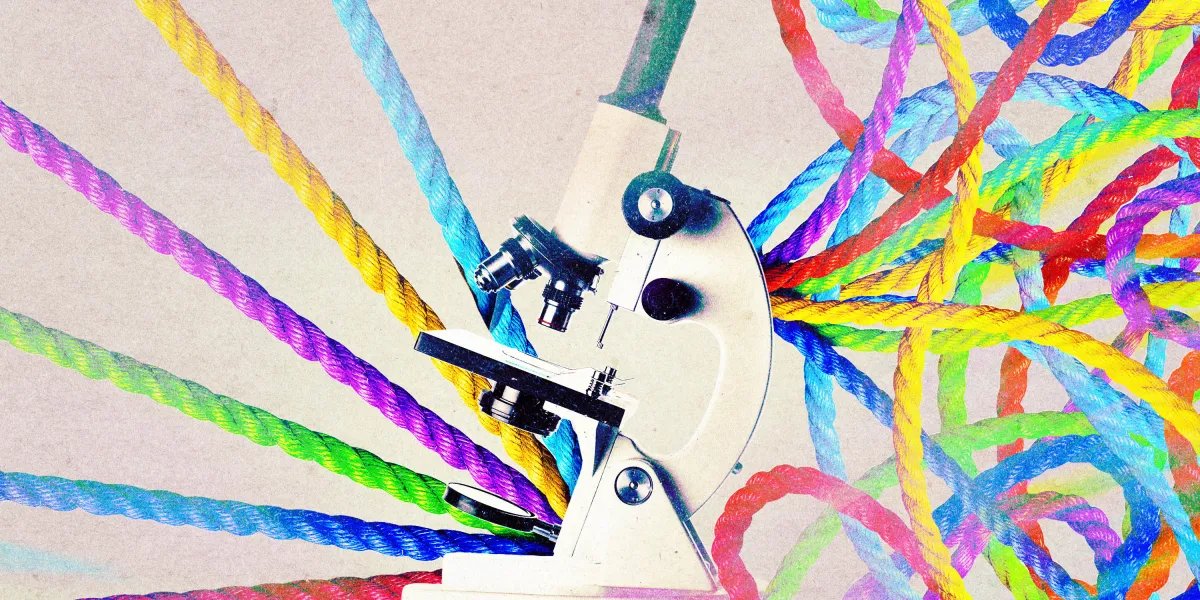
The researchers concluded that the model was getting at least some of its neurons to multitask, perhaps so that it could fit in more data. Looking at other models appeared to back this up. The phenomenon became known as superposition: Models folded unrelated concepts into single neurons. The upshot was clear: When you looked inside a model, what you saw was a vast, tangled knot.
Most mechanistic interpretability research has therefore focused on ways to untangle that knot. But despite a few breakthroughs, progress has been slow. Today’s models, such as the latest LLMs, are so large and complex that researchers can make sense of only tiny pieces at a time. Some leading figures in the field doubt if it will ever be possible to understand an LLM in fine-grained detail.
Cammarata was one of them. “I was very pessimistic,” he says. But then he took the trouble to really look.
Nothing but neurons
At Goodfire, Cammarata spends nearly all of his time peering inside neural networks. He has built new tools and deploys teams of AI agents to help him make sense of what he sees. “I spent like, I don’t know, 10 hours a day, seven days a week, for most of the last year just looking at neurons,” he says.
What he claims to have realized is that there is a kind of logic to neural networks after all, even if they seem to make no sense at first. “We were looking at it wrong,” he says. “I just think you want to try slightly harder; you don’t want to give up too quickly.”
Cammarata almost makes it sound like a conversion of faith. Those early experiments with models such as Inception v1, which suggested that neural networks were tangled up, fostered a kind of confirmation bias. When researchers looked at a new model, they expected to be flummoxed, he says. “Every time I couldn’t understand something, I was like, ‘Wow, this untangling process is even more important than I thought, because I can’t make any progress without it.’”
But the more Cammarata looked at neurons, he says, the more things started to fall into place. “Not all of them are flawless, but I expected nothing to be legible, or very little to be legible,” he says. “And actually, I was able to, like, map out whole circuitry.”
Back to cars and cats
Cammarata took his new approach—and his new agents—and went back to Inception v1. “I’d studied that for probably thousands of hours,” he says. But with fresh eyes, Cammarata found things that he now thinks they got wrong the first time around. Take the car-and-cat neuron. Rather than asking why multiple unrelated things were packed into a single neuron, he now tried to figure out what those things might have in common.